
U.S. Awards First Deep-Sea Mining Leases for 31.5 Million Acres Off American Samoa
Why it matters
The entry of sovereign auction frameworks into deep-sea mineral tracts sets up a direct operational test between national supply-chain security mandates and international maritime regulatory risk.
What happened (in 30 seconds)
- The federal government auctioned deep-sea mineral tracts: On November 19, 2026, the U.S. Department of the Interior’s Marine Minerals Administration concluded lease sale PACM-1, granting two 20-year leases across 31.5 million acres of seabed off American Samoa.
- A single bidder took both blocks at reserve: Commercial entity Wetstone secured both offshore blocks for a combined $6 million minimum bid ($3 million per tract), edging past participating bidder Adepth Minerals.
- The awarded scope remains restricted: The signed leases authorize only early-stage seabed mapping and preliminary exploration, with actual commercial extraction locked behind separate environmental reviews, federal approvals, and ongoing court proceedings.
The context you actually need
- The origin traces to an industrial request: The bidding pathway initiated in April 2025 following a petition by Impossible Metals, subsequently codified into an executive order instructing federal departments to expand domestic reserves of nickel, cobalt, and manganese.
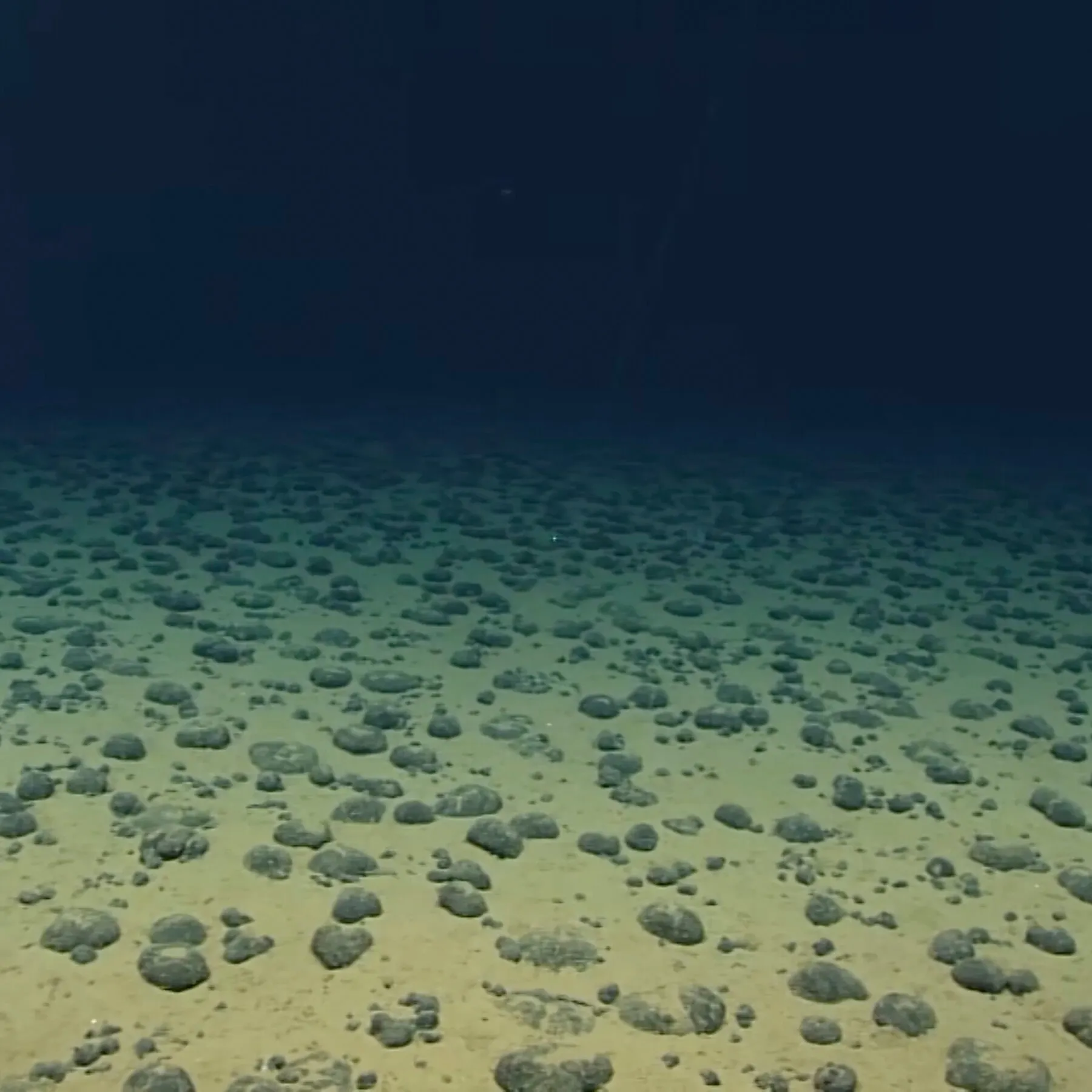
- The targeted geology holds critical industrial inputs: The Pacific acreage, situated 150 to 240 miles east of Pago Pago, contains dense formations of polymetallic nodules and ferromanganese crusts critical for advanced battery chemistries and defense hardware.
- A court ruling preceded the sale: On November 16, 2026, three days before bidding opened, a federal court in Hawaii ruled that preliminary leasing steps violated aspects of the Endangered Species Act, compelling the agency to proceed under expanded species consultations.
What's really happening
The commercial mechanics of the PACM-1 auction represent an institutional move to establish domestic sovereignty over deep-water critical minerals. Rather than waiting for consensus within multilateral bodies like the International Seabed Authority, the regulatory apparatus deployed its domestic leasing framework to open 31.5 million acres of outer continental shelf and extended maritime territories.
The operational economics of the winning bids reveal the present state of this frontier. Wetstone acquired both tracts for $6 million, exactly matching the $3 million reserve threshold per block set by the Marine Minerals Administration. This minimum-clearing price underscores the asymmetric risk profile of deep-sea mining. While the seabed contains verified concentrations of cobalt, nickel, and manganese, extracting those deposits requires deploying untested capital equipment through thousands of meters of water column. Operators must commit capital today for survey rights while commercial exploitation remains years away from technical and legal de-risking.
The auction design creates a distinct legal tension. The tracts directly border the Rose Atoll Marine National Monument. Furthermore, the November 16 federal court ruling established that earlier agency filings failed to adequately address habitat disruption for protected marine species. Interior Secretary Doug Burgum’s department addressed this legal exposure by segmenting the timeline: granting immediate rights exclusively for mapping and environmental data collection, while pushing the commercial extraction phase into a future regulatory permitting pipeline.
This phased framework serves as a deliberate incentive structure. By securing 20-year lease paper today, resource firms obtain geographic exclusivity against competitors like Adepth Minerals. Meanwhile, the administration establishes a concrete legal foothold in Western Pacific waters, signaling to industrial consumers of electric vehicle components and defense manufacturing that alternative mineral flows are being mapped outside of supply channels dominated by China.
For global supply managers, this auction alters long-term mineral balance sheets. Establishing commercial-scale extraction will require multi-billion-dollar investments in deep-water recovery systems and port logistics. By executing this sale despite localized resistance and pending legal challenges, the domestic regulatory environment has initiated an irreversible industrial timeline that tests whether marine geology can serve as a dependable backstop for modern battery manufacturing.
Who feels it first (and how)
- Advanced battery and grid-storage manufacturers: Upstream sourcing strategists gain a speculative 20-year timeline for non-land-based cobalt and nickel, though no refined product reaches commercial supply chains in the immediate term.
- Pacific maritime transport and logistics operators: Marine surveying contractors, deep-sea acoustic mapping teams, and specialized vessel owners will see immediate operational tenders for preliminary exploratory voyages out of Pago Pago.
- Regional infrastructure planners in the GCC: Municipalities and sovereign wealth entities scaling battery megafactories and electric mobility hubs monitor these leasing auctions as a long-term signal for broader geographical diversification in mineral pricing.
- Offshore energy and mining EPC contractors: Specialized subsea engineering firms face new design incentives to build deep-water robotic crawlers, acoustic monitoring buoys, and nodule collection heads capable of operating at extreme atmospheric pressures.
What to watch next
- The December 2026 Northern Mariana Islands sale: Regulators have slated a second offshore critical minerals auction for late December 2026; whether bidding proceeds will indicate if federal agencies can successfully navigate parallel federal litigation.
- Post-auction legal injunctions: Watch whether environmental litigators seek a preliminary injunction in the Hawaii federal district court to block Wetstone’s specialized mapping vessels from initiating initial offshore sonar operations.
- International Seabed Authority response protocols: Multi-nation legal bodies will face growing pressure from international member states to clarify cross-jurisdictional standards as national domestic agencies unilaterally license contiguous deep-water zones.
The U.S. Interior Department’s Marine Minerals Administration leased 31.5 million acres across two tracts to Wetstone for $6 million on November 19, 2026, granting exploration rights for a 20-year term.
Initial subsea mapping operations will encounter legal motions from environmental plaintiffs seeking to enforce the November 16 Endangered Species Act judicial finding.
Whether current subsea robotics and extraction mechanics can lift and process polymetallic crusts from the Samoan seabed at a cost per metric ton that undercuts established terrestrial mining.
Frequently Asked Questions
- Why it matters?
- The entry of sovereign auction frameworks into deep-sea mineral tracts sets up a direct operational test between national supply-chain security mandates and international maritime regulatory risk.
- What happened (in 30 seconds)?
- The federal government auctioned deep-sea mineral tracts: On November 19, 2026, the U.S. Department of the Interior’s Marine Minerals Administration concluded lease sale PACM-1, granting two 20-year leases across 31.5 million acres of seabed off American Samoa. A single bidder took both blocks at reserve: Commercial entity Wetstone secured both offshore blocks for a combined $6 million minimum bid ($3 million per tract), edging past participating bidder Adepth Minerals. The awarded scope remains
- What's really happening?
- The commercial mechanics of the PACM-1 auction represent an institutional move to establish domestic sovereignty over deep-water critical minerals. Rather than waiting for consensus within multilateral bodies like the International Seabed Authority, the regulatory apparatus deployed its domestic leasing framework to open 31.5 million acres of outer continental shelf and extended maritime territories. The operational economics of the winning bids reveal the present state of this frontier. Wetsto
- Who feels it first (and how)?
- Advanced battery and grid-storage manufacturers: Upstream sourcing strategists gain a speculative 20-year timeline for non-land-based cobalt and nickel, though no refined product reaches commercial supply chains in the immediate term. Pacific maritime transport and logistics operators: Marine surveying contractors, deep-sea acoustic mapping teams, and specialized vessel owners will see immediate operational tenders for preliminary exploratory voyages out of Pago Pago. Regional infrastructure pla
- What to watch next?
- The December 2026 Northern Mariana Islands sale: Regulators have slated a second offshore critical minerals auction for late December 2026; whether bidding proceeds will indicate if federal agencies can successfully navigate parallel federal litigation. Post-auction legal injunctions: Watch whether environmental litigators seek a preliminary injunction in the Hawaii federal district court to block Wetstone’s specialized mapping vessels from initiating initial offshore sonar operations. Internati
Capitol Hill news, legislation, and policy insight.
"The Hill specializes in U.S. politics and policy, with a focus on Capitol Hill developments and a reputation for insider reporting."
— A47 Editor
1 company bids to mine off coast of American Samoa after Trump push
One company, Wetstone US Ventures, has provisionally won the rights to mine off the coast of American Samoa after being the only bidder in an auction, according to a spokesperson for the Marine Minerals Administration, as the Trump administration pus...
Scientific research, space, environment, and health coverage.
"The New York Times is a globally recognized newspaper offering authoritative reporting with a center-left editorial stance."
— A47 Editor
U.S. Auctions 31.5 Million Acres of Pacific Ocean to Deep Sea Mining Company
The U.S. held its first-ever lease sale for seabed mining, auctioning roughly 31.5 million acres of Pacific Ocean floor to Wetstone U.S. Ventures, which paid $6 million for the rights to map and prepare the area rather than to begin extraction. The s...
Scientific research, space, environment, and health coverage.
"The New York Times is a globally recognized newspaper offering authoritative reporting with a center-left editorial stance."
— A47 Editor
Judge Finds Trump’s Planned Seabed Mining Auction Violated Law
A federal judge has ruled that the Trump administration's planned seabed mining lease auction, scheduled for Thursday, violated the law, according to a report by The New York Times. The auction would have allowed companies to mine the ocean floor off...