
Iran Escalates Strikes on Oil Tankers in Strait of Hormuz Amid Ongoing Regional Conflict
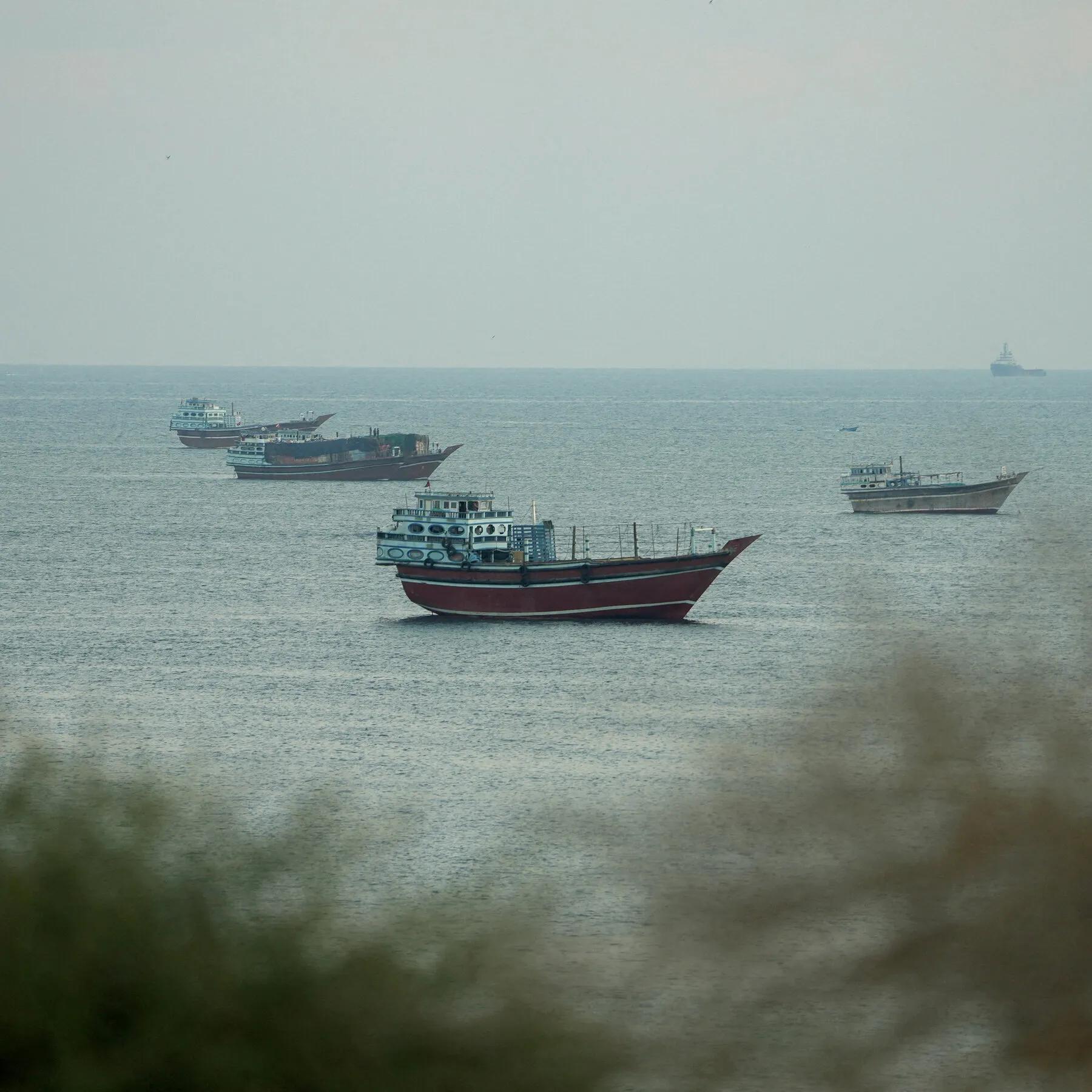
Why it matters
The targeting of commercial vessels within the Strait of Hormuz injects structural friction into the transit route handling significant shares of global maritime crude flows, instantly recalibrating regional underwriting costs and tanker logistics.
What happened (in 30 seconds)
- Coordinated maritime interdictions: Between November 19 and 21, 2026, Iranian forces and Revolutionary Guard Corps (IRGC) units conducted multiple strikes against outbound commercial oil tankers navigating the Strait of Hormuz.
- Direct projectile and mine impacts: UK Maritime Trade Operations confirmed that two commercial tankers exiting the Gulf suffered projectile hits—one to the engine room and one to the stern—while Iranian reports claimed additional vessels struck naval mines.
- Zero reported casualties: Despite verified structural hull damage and fires on vessels reportedly carrying over 4 million barrels of crude oil, operations across the waterway recorded no direct casualties.
The context you actually need
- A protracted conflict cycle: The naval engagements stem directly from broader regional hostilities initiated by joint U.S.-Israeli strikes on Iran in February 2026, shifting naval priorities toward commercial choke points.
- Contested navigational protocols: Iranian authorities have actively attempted to restrict navigation through the waterway to vessels following strict authorization requirements, establishing an operational friction zone against unsanctioned maritime movement.
- Escort confrontations: U.S. Central Command continues to conduct escort missions for commercial shipping transiting the strait, prompting counter-interdiction operations including localized mine deployments and anti-ship projectile launches.
What's really happening
The operational friction in the Strait of Hormuz reflects an incentive-driven strategy to weaponize maritime geography without triggering total conventional conflict. The waterway serves as the primary conduit for Gulf crude exports; by challenging navigation rather than imposing an outright physical closure, maritime actors create commercial uncertainty that alters global logistics pricing.
The mechanism relies on asymmetric maritime interdiction. Rather than engaging naval combatants directly, units target commercial tankers transiting outside state-designated channels. On November 19, the IRGC asserted that two supertankers carrying a combined volume exceeding 4 million barrels of crude struck naval mines after deviating onto unauthorized routes. By Saturday, November 21, projectile strikes hit the propulsion systems of two additional outbound vessels—specifically penetrating the stern of one ship and the engine compartment of another. Striking machinery spaces rather than living quarters disables vessel transit capabilities, demonstrating interdiction leverage while avoiding crew casualties that could compel rapid military retaliation.
This operational threshold fundamentally shifts the economic equation for global freight. When naval mines and projectiles enter commercial transit corridors, maritime underwriters automatically reclassify the operating area. The resulting spike in additional war risk premiums (AWRP) alters charter calculations for every metric ton leaving Gulf terminals. Tanker operators are forced to weigh three costly operational paths: paying premium insurance rates to maintain direct transit, idling vessels outside the strait while waiting for military convoy formation, or utilizing land-based bypass infrastructure where pipeline capacity permits.
At the systemic level, diplomacy runs parallel to interdiction. High-level mediation efforts led by Qatari officials conducting visits in Tehran highlight the transactional nature of the crisis. Regional intermediaries operate to calibrate escalation ceilings, ensuring the waterway remains functionally viable under conditional terms. Consequently, crude markets absorb localized volatility: prices experience short-term swings driven by immediate transit delays, yet global reserves and existing stockpiles cushion against systemic structural shortfalls. The primary burden remains financial and operational, shifting baseline trade economics onto commercial operators.
Who feels it first (and how)
- Dubai-based shipping lines and maritime brokers: Face immediate escalations in hull and machinery war-risk premiums, forcing rapid contract renegotiations and expanded operating budgets for Gulf voyages.
- Regional crude exporters and ADNOC-linked logistics networks: Experience scheduling delays and freight cost adjustments as vessels require heightened route validation or coordinated military convoy windows.
- Global logistics managers and freight forwarders: Absorb sudden fuel surcharges and unpredictable arrival timelines for petrochemical derivatives and raw materials exiting Persian Gulf ports.
- Underwriting syndicates and maritime risk analysts: Must rapidly reassess transit loss models and reset risk premiums for all vessels operating across the Gulf of Oman and the Strait of Hormuz.
What to watch next
- Mediation mechanics from Doha: Continued diplomatic visits between Qatari negotiators and Tehran officials will establish whether commercial transit permits can be formalized to suppress further tanker strikes.
- Underwriting surcharge updates: Announcements from London and regional joint war committees regarding expanded high-risk zone boundaries will dictate the immediate margin impact on maritime trade lanes.
- U.S. CENTCOM convoy frequency: Any operational shifts in the cadence, scale, or defensive posture of naval escort missions will indicate the expected duration of active interdiction risks.
Multiple commercial oil tankers sustained mechanical and structural damage from projectiles and naval mines between November 19 and 21, 2026, with zero reported personnel casualties.
War-risk insurance premiums for Persian Gulf commercial transits will remain elevated in the near term, directly lifting the delivered cost per barrel of regional crude.
Whether diplomatic mediation via Qatar will yield durable safe-passage protocols or if operational interdictions will expand to non-tanker commercial merchant fleets.
Frequently Asked Questions
- Why it matters?
- The targeting of commercial vessels within the Strait of Hormuz injects structural friction into the transit route handling significant shares of global maritime crude flows, instantly recalibrating regional underwriting costs and tanker logistics.
- What happened (in 30 seconds)?
- Coordinated maritime interdictions: Between November 19 and 21, 2026, Iranian forces and Revolutionary Guard Corps (IRGC) units conducted multiple strikes against outbound commercial oil tankers navigating the Strait of Hormuz. Direct projectile and mine impacts: UK Maritime Trade Operations confirmed that two commercial tankers exiting the Gulf suffered projectile hits—one to the engine room and one to the stern—while Iranian reports claimed additional vessels struck naval mines. Zero reported
- What's really happening?
- The operational friction in the Strait of Hormuz reflects an incentive-driven strategy to weaponize maritime geography without triggering total conventional conflict. The waterway serves as the primary conduit for Gulf crude exports; by challenging navigation rather than imposing an outright physical closure, maritime actors create commercial uncertainty that alters global logistics pricing. The mechanism relies on asymmetric maritime interdiction. Rather than engaging naval combatants directl
- Who feels it first (and how)?
- Dubai-based shipping lines and maritime brokers: Face immediate escalations in hull and machinery war-risk premiums, forcing rapid contract renegotiations and expanded operating budgets for Gulf voyages. Regional crude exporters and ADNOC-linked logistics networks: Experience scheduling delays and freight cost adjustments as vessels require heightened route validation or coordinated military convoy windows. Global logistics managers and freight forwarders: Absorb sudden fuel surcharges and unpre
- What to watch next?
- Mediation mechanics from Doha: Continued diplomatic visits between Qatari negotiators and Tehran officials will establish whether commercial transit permits can be formalized to suppress further tanker strikes. Underwriting surcharge updates: Announcements from London and regional joint war committees regarding expanded high-risk zone boundaries will dictate the immediate margin impact on maritime trade lanes. U.S. CENTCOM convoy frequency: Any operational shifts in the cadence, scale, or defens
Breaking news, politics, business, and entertainment from the U.S. and around the world.
"The New York Post is a tabloid-format newspaper known for its sensationalist headlines and conservative-leaning editorial tone."
— A47 Editor
Two tankers hit in Strait of Hormuz as hawks press Trump to resume Iran strikes
Two tankers were reportedly struck by projectiles near the Strait of Hormuz on Saturday, raising fears of a new escalation in the crucial oil-shipping corridor as Israel presses President Donald Trump to renew major attacks on Iran.
UAE-based newspaper covering Gulf politics, society, and international developments.
"Gulf News is one of the UAE’s most prominent English-language publications."
— A47 Editor
Two tankers attacked in Hormuz strait: maritime agency
Two tankers were attacked in the Strait of Hormuz, according to a maritime agency reported by Gulf News, in what the report frames as part of a series of recent attacks on shipping along the critical oil transit corridor.
A curated Gulf News feed featuring major stories across news, business, opinion, and lifestyle.
"Gulf News is a major UAE newspaper whose featured stories feed reflects a broad editorial mix shaped for a Gulf audience."
— A47 Editor
Two tankers attacked in Hormuz strait: maritime agency
Two tankers were attacked in the Strait of Hormuz, according to a maritime agency reported by Gulf News, in what the report frames as part of a series of recent attacks on shipping along the critical oil transit corridor.
Markets, economy, and company analysis from NYT’s business desk.
"The New York Times is a globally recognized newspaper offering authoritative reporting with a center-left editorial stance."
— A47 Editor
Iran Keeps Up Unrelenting Attacks on Ships in the Strait of Hormuz
The New York Times reports that Iran has continued its attacks on ships in the Strait of Hormuz, with a recent strike on a vessel that had already been disabled suggesting a dangerous new phase for tankers in the Persian Gulf and surrounding waters. ...