
Iranian Strikes on Bahrain and Hormuz Tanker Incidents Reignite US-Iran Escalation
Why it matters
A dual-front strike on Bahrain's industrial infrastructure and merchant vessels near the Strait of Hormuz has compressed transit volumes by 15% in a single week, testing regional supply chain resilience.
What happened (in 30 seconds)
- Civilian infrastructure hit in Bahrain: An attack on Sitra Island sparked an industrial facility fire, leaving one Bahraini citizen and one Pakistani resident injured, while Bahraini defenses intercepted additional incoming strikes.
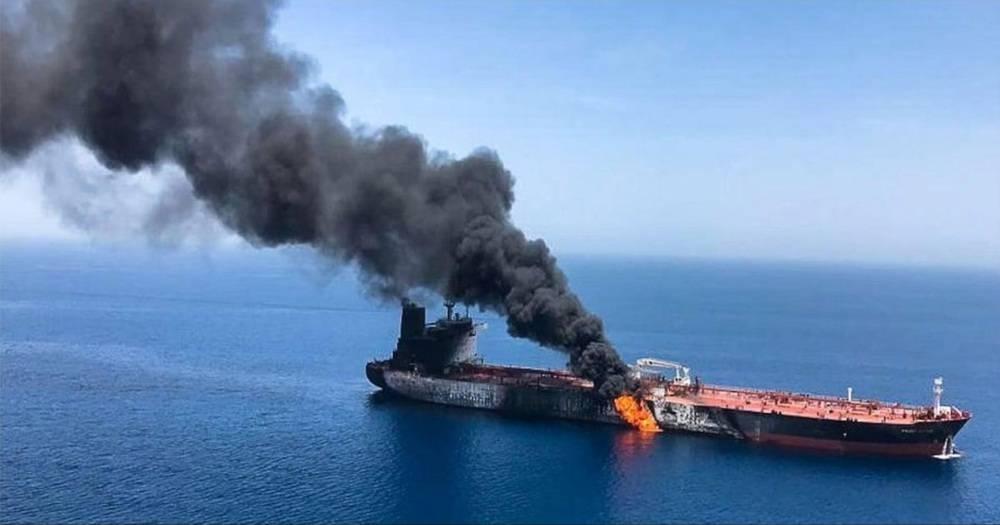
- Commercial vessels targeted at sea: The United Kingdom Maritime Trade Operations (UKMTO) documented two projectile incidents near Khasab, Oman, resulting in shipboard fires without crew casualties, alongside reports of mine detonations.
- Transit volumes contracted sharply: Commercial transits through the Strait of Hormuz dropped to 263 vessels for the week ending November 18, 2026, marking a 15% week-over-week drop and sitting 65% below baseline levels established before the late February 2026 conflict began.
The context you actually need
- The structural choke point: The Strait of Hormuz serves as the central artery for Middle Eastern crude and liquefied natural gas, where physical disruption rapidly translates into maritime insurance repricing.
- The economic containment campaign: Following US-Israeli strikes in late February 2026, the US imposed a strict naval blockade alongside financial sanctions, prompting Iranian demands for asset unfreezing and sanctions relief as preconditions for negotiation.
- The recurring cross-gulf vectors: Bahrain, which hosts the US Fifth Fleet, has faced repeated drone and missile profiles since September 2026, establishing a persistent operational risk premium across the Gulf Cooperation Council (GCC).
What's really happening
The physical confrontation unfolding along the Strait of Hormuz and within Bahrain's industrial perimeter reflects a deliberate leverage strategy: using selective maritime friction to challenge an economic blockade.
When US-Israeli strikes initiated this phase of conflict in late February 2026, the subsequent US containment strategy relied on tightening naval blockades and asset freezes. In response, Iran's operational apparatus—spearheaded by the Islamic Revolutionary Guard Corps (IRGC) and the Iranian Navy—has targeted merchant shipping lanes and host infrastructure across the Gulf. By striking Sitra Island and engaging maritime assets near Khasab, the operational goal is not complete territorial closure, which would eliminate all commercial transit, but rather calibrated operational drag.
The economic arithmetic of shipping dictates that absolute closure is unnecessary to create commercial disruption. At 263 transits per week, vessel traffic through Hormuz has fallen 65% below historical benchmarks. A 15% week-over-week decline illustrates that commercial operators recalculate risk exposure long before military forces physically interdict cargo. Marine underwriters adjust war risk premiums upward the moment projectile attacks or naval mines enter transit corridors. These costs compound: vessel charter rates surge, bunker routing adjusts, and maritime carriers either absorb the balance-sheet hit or redirect vessels around extended routes, delaying supply schedules.
On land, the strike profile on Sitra Island demonstrates an expansion beyond naval targets to civilian-adjacent industrial facilities. While Iran asserted that its strikes targeted US Patriot radar installations at Al-Riffa and Awali bases—claims denied by US Central Command—the collateral reality was an industrial fire and civilian casualties. This dual-track approach targets both logistical corridors and host-nation stability.
Concurrently, diplomatic channels remain deadlocked. Qatari mediation efforts have achieved little forward motion because the foundational incentives are entirely misaligned. Tehran requires sanctions relief and unencumbered asset liquidity before de-escalating kinetic activity. Washington has explicitly rejected these terms, choosing instead to sustain enforcement. As long as economic sanctions hold without an off-ramp, asymmetric strikes against commercial shipping and regional installations remain the lower-cost lever to force commercial and political counter-pressure on Western negotiators.
Who feels it first (and how)
- Maritime logistics operators and cargo underwriters: Must reprice war risk insurance premiums and navigate altered transit schedules through the Gulf of Oman and Strait of Hormuz.
- Dubai-based trading desks and procurement directors: Experience delayed import-export lead times for critical materials and increased freight forwarding charges across regional routes.
- GCC equity investors and portfolio managers: Absorb immediate equity index drawdowns, mirrored in early declines across the Saudi Tadawul (-1.7%) and Qatar Stock Exchange (-1.5%).
- Industrial facilities and regional infrastructure managers: Face elevated operational defense costs and stricter security procedures across coastal GCC production hubs.
What to watch next
- Sustained weekly transit volumes below 250 hulls: A persistent decline below this threshold will signal that Tier-1 international shipping operators are pulling tonnage from the route, triggering structural supply crunches.
- US Fifth Fleet escort announcements: Any shift toward official sovereign naval convoys for commercial tankers will confirm that commercial underwriting alone can no longer support merchant transits.
- Shifts in Qatari mediation parameters: Breakthrough indicators will center on incremental sanctions concessions or partial asset liquidity, without which kinetic friction is likely to persist.
Sitra Island sustained industrial damage leaving two workers injured; UKMTO confirmed projectile-related vessel fires near Khasab; weekly Hormuz transits fell to 263 vessels, down 65% from pre-conflict levels; Saudi and Qatari stock indices dropped 1.7% and 1.5% respectively.
Marine war risk underwriters will expand high-risk maritime boundaries further south into the Gulf of Oman, raising base freight costs for regional trade hubs including the UAE.
Whether Iranian claims regarding the downing of a US MQ-1 drone and radar strikes at Al-Riffa and Awali bases represent verified hardware attrition or psychological operations, given direct denials from US Central Command.
Frequently Asked Questions
- Why it matters?
- A dual-front strike on Bahrain's industrial infrastructure and merchant vessels near the Strait of Hormuz has compressed transit volumes by 15% in a single week, testing regional supply chain resilience.
- What happened (in 30 seconds)?
- Civilian infrastructure hit in Bahrain: An attack on Sitra Island sparked an industrial facility fire, leaving one Bahraini citizen and one Pakistani resident injured, while Bahraini defenses intercepted additional incoming strikes. Commercial vessels targeted at sea: The United Kingdom Maritime Trade Operations (UKMTO) documented two projectile incidents near Khasab, Oman, resulting in shipboard fires without crew casualties, alongside reports of mine detonations. Transit volumes contracted sha
- What's really happening?
- The physical confrontation unfolding along the Strait of Hormuz and within Bahrain's industrial perimeter reflects a deliberate leverage strategy: using selective maritime friction to challenge an economic blockade. When US-Israeli strikes initiated this phase of conflict in late February 2026, the subsequent US containment strategy relied on tightening naval blockades and asset freezes. In response, Iran's operational apparatus—spearheaded by the Islamic Revolutionary Guard Corps (IRGC) and t
- Who feels it first (and how)?
- Maritime logistics operators and cargo underwriters: Must reprice war risk insurance premiums and navigate altered transit schedules through the Gulf of Oman and Strait of Hormuz. Dubai-based trading desks and procurement directors: Experience delayed import-export lead times for critical materials and increased freight forwarding charges across regional routes. GCC equity investors and portfolio managers: Absorb immediate equity index drawdowns, mirrored in early declines across the Saudi Tadaw
- What to watch next?
- Sustained weekly transit volumes below 250 hulls: A persistent decline below this threshold will signal that Tier-1 international shipping operators are pulling tonnage from the route, triggering structural supply crunches. US Fifth Fleet escort announcements: Any shift toward official sovereign naval convoys for commercial tankers will confirm that commercial underwriting alone can no longer support merchant transits. Shifts in Qatari mediation parameters: Breakthrough indicators will center on
Arabic-language coverage of Saudi, regional, and international affairs.
"Al Bilad offers mainstream Saudi newspaper coverage across domestic and broader Arab topics."
— A47 Editor
وساطة قطرية لتحريك المسار الدبلوماسي.. طهران تبقي باب التفاوض مفتوحاً
Iranian Foreign Minister Abbas Araghchi confirmed that Tehran continues efforts to open diplomatic channels for negotiations with the United States, aiming to lift sanctions and reach an understanding that ends the conflict, despite hardline statemen...
Arabic-language coverage of political affairs and current events.
"Okaz political coverage typically follows mainstream Saudi framing on national and regional affairs."
— A47 Editor
إيران تصعد وتنسف المفاوضات بشروط تعجيزية
Iran's parliament speaker Mohammad Bagher Ghalibaf said Tehran will not take any steps or enter negotiations with the United States until its seven conditions are met, as the Trump administration intensifies economic and military pressure amid escala...
Arabic-language coverage of Saudi, regional, and international affairs.
"Al Bilad offers mainstream Saudi newspaper coverage across domestic and broader Arab topics."
— A47 Editor
طهران تلوح باستهداف القواعد العسكرية الأمريكية في أوروبا.. وترمب: هجمات إيران تهدد أمن المنطقة
Tensions between the United States and Iran have escalated, with both sides trading military threats and increased movements in the region. US President Donald Trump accused Tehran of intensifying its ballistic missile and drone attacks and warned of...
Pan-Arab political news and analysis.
"Al-Quds Al-Arabi is a London-based Arabic newspaper known for political coverage."
— A47 Editor
موقع عبري: ترامب لا يزال متردداً في توجيه ضربة لإيران… ولكن لا مفر
According to a report cited from an Israeli website, US President Donald Trump remains hesitant about launching a strike on Iran, though the report suggests a military confrontation is hard to avoid. The assessment was framed in a statement by Irania...
Coverage of political affairs and regional developments from a Saudi perspective.
"Al Watan political coverage typically follows a mainstream Saudi framing of regional and national issues."
— A47 Editor
هجمات البحرين وناقلات هرمز تعيدان التصعيد للواجهة
Attacks on Bahrain and tanker incidents near the Strait of Hormuz have renewed escalation in the US-Iran confrontation, after Bahraini authorities reported a civilian industrial facility fire and injuries to a Bahraini citizen and a Pakistani residen...