
Delays in Strait of Hormuz reopening due to mine clearance challenges
Here's what it means for you.
The ongoing delays in reopening the Strait of Hormuz could have significant implications for global oil markets and shipping logistics. With approximately 80 mines obstructing this critical maritime route, the timeline for resuming normal operations remains uncertain. Stakeholders in the oil industry and international shipping will need to closely monitor developments as mine-clearing operations progress. The geopolitical landscape surrounding the Strait adds another layer of complexity, as tensions between the U.S. and Iran could influence shipping dynamics. As the situation unfolds, the potential for increased transit fees or further disruptions remains a concern for global supply chains.
What happened
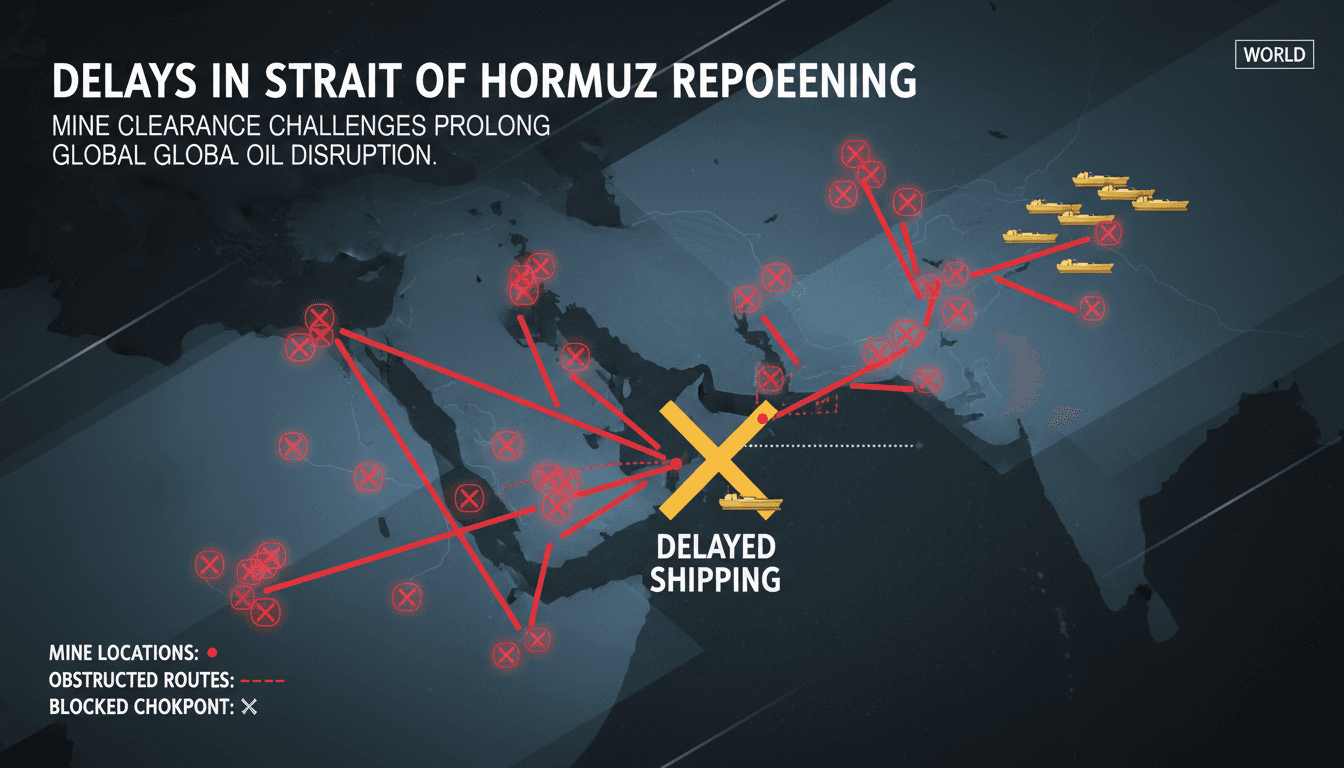
The Strait of Hormuz is currently blocked by approximately 80 mines, which are delaying the resumption of shipping traffic. This obstruction persists despite a recent memorandum of understanding between the U.S. and Iran aimed at normalizing shipping operations. The timeline for clearing these mines and restoring traffic levels is uncertain, with estimates suggesting it could take weeks to return to prewar conditions.
The U.S. military is actively engaged in searching for these mines, but the challenges of mine clearance are significant. The presence of these mines complicates the reopening process and poses risks to maritime safety in the region.
The Context
The Strait of Hormuz is a vital maritime chokepoint for global oil shipments, making its reopening critical for international trade. Mines were reportedly placed during the Iran war, which complicates the current efforts to clear the route. The ongoing geopolitical tensions between the U.S. and Iran further exacerbate the situation, raising concerns about potential violence and the imposition of transit fees by Iran.
As the situation develops, stakeholders must navigate both logistical and geopolitical challenges to ensure safe passage for vessels in this crucial area. The implications of these delays extend beyond immediate shipping concerns, potentially affecting global oil supply chains and market stability.
Takeaway
In the coming weeks, it will be essential to monitor the progress of mine-clearing operations in the Strait of Hormuz. Any developments in U.S.-Iran relations could also impact shipping dynamics and the overall timeline for reopening the strait. The situation requires careful navigation of both logistical and geopolitical challenges, as stakeholders seek to restore normal operations.
As the mine clearance efforts unfold, the potential for further disruptions remains a concern. The global oil market will be watching closely, as the reopening of this critical route is vital for maintaining supply chain stability.
UK and international business news, economics, and corporate coverage.
"The Guardian’s business section covers finance and markets with a progressive editorial tone."
— A47 Editor
Hormuz disruption will continue until 80 mines blocking route are cleared
The Strait of Hormuz remains obstructed by approximately 80 mines, preventing normal shipping operations, as reported by the independent tanker owner trade body. This disruption follows a recent memorandum of understanding between the US and Iran, wh...
International coverage from The Guardian's global desks.
"The Guardian is known for its progressive editorial stance and in-depth analysis."
— A47 Editor
Hormuz disruption will continue until 80 mines blocking route are cleared
The Strait of Hormuz remains obstructed by approximately 80 mines, preventing normal shipping operations, as reported by the independent tanker owner trade body. This disruption follows a recent memorandum of understanding between the US and Iran, wh...
Capitol Hill news, legislation, and policy insight.
"The Hill specializes in U.S. politics and policy, with a focus on Capitol Hill developments and a reputation for insider reporting."
— A47 Editor
Strait of Hormuz reopening likely to be delayed to sweep Iranian mines
The reopening of the Strait of Hormuz, a crucial maritime route for global oil shipments, is likely to be delayed due to the presence of mines laid during the Iran war. President Trump announced that the U.S. military is actively searching for these ...
Regional coverage and analysis focused on politics, diplomacy, and business across the Middle East.
"Al-Monitor is known for analytical reporting on Middle East politics and policy developments."
— A47 Editor
What happens when the Strait of Hormuz re-opens?
The Strait of Hormuz, a crucial shipping lane, is set to reopen on Friday after nearly four months of closure, following a significant agreement between the United States and Iran to end hostilities in the Middle East. This reopening is expected to f...
Arabic-language coverage of political affairs and current events.
"Okaz political coverage typically follows mainstream Saudi framing on national and regional affairs."
— A47 Editor
تحديات ما بعد الفتح.. هل تعيق الألغام والرسوم عودة الملاحة في «هرمز»؟
Bloomberg reports that commitments to reopen the Strait of Hormuz and restore shipping traffic to pre-war levels face significant challenges, particularly due to the presence of mines in the shipping corridor. Predictions from Kalshi indicate a 51% c...
Global political, business, and cultural coverage from WSJ international desks.
"The Wall Street Journal offers extensive international reporting with a reputation for financial insight and a center-right editorial stance."
— A47 Editor
How Quickly Can the Strait of Hormuz Get Back Up and Running?
The reopening of the Strait of Hormuz, a critical maritime route for global oil shipments, is expected to take several weeks to return to even half of its prewar traffic levels, following a recent peace deal between the U.S. and Iran. This agreement ...