
Escalating U.S.-Iran tensions amid military actions and diplomatic efforts
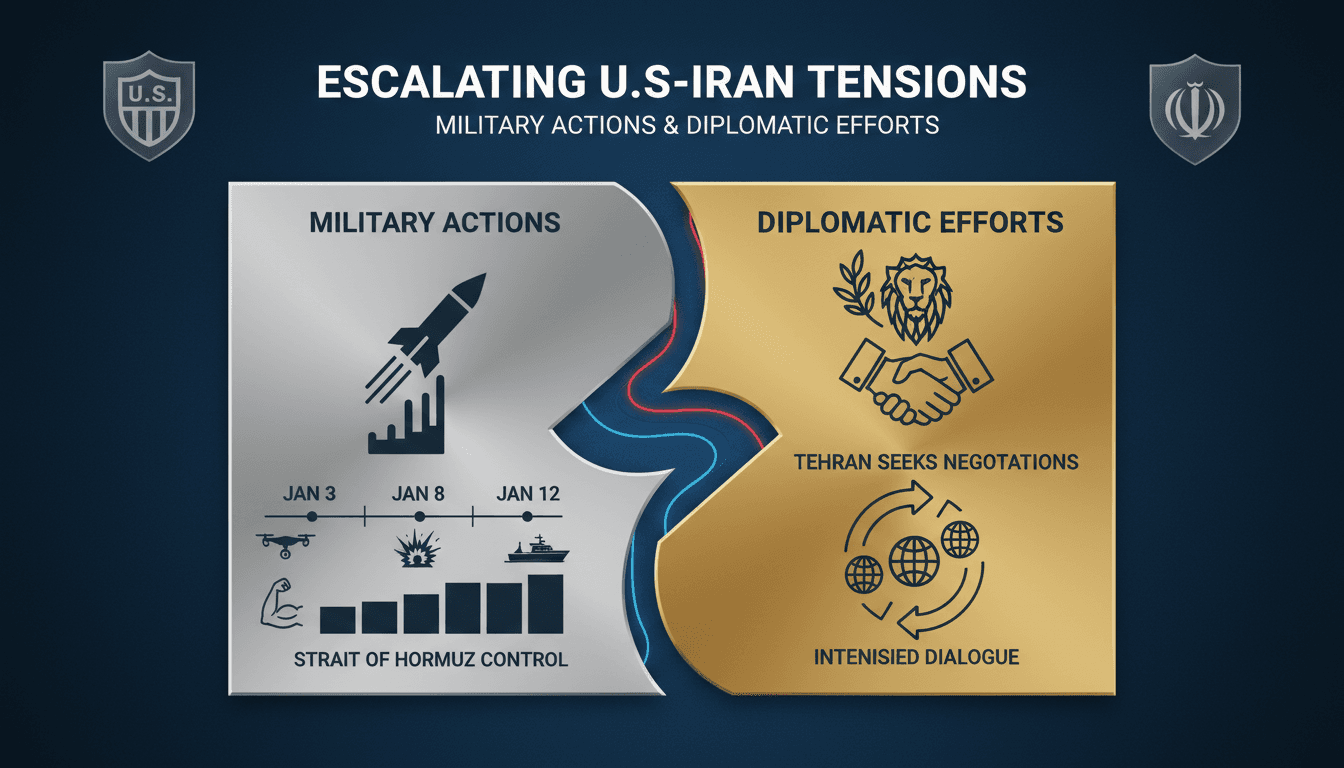
Here's what it means for you.
The rising tensions between the U.S. and Iran could have significant implications for global markets and regional stability. Investors should be aware of the potential for increased volatility in oil prices, particularly given the strategic importance of the Strait of Hormuz. Policymakers may need to navigate complex diplomatic channels to mitigate the risk of military escalation, which could impact international relations and trade.
What happened
Tensions between the United States and Iran have intensified as President Trump asserts military success against Iranian targets. He claims that the U.S. is effectively engaging in military operations while Tehran is not yet prepared to negotiate. This situation is underscored by ongoing military strikes and threats from both sides, with the U.S. emphasizing its control over the Strait of Hormuz.
Iran's leadership has responded with warnings that U.S. threats could lead to further escalation of the conflict. Despite the military posturing, diplomatic efforts are reportedly underway to establish a temporary ceasefire, indicating a complex interplay between military actions and negotiations.
The Context
The backdrop of this conflict includes significant military strikes conducted by the U.S. against Iranian targets, which have raised concerns in Tehran. The U.S. Central Command has refuted Iranian claims of controlling the Strait of Hormuz, a vital waterway for global oil transport. The situation is further complicated by the recent visit of the new head of the Israeli Mossad to Washington, focusing on Iran's nuclear program.
As both nations engage in rhetoric and military posturing, the international community is closely monitoring developments. The potential for a broader conflict looms, making diplomatic efforts crucial in the coming days.
Takeaway
The current situation remains volatile, with the possibility of both military escalation and diplomatic resolution. Observers should monitor developments in U.S.-Iran negotiations, as well as any further military actions or retaliatory measures from Iran. The ongoing conflict highlights the delicate balance between military strategy and diplomatic engagement, with implications for regional stability.
As both sides continue to assert their positions, the risk of escalation remains high. The international community's role in mediating this conflict will be critical in the weeks ahead.
Arabic-language coverage of political affairs and current events.
"Okaz political coverage typically follows mainstream Saudi framing on national and regional affairs."
— A47 Editor
ترمب: ننتصر في الحرب.. وإيران ليست مستعدة للاتفاق
U.S. President Donald Trump stated that the United States is winning the war against Iran, asserting that Tehran is not yet ready to reach an agreement. He emphasized that U.S. forces are striking Iran with significant force and that while Iran desir...
Arabic-language coverage of international news and geopolitics.
"RT Arabic is a Russian state-funded outlet often criticized for promoting Kremlin-aligned narratives."
— A47 Editor
ترامب: لن نغادر المنطقة قبل استكمال تدمير قدرات إيران
On Tuesday, U.S. President Donald Trump stated that there are ongoing behind-the-scenes discussions with Iran, claiming that Tehran is eager to hold a meeting to end the conflict. He emphasized that the U.S. will not leave the region until Iran's cap...
Arabic-language coverage of Saudi, regional, and international affairs.
"Al Bilad offers mainstream Saudi newspaper coverage across domestic and broader Arab topics."
— A47 Editor
ترمب يؤكد الرد على الهجمات.. وبزشكيان: الحرب شاملة.. وساطة دولية لهدنة مؤقتة
Tensions between the United States and Iran are escalating as military strikes and threats continue, prompting increased diplomatic efforts to contain the crisis and prevent a broader conflict that could destabilize the region and threaten global ene...