
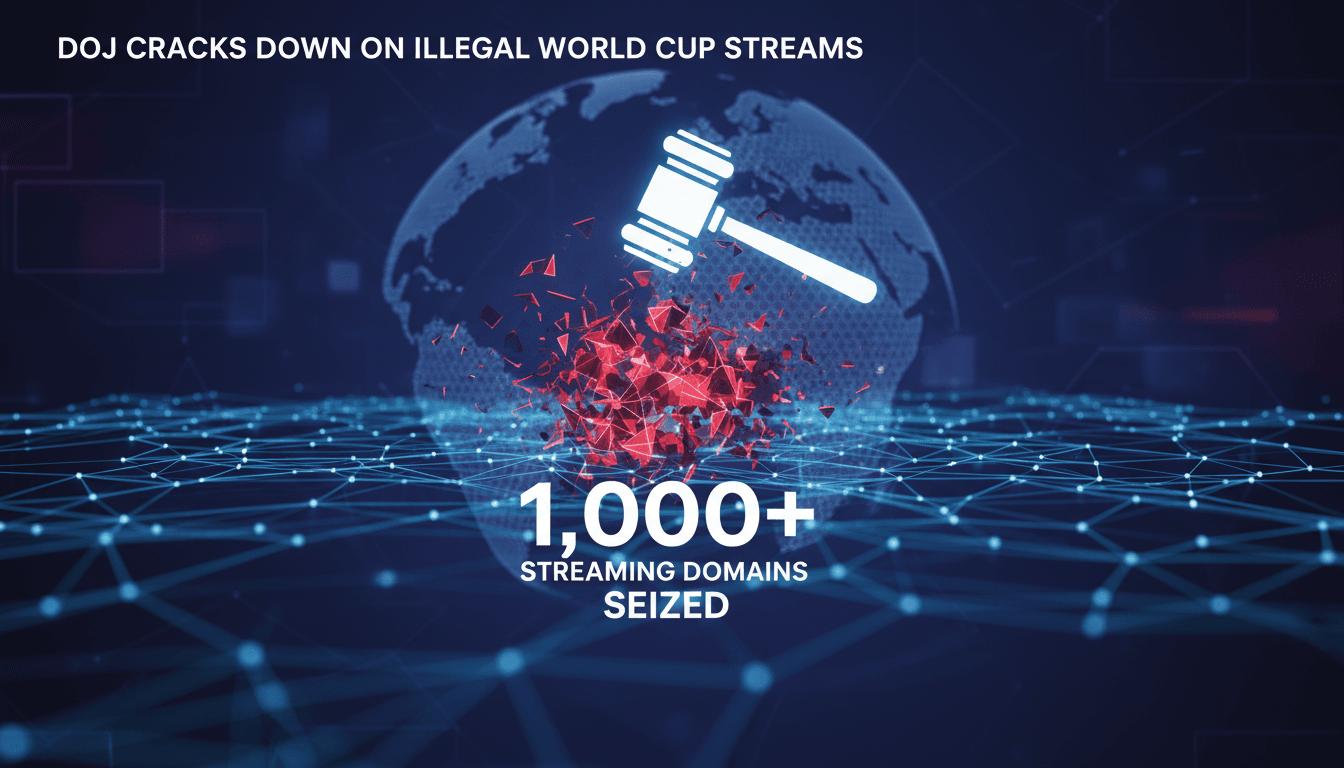
DOJ seizes over 1,000 illegal streaming domains linked to World Cup broadcasts
Here's what it means for you.
The recent seizure of over 1,000 illegal streaming domains by the U.S. Department of Justice marks a significant step in the fight against online piracy. This action not only protects the rights of content creators but also reinforces the importance of adhering to copyright laws in the digital age. As enforcement efforts intensify, stakeholders in the streaming industry may need to adapt to a more regulated environment. The crackdown signals a growing commitment from authorities to safeguard intellectual property, particularly during high-profile events like the World Cup. This could lead to increased scrutiny of streaming services and their compliance with copyright regulations.
What happened
The U.S. Department of Justice has seized more than 1,000 websites that were illegally streaming World Cup matches without authorization. This operation was officially announced on July 21, 2026, following reports of illegal streaming activities during the tournament. The seized sites were found to be in violation of U.S. copyright law, highlighting the ongoing battle against online piracy.
This enforcement action is part of a broader initiative aimed at combating illegal streaming, particularly during major sporting events. A similar number of illegal streaming sites were also blocked in Colombia, indicating a coordinated effort to address this issue on an international scale.
The Context
The seizure of these domains underscores the increasing importance of copyright enforcement in the digital landscape. As digital streaming continues to grow, the potential for piracy rises, prompting authorities to take decisive action. The DOJ's efforts reflect a commitment to protecting the rights of content creators and ensuring that intellectual property laws are upheld.
This crackdown comes at a time when the demand for live sports content is at an all-time high, making it a prime target for illegal streaming operations. By targeting these sites, the DOJ aims to deter future violations and promote legal consumption of content.
Takeaway
Looking ahead, the DOJ's actions may pave the way for further enforcement measures against illegal streaming sites. As authorities ramp up their efforts, stakeholders in the streaming industry should prepare for potential impacts on service availability and compliance requirements. The focus on protecting copyright laws is likely to remain a priority, especially during significant sporting events.
The implications of these seizures could extend beyond immediate enforcement actions, influencing how content is distributed and consumed in the future. As the digital landscape evolves, ongoing vigilance against piracy will be essential for maintaining a fair and legal streaming environment.
Conservative-leaning political and national coverage.
"The Washington Times is a conservative-leaning newspaper known for its political coverage and advocacy of right-of-center viewpoints."
— A47 Editor
DOJ seizes over 1,000 internet domains that illegally streamed World Cup games
The U.S. Department of Justice has seized over 1,000 internet domains that were used to illegally stream matches from the recently concluded World Cup, highlighting ongoing efforts to combat online piracy. This action follows a previous seizure of ne...
Capitol Hill news, legislation, and policy insight.
"The Hill specializes in U.S. politics and policy, with a focus on Capitol Hill developments and a reputation for insider reporting."
— A47 Editor
1K internet domains were used to illegally stream World Cup matches
The U.S. Department of Justice reported that approximately 1,000 internet domains were utilized for the illegal streaming of World Cup matches, violating copyright laws. This crackdown highlights ongoing efforts to combat online piracy during signifi...
Corporate news, economic trends, and markets with UK and global scope.
"BBC News is widely regarded as reputable and impartial, with a public service mandate."
— A47 Editor
Thousands of websites taken down for illegal World Cup streams
More than 1,000 illegal streaming websites were shut down in the United States during the World Cup, with a similar number blocked in Colombia, highlighting ongoing efforts to combat copyright infringement in sports broadcasting.