
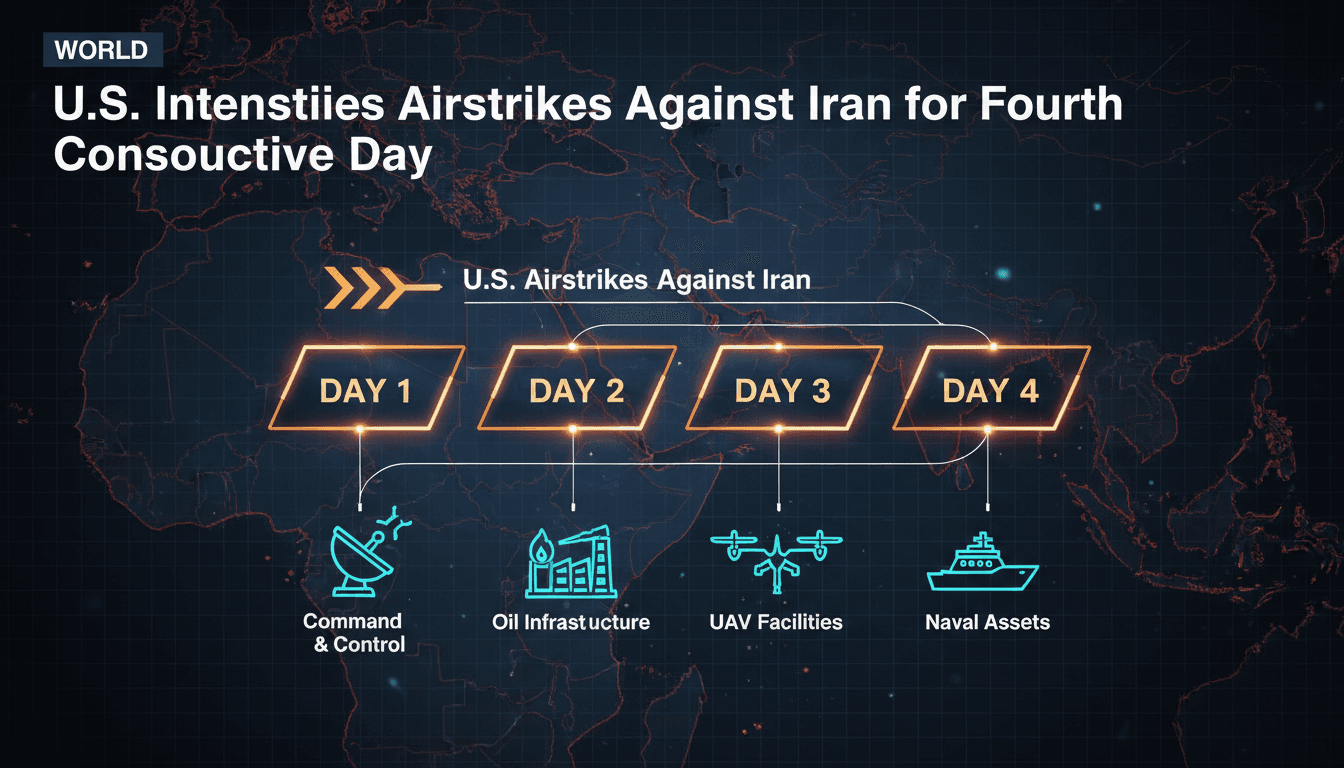
U.S. Intensifies Airstrikes Against Iran for Fourth Consecutive Day
Here's what it means for you.
The U.S. military's ongoing airstrikes against Iran signal a significant escalation in hostilities, which could have far-reaching implications for regional stability and international relations. As tensions rise, stakeholders in the Middle East and beyond will be closely monitoring the situation for potential shifts in military strategy and diplomatic responses. This development may also impact global markets, particularly in sectors sensitive to geopolitical risks.
What happened
The U.S. military has conducted airstrikes on Iranian military targets for the fourth consecutive day. These operations are focused on neutralizing perceived threats from Iran, utilizing precision munitions against coastal defense systems and cruise missile sites. The sustained military engagement underscores a broader strategy amid rising tensions and discussions of an expanded military campaign under the Trump administration.
The airstrikes began on July 14, 2026, and have continued unabated, marking a significant escalation in U.S.-Iran relations. The military actions reflect a calculated response to what the U.S. perceives as emerging threats from Iranian military capabilities.
The Context
The backdrop to these airstrikes involves a complex web of geopolitical tensions in the region. The U.S. has been increasingly concerned about Iran's military advancements and its potential to disrupt stability in the Middle East. The ongoing military actions coincide with discussions within the Trump administration regarding a more extensive military campaign, raising the stakes for all involved parties.
As the U.S. intensifies its military operations, the potential for broader conflict looms large. Observers are particularly focused on how Iran might respond to these provocations, which could further escalate tensions and impact regional dynamics.
Takeaway
The ongoing military actions suggest a potential escalation in U.S.-Iran tensions, with implications for future military involvement. Analysts will be watching closely for any responses from Iran, which could shape the next phase of this conflict. Additionally, developments in U.S. military strategy in the region will be critical to understanding the trajectory of these hostilities.
As the situation evolves, the international community will be keenly aware of the potential consequences for regional stability and global markets. The coming days will be pivotal in determining the future of U.S.-Iran relations.
Macro commentary, policy analysis, growth/inflation themes, and global outlooks.
"Contextual macro coverage that complements day-to-day market headlines."
— A47 Editor
U.S. launches fifth night of Iran strikes as Trump vows campaign will continue
The United States has launched its fifth consecutive night of airstrikes against Iran, intensifying military actions in response to escalating tensions in the Strait of Hormuz, where Iranian forces have been implicated in missile attacks on commercia...
Business and tech news excluding paywalled content.
"High-volume business/tech outlet with frequent AI coverage."
— A47 Editor
The US military is striking Iran day and night in this new round of fighting
The US military has intensified its military operations against Iran, conducting airstrikes targeting coastal defense systems and cruise missile sites. This escalation marks a significant increase in hostilities, with US forces reportedly striking da...
Capitol Hill news, legislation, and policy insight.
"The Hill specializes in U.S. politics and policy, with a focus on Capitol Hill developments and a reputation for insider reporting."
— A47 Editor
US military strikes Iran for fourth straight day, targeting 'emerging threats’
The U.S. military has conducted airstrikes against Iran for the fourth consecutive day, targeting what officials describe as 'emerging threats' from Tehran. This escalation follows a series of Iranian attacks on commercial vessels in the strategicall...