
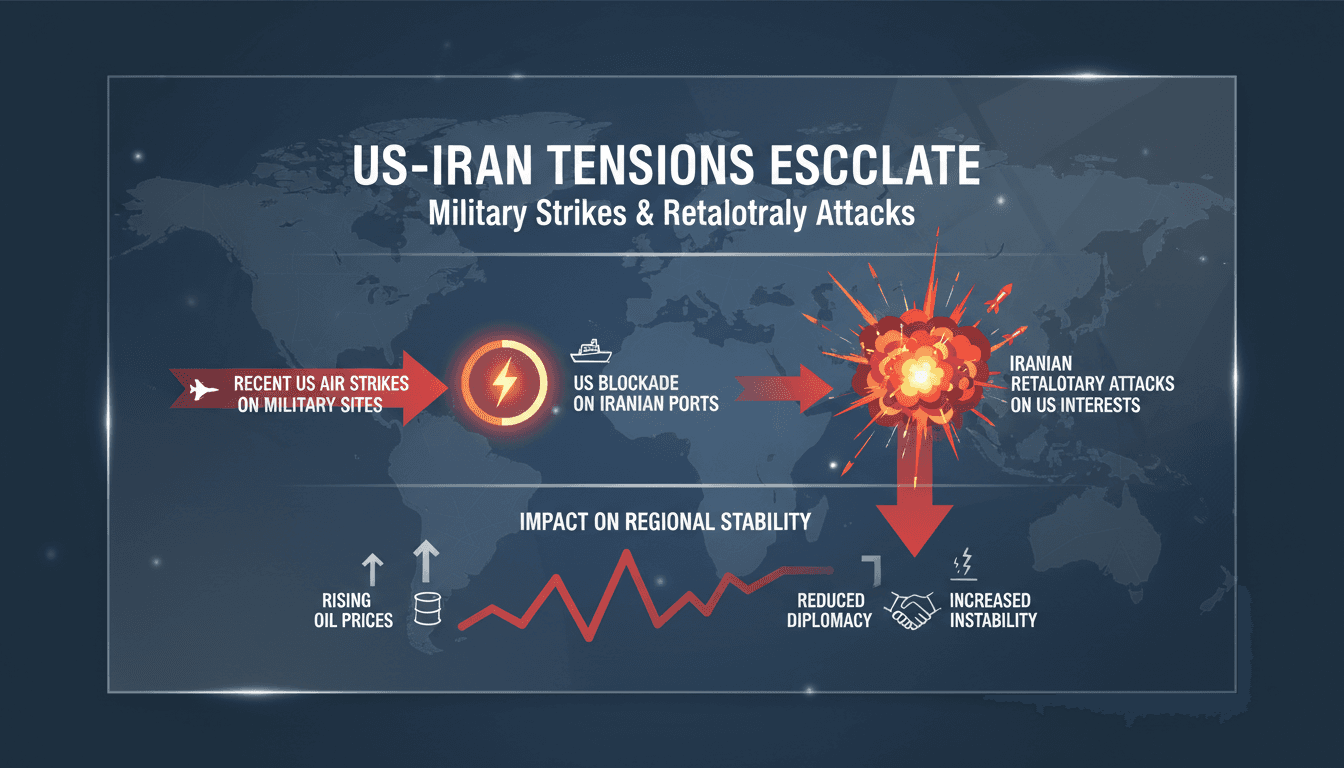
US-Iran tensions escalate with military strikes and retaliatory attacks
Here's what it means for you.
The recent escalation in US-Iran tensions signals a precarious situation for regional stability and international markets. As military actions intensify, stakeholders must prepare for potential disruptions in oil supply and heightened geopolitical risks. The renewed blockade on Iranian ports could further strain relations and impact global oil prices, making it essential for businesses and policymakers to monitor developments closely. The conflict's implications extend beyond the immediate parties involved, as neighboring countries may also feel the repercussions. Increased military activity in the Gulf region raises concerns about broader military engagement, which could have lasting effects on international relations and economic stability.
What happened
Tensions between the US and Iran have escalated following a series of military strikes. The US conducted air strikes on Iranian military sites, prompting Iran to launch retaliatory attacks targeting US interests in the Gulf. This exchange of military actions has raised alarms about the potential for further conflict in the region.
In response to the ongoing conflict, Bahrain's interior ministry has issued shelter warnings to its residents, highlighting the immediate impact of the situation on civilian safety. The escalation has led to increased military activity, further heightening tensions in an already volatile area.
The Context
The backdrop to this conflict includes the US's renewed blockade on Iranian ports amid rising oil prices, which has exacerbated existing tensions. The involvement of two countries— the US and Iran— underscores the regional implications of this confrontation, as both nations adopt aggressive postures.
The timing of these events is critical, as they coincide with a period of heightened military readiness and geopolitical maneuvering in the Gulf. The situation not only affects the direct participants but also poses risks to neighboring countries and global markets, making it a focal point for international observers.
Takeaway
As military actions continue, the potential for diplomatic resolutions appears increasingly remote. Stakeholders should closely monitor developments in US military strategy in the Gulf region, as well as responses from other Middle Eastern nations regarding the conflict. The ongoing military actions suggest a likelihood of further escalation in US-Iran relations, which could have significant implications for regional stability.
The situation warrants attention as it unfolds, with the possibility of broader military engagement looming. Observers should remain vigilant to assess how these developments may influence global oil markets and international diplomatic efforts.
Global news coverage with extensive reporting on Middle Eastern conflicts and geopolitics.
"Al Jazeera is a Qatar-based broadcaster known for wide regional coverage and alternative perspectives."
— A47 Editor
US attacks Iran as IRGC claims strikes on US military sites in Gulf
The United States has intensified its military actions against Iran, conducting a series of airstrikes and reimposing a blockade on Iranian ports, which has led to rising oil prices. This escalation follows Iran's Islamic Revolutionary Guard Corps (I...
UAE-based English-language newspaper covering regional politics, economics, and global affairs.
"The National reflects Emirati policy perspectives while maintaining international editorial standards."
— A47 Editor
Iran launches attacks across region, Qatar mourns former emir and EU debates West Bank trade
Iran has launched a series of military attacks across the region, escalating tensions with Gulf states amid ongoing hostilities with the United States. This comes as Qatar mourns the death of its former Emir, Sheikh Hamad bin Khalifa Al Thani, who pl...
International coverage from The Guardian's global desks.
"The Guardian is known for its progressive editorial stance and in-depth analysis."
— A47 Editor
Iran launches retaliatory attacks after fresh US strikes – as it happened
Iran has launched retaliatory missile and drone attacks targeting US interests in the Gulf, following a series of US airstrikes against Iranian positions. This escalation has prompted Bahrain's interior ministry to advise residents to take shelter as...