
Equinor Reports $11.5 Billion Profit Surge Amid Middle East Conflict
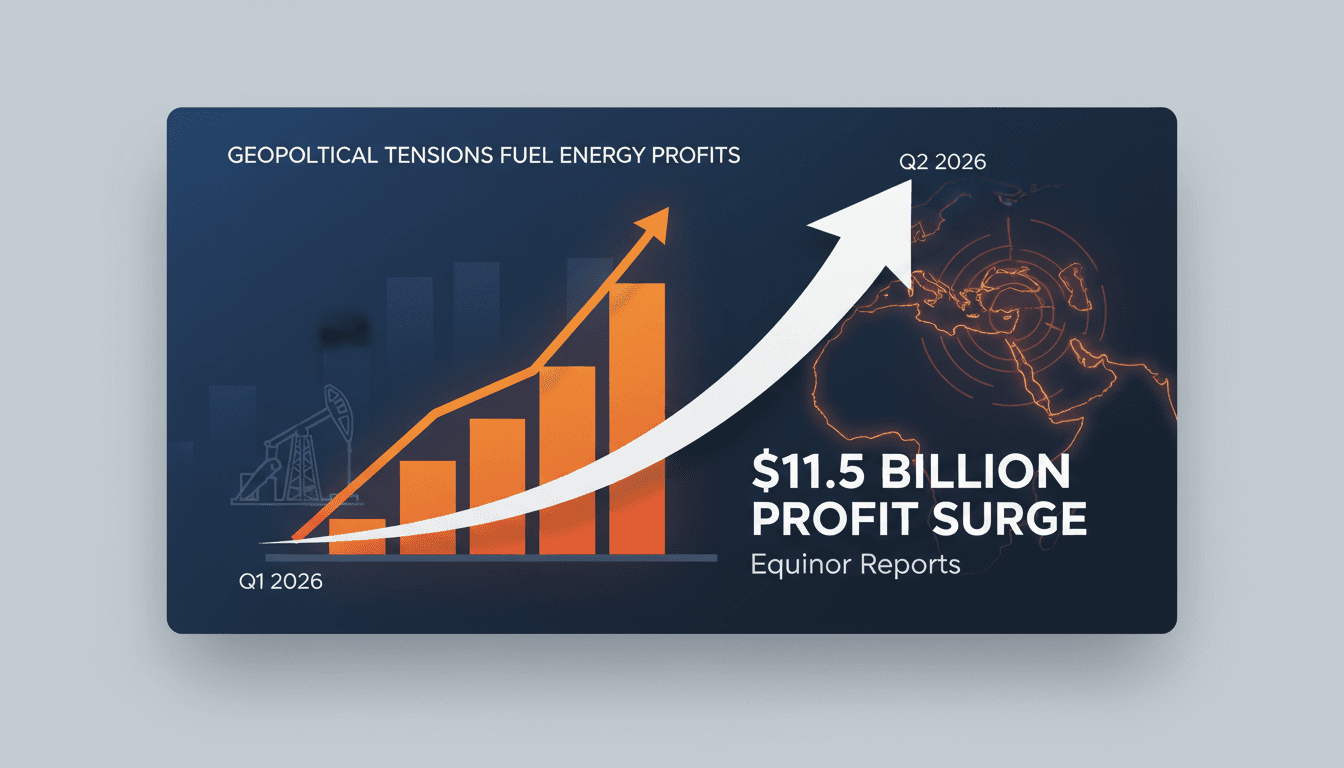
Here's what it means for you.
Equinor's remarkable profit increase signals a significant shift in the energy market, driven by geopolitical tensions. As the company capitalizes on rising oil and gas prices, stakeholders should prepare for potential market volatility. This financial performance may influence investment strategies and energy policies moving forward.
What happened
Equinor, Norway's state oil company, reported a staggering profit of $11.5 billion in the second quarter of 2026. This nearly doubled profit is attributed to soaring energy prices linked to the ongoing conflict in the Middle East, particularly the war against Iran. The company strategically increased its production to fill market gaps caused by disruptions in oil shipping through the Strait of Hormuz.
The significant rise in profits underscores the impact of geopolitical events on energy markets. Equinor's decision to ramp up production at the onset of the conflict has positioned it favorably amidst rising prices. This financial performance not only reflects the company's operational agility but also highlights the broader implications for global energy supply.
The Context
Equinor stands as the UK's largest gas supplier, making its financial health crucial for energy stability in the region. The ongoing conflict in the Middle East has led to substantial disruptions in oil supply, particularly affecting Gulf oil flows due to blockades in the Strait of Hormuz. As these geopolitical tensions persist, companies like Equinor are positioned to benefit from the resulting volatility in energy prices.
The company's proactive approach to increasing production at the start of the conflict has allowed it to capitalize on the rising demand for oil and gas. This strategic move not only enhances Equinor's market position but also reflects the interconnectedness of global energy markets. As the situation evolves, the implications for energy supply and pricing will be closely monitored by industry stakeholders.
Takeaway
Equinor's strong financial performance may lead to further investments and buybacks as it seeks to capitalize on high energy prices. Stakeholders should keep an eye on developments in the Middle East, as these events will likely continue to influence oil prices and market dynamics. Additionally, Equinor's future production strategies and financial announcements will be critical in assessing its long-term impact on the energy sector.
As geopolitical tensions remain a factor, Equinor is poised to leverage its production capabilities to maximize profits in a fluctuating market. The company's ability to adapt to these challenges will be essential for maintaining its competitive edge in the global energy landscape.
News and current affairs from across Europe.
"The Guardian is known for its progressive editorial stance and in-depth analysis."
— A47 Editor
Norway’s national oil company’s profits double to $11.5bn amid war on Iran
Norway's state oil company, Equinor, reported a significant increase in profits, nearly doubling to $11.5 billion in the second quarter of 2026, largely due to rising oil and gas prices amid the ongoing conflict in Iran. The company's decision to ram...
Pan-Arab news coverage spanning politics, business, sports, and regional affairs.
"Asharq Al-Awsat reflects a broad Arab editorial perspective with strong attention to regional geopolitics."
— A47 Editor
ارتفاع أرباح «إكوينور» النرويجية خلال الربع الثاني
Norwegian energy company Equinor announced a rise in its profits during the second quarter, attributed to the increase in oil and gas prices. This financial performance reflects the company's ability to capitalize on favorable market conditions.
UK and international business news, economics, and corporate coverage.
"The Guardian’s business section covers finance and markets with a progressive editorial tone."
— A47 Editor
Norway’s national oil company profits double to $11.5bn amid war on Iran
Norway's state oil company, Equinor, reported a significant profit increase to $11.5 billion in the second quarter of 2026, driven by rising oil and gas prices amid the ongoing conflict in Iran, which has disrupted shipping through the strait of Horm...
U.S. business news, corporate developments, and economy.
"The Wall Street Journal is respected for deep financial and economic reporting with a center-right editorial perspective."
— A47 Editor
Equinor Hikes Buyback as Earnings Jump on Higher Energy Prices
Equinor has announced a significant increase in its share buyback program following a more than 75% surge in adjusted operating income for the second quarter, driven by rising oil and gas prices amid ongoing conflicts in the Middle East.