
India Increases LPG Production in Response to Strait of Hormuz Disruptions
Why it matters
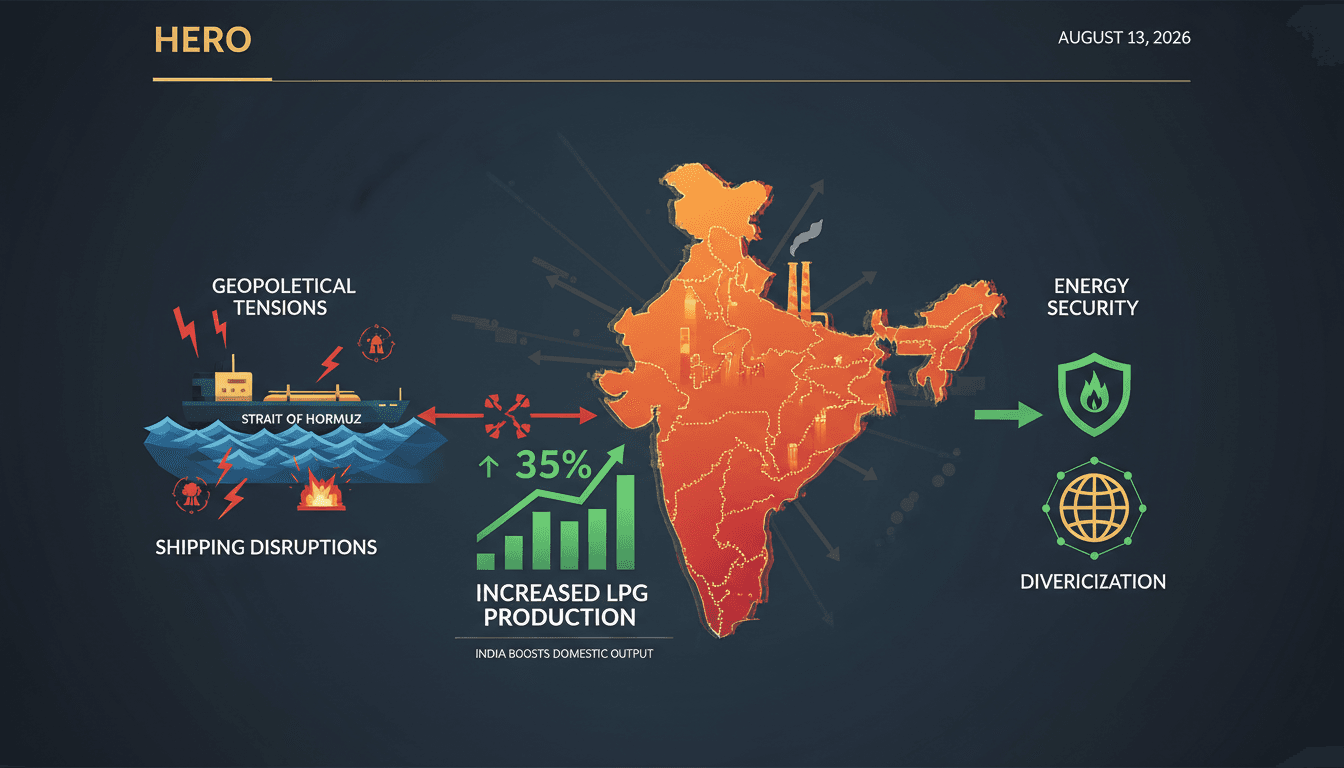
India's directive to increase LPG production is a strategic move to enhance energy security amid geopolitical tensions affecting global supply chains.
What happened (in 30 seconds)
- On August 13, 2026, the Indian government directed refiners to maximize LPG output due to disruptions in the Strait of Hormuz.
- Current production has risen to 54,000 tons per day, up from 36,000 tons pre-conflict, with a target of 63,810 tons per day.
- India is diversifying its LPG supply sources, securing additional volumes from the United States and Algeria.
The context you actually need
- The Strait of Hormuz is a critical chokepoint for global energy trade, handling about 90% of India's LPG imports.
- Ongoing conflicts involving Iran have created uncertainties in shipping routes, prompting India to seek local production boosts.
- India imports roughly two-thirds of its LPG consumption, making it vulnerable to international supply disruptions.
What's really happening
The Indian government's directive to maximize LPG production is a calculated response to the escalating tensions in the Middle East, particularly the US-Israel-Iran conflict that began in early 2026. This conflict has led to significant disruptions in the Strait of Hormuz, a vital shipping route for energy supplies, including LPG. With approximately 90% of India's LPG imports passing through this chokepoint, the Indian government recognized the urgent need to bolster domestic production to mitigate risks associated with potential supply shortages.
As a result, the Indian Ministry of Petroleum and Natural Gas has mandated state-owned oil companies and private refineries to implement all technically and economically feasible measures to increase LPG output. This includes converting alternative feedstocks, such as naphtha, into LPG. The immediate impact has been a rapid increase in production levels, which have surged from 36,000 tons per day before the conflict to 54,000 tons per day currently. The government has set an explicit target of 63,810 tons per day to ensure sufficient supply during peak demand periods.
In addition to ramping up domestic production, Indian refiners are also diversifying their import sources. They are securing additional LPG volumes from the United States and new suppliers like Algeria, reducing reliance on the volatile Hormuz route. This diversification strategy not only enhances energy security but also positions India to better navigate future geopolitical uncertainties.
The broader implications of this directive extend beyond immediate supply concerns. The Indian government's proactive measures signal a shift in energy policy, emphasizing self-sufficiency and resilience in the face of global disruptions. As refiners adjust their operations to meet the higher production targets, the market is likely to experience shifts in pricing and availability, particularly as regional governments and energy markets monitor developments closely.
Who feels it first (and how)
- Household consumers: Increased domestic LPG production may stabilize supply but could lead to price fluctuations.
- Refinery operators: They will need to adapt operations to meet new production targets and diversify supply chains.
- Energy markets: Regional energy prices may rise due to heightened market volatility linked to Hormuz shipping routes.
What to watch next
- Production targets: Monitor if Indian refiners meet the 63,810 tons per day target and how this affects domestic supply.
- Import diversification: Watch for developments in new supply agreements with the US and Algeria, which could reshape India's energy landscape.
- Regional price trends: Keep an eye on LPG prices in India and neighboring markets, as fluctuations may indicate broader market impacts.
India has increased LPG production from 36,000 tons to 54,000 tons per day.
Continued diversification of LPG supply sources will reduce reliance on the Strait of Hormuz.
The long-term impact on LPG prices and availability in India remains uncertain as geopolitical tensions evolve.
Frequently Asked Questions
- Why it matters?
- India's directive to increase LPG production is a strategic move to enhance energy security amid geopolitical tensions affecting global supply chains.
- What happened (in 30 seconds)?
- On August 13, 2026, the Indian government directed refiners to maximize LPG output due to disruptions in the Strait of Hormuz. Current production has risen to 54,000 tons per day, up from 36,000 tons pre-conflict, with a target of 63,810 tons per day. India is diversifying its LPG supply sources, securing additional volumes from the United States and Algeria.
- What's really happening?
- The Indian government's directive to maximize LPG production is a calculated response to the escalating tensions in the Middle East, particularly the US-Israel-Iran conflict that began in early 2026. This conflict has led to significant disruptions in the Strait of Hormuz, a vital shipping route for energy supplies, including LPG. With approximately 90% of India's LPG imports passing through this chokepoint, the Indian government recognized the urgent need to bolster domestic production to mitig
- Who feels it first (and how)?
- Household consumers: Increased domestic LPG production may stabilize supply but could lead to price fluctuations. Refinery operators: They will need to adapt operations to meet new production targets and diversify supply chains. Energy markets: Regional energy prices may rise due to heightened market volatility linked to Hormuz shipping routes.
- What to watch next?
- Production targets: Monitor if Indian refiners meet the 63,810 tons per day target and how this affects domestic supply. Import diversification: Watch for developments in new supply agreements with the US and Algeria, which could reshape India's energy landscape. Regional price trends: Keep an eye on LPG prices in India and neighboring markets, as fluctuations may indicate broader market impacts.
Sports reporting with a focus on Saudi and regional competitions.
"Okaz sports coverage is broad and audience-friendly, with strong attention to Saudi teams and leagues."
— A47 Editor
الهند ترفع إنتاج غاز الطهي تحسباً لاضطرابات هرمز
India is preparing to increase its domestic production of liquefied petroleum gas (LPG) amid ongoing tensions with Iran and uncertainty regarding shipping routes through the Strait of Hormuz, which accounts for approximately 90% of the country's LPG ...
Pan-Arab news coverage spanning politics, business, sports, and regional affairs.
"Asharq Al-Awsat reflects a broad Arab editorial perspective with strong attention to regional geopolitics."
— A47 Editor
الهند تستعد لزيادة كبيرة في إنتاج الغاز مع استمرار حرب إيران
India has issued directives to its state-owned companies and private refineries to prepare for a significant increase in cooking gas production, amid the ongoing conflict in Iran. This move aims to bolster local supplies in response to the geopolitic...
Global markets, investing, and macroeconomics from a premier financial newsroom.
"Bloomberg is respected for in-depth financial reporting and data-driven analysis."
— A47 Editor
India Readies Big LPG Output Boost as Hormuz Uncertainty Lingers
India has instructed its state-owned companies and private refiners to prepare for a significant increase in liquefied petroleum gas (LPG) production, aiming to enhance domestic supplies amid ongoing uncertainties related to the Iran conflict and its...