
US Energy Official Confirms Half of Venezuela's Oil Production is Exported to the US
Why it matters
This development signals a significant shift in global oil supply chains and trade relationships, impacting energy prices and availability.
What happened (in 30 seconds)
- US Under Secretary of Energy Kyle Haustveit announced that approximately half of Venezuela's oil production is now exported to the United States.
- Venezuelan PDVSA Vice President Jovanny Martinez confirmed that exports have risen by 19.7% year-to-date, with production targets set at 1.245 million barrels per day.
- New production-sharing agreements have been signed with US firms, indicating a deepening commercial relationship between the two nations.
The context you actually need
- US sanctions on Venezuelan oil were eased in early 2026 following the capture of former President Nicolás Maduro, allowing for increased trade.
- Venezuela's oil production had previously plummeted due to sanctions, but recent policy changes have led to a resurgence in output and exports.
- The US Gulf Coast refineries are specifically designed for heavy crude, making Venezuelan oil a strategic fit for American energy needs.
What's really happening
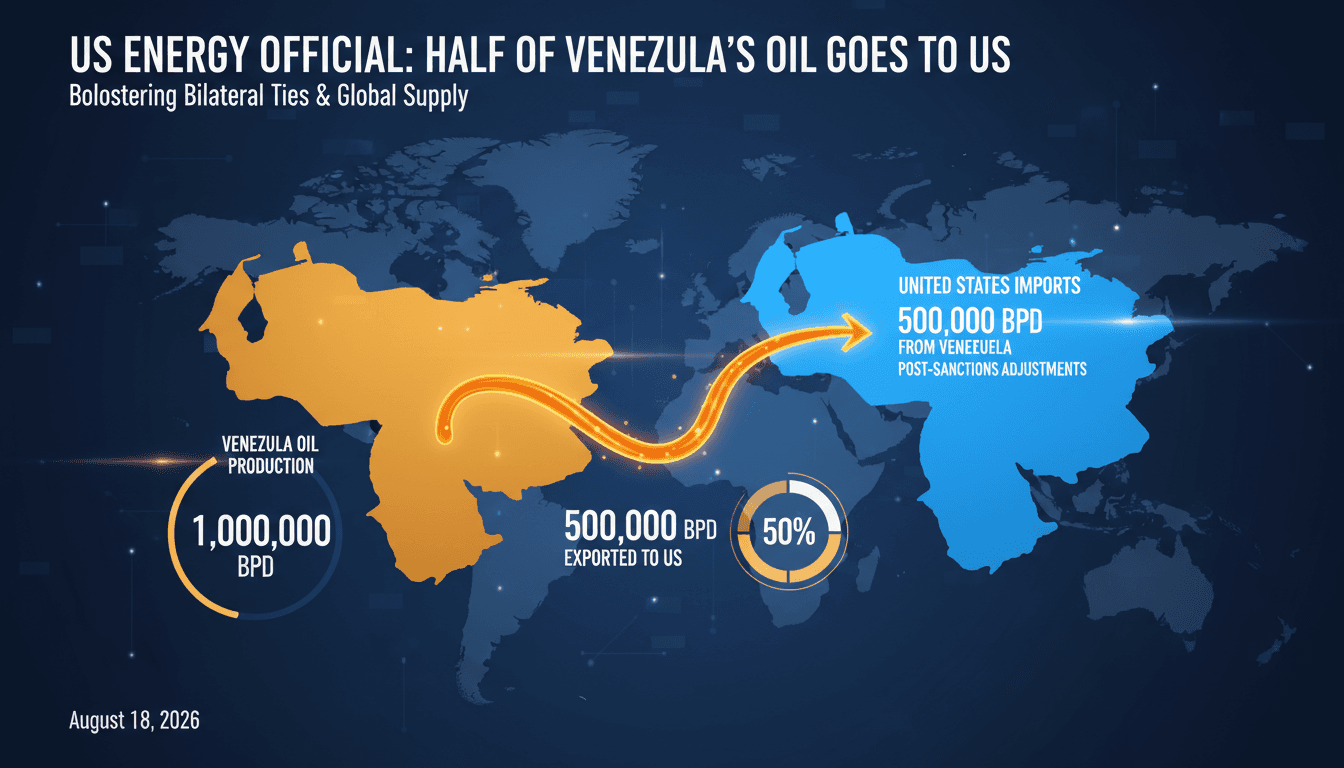
The recent announcement by US energy officials marks a pivotal moment in the evolving relationship between the United States and Venezuela, particularly in the oil sector. Following the easing of sanctions in early 2026, the US has become a primary destination for Venezuelan crude, with over 500,000 barrels per day now flowing to American refineries. This shift is not merely a response to geopolitical changes but also a strategic maneuver to stabilize global oil supplies amid ongoing disruptions.
The easing of sanctions was a calculated decision by the Trump administration, aimed at increasing global oil supply while maintaining oversight of Venezuelan oil transactions. This policy change has allowed US companies to engage in oil purchases and exports with PDVSA, Venezuela's state-owned oil company, under specific conditions. The arrangement is designed to ensure that payments are routed to controlled accounts, thereby minimizing risks associated with financial transactions.
As a result, Venezuelan oil production has rebounded from its previous lows, with production targets set at approximately 1.245 million barrels per day by the end of August 2026. This resurgence is further supported by new production-sharing agreements with US firms like Hunt Oil and SLB, which are expected to enhance operational efficiencies and output levels.
The implications of this trade relationship extend beyond mere numbers. For the US, securing a reliable source of heavy crude is essential for maintaining refinery operations and stabilizing domestic fuel prices. For Venezuela, increased exports mean a potential boost in domestic fuel production and consumption, which could help alleviate some of the economic pressures faced by the country.
However, this relationship is not without its complexities. The US must navigate the geopolitical landscape carefully, balancing its energy needs with the broader implications of engaging with a nation that has faced significant international scrutiny. The ongoing trade relationship will likely be monitored closely, with both countries keen to ensure compliance with the terms of their agreements.
Who feels it first (and how)
- Energy companies: US firms involved in oil extraction and refining will see direct benefits from increased Venezuelan crude supplies.
- Consumers: Fluctuations in oil prices may affect fuel costs for consumers, particularly in regions reliant on heavy crude.
- Venezuelan citizens: Increased oil exports could lead to improved domestic fuel availability and economic conditions, albeit slowly.
What to watch next
- Production levels: Monitor Venezuela's oil production targets and actual output to gauge the sustainability of this export trend.
- US policy changes: Watch for any shifts in US sanctions or trade policies that could impact the flow of Venezuelan oil.
- Global oil prices: Keep an eye on how this increased supply affects global oil prices, particularly in relation to other geopolitical events.
Venezuela is exporting approximately 500,000 barrels per day to the US.
Continued growth in Venezuelan oil exports as production-sharing agreements take effect.
The long-term stability of this trade relationship amid potential geopolitical tensions.
Frequently Asked Questions
- Why it matters?
- This development signals a significant shift in global oil supply chains and trade relationships, impacting energy prices and availability.
- What happened (in 30 seconds)?
- US Under Secretary of Energy Kyle Haustveit announced that approximately half of Venezuela's oil production is now exported to the United States. Venezuelan PDVSA Vice President Jovanny Martinez confirmed that exports have risen by 19.7% year-to-date, with production targets set at 1.245 million barrels per day. New production-sharing agreements have been signed with US firms, indicating a deepening commercial relationship between the two nations.
- What's really happening?
- The recent announcement by US energy officials marks a pivotal moment in the evolving relationship between the United States and Venezuela, particularly in the oil sector. Following the easing of sanctions in early 2026, the US has become a primary destination for Venezuelan crude, with over 500,000 barrels per day now flowing to American refineries. This shift is not merely a response to geopolitical changes but also a strategic maneuver to stabilize global oil supplies amid ongoing disruptions
- Who feels it first (and how)?
- Energy companies: US firms involved in oil extraction and refining will see direct benefits from increased Venezuelan crude supplies. Consumers: Fluctuations in oil prices may affect fuel costs for consumers, particularly in regions reliant on heavy crude. Venezuelan citizens: Increased oil exports could lead to improved domestic fuel availability and economic conditions, albeit slowly.
- What to watch next?
- Production levels: Monitor Venezuela's oil production targets and actual output to gauge the sustainability of this export trend. US policy changes: Watch for any shifts in US sanctions or trade policies that could impact the flow of Venezuelan oil. Global oil prices: Keep an eye on how this increased supply affects global oil prices, particularly in relation to other geopolitical events.
Pan-Arab news coverage spanning politics, business, sports, and regional affairs.
"Asharq Al-Awsat reflects a broad Arab editorial perspective with strong attention to regional geopolitics."
— A47 Editor
مسؤول أميركي: نصف إنتاج النفط الفنزويلي يُصدّر إلى الولايات المتحدة
Kyle Howstvet, the U.S. Deputy Secretary of Energy, announced that approximately half of Venezuela's oil production is currently being exported to the United States. This marks a significant development in the energy trade between the two countries, ...
Global news coverage with extensive reporting on Middle Eastern conflicts and geopolitics.
"Al Jazeera is a Qatar-based broadcaster known for wide regional coverage and alternative perspectives."
— A47 Editor
US refineries taking in half of Venezuela’s oil output, official says
A U.S. official has reported that Venezuela is currently supplying 500,000 barrels of oil per day to Gulf Coast refineries, which constitutes approximately 40% of its total output of 1.25 million barrels daily. This development highlights the ongoing...
Comprehensive coverage of Middle Eastern and global issues.
"Al Jazeera is a prominent voice from the Global South, especially the Middle East, with an emphasis on underreported stories."
— A47 Editor
US refineries taking in half of Venezuela’s oil output, official says
A U.S. official has reported that Venezuela is currently supplying 500,000 barrels of oil per day to Gulf Coast refineries, which constitutes approximately 40% of its total output of 1.25 million barrels daily. This development highlights the ongoing...
Macro commentary, policy analysis, growth/inflation themes, and global outlooks.
"Contextual macro coverage that complements day-to-day market headlines."
— A47 Editor
Venezuela sends half its oil production to US refineries, Haustveit says
Venezuela is currently sending half of its oil production to U.S. refineries, as reported by Haustveit, highlighting a significant shift in the country's oil export strategy amidst ongoing economic challenges.