
UAE Expands Multi-Modal Logistics Network to Enhance Supply Chain Resilience
Here's what it means for you.
If you rely on global supply chains, the UAE's logistics advancements could enhance your operational efficiency and reduce costs.
Why it matters
The UAE's integrated logistics infrastructure is pivotal for maintaining supply chain resilience amid global disruptions.
What happened (in 30 seconds)
- The UAE expanded its multi-modal logistics network through coordinated developments in ports, rail, air freight, and free zones in 2026.
- Key players like Sharjah Ports and Etihad Rail are enhancing connectivity between maritime, land, air, and rail corridors.
- Record non-oil foreign trade reached Dh1.937 trillion in the first half of 2026, reflecting the initiative's impact on economic growth.
The context you actually need
- Geopolitical uncertainties have prompted the UAE to diversify trade routes beyond traditional chokepoints, enhancing supply chain resilience.
- Previous developments included contracts for Hafeet Rail and multimodal corridor planning by DP World to reduce reliance on single gateways.
- The UAE's logistics corridor with Oman Customs links key ports and facilitates smoother trade operations, bolstering regional trade dynamics.
What's really happening
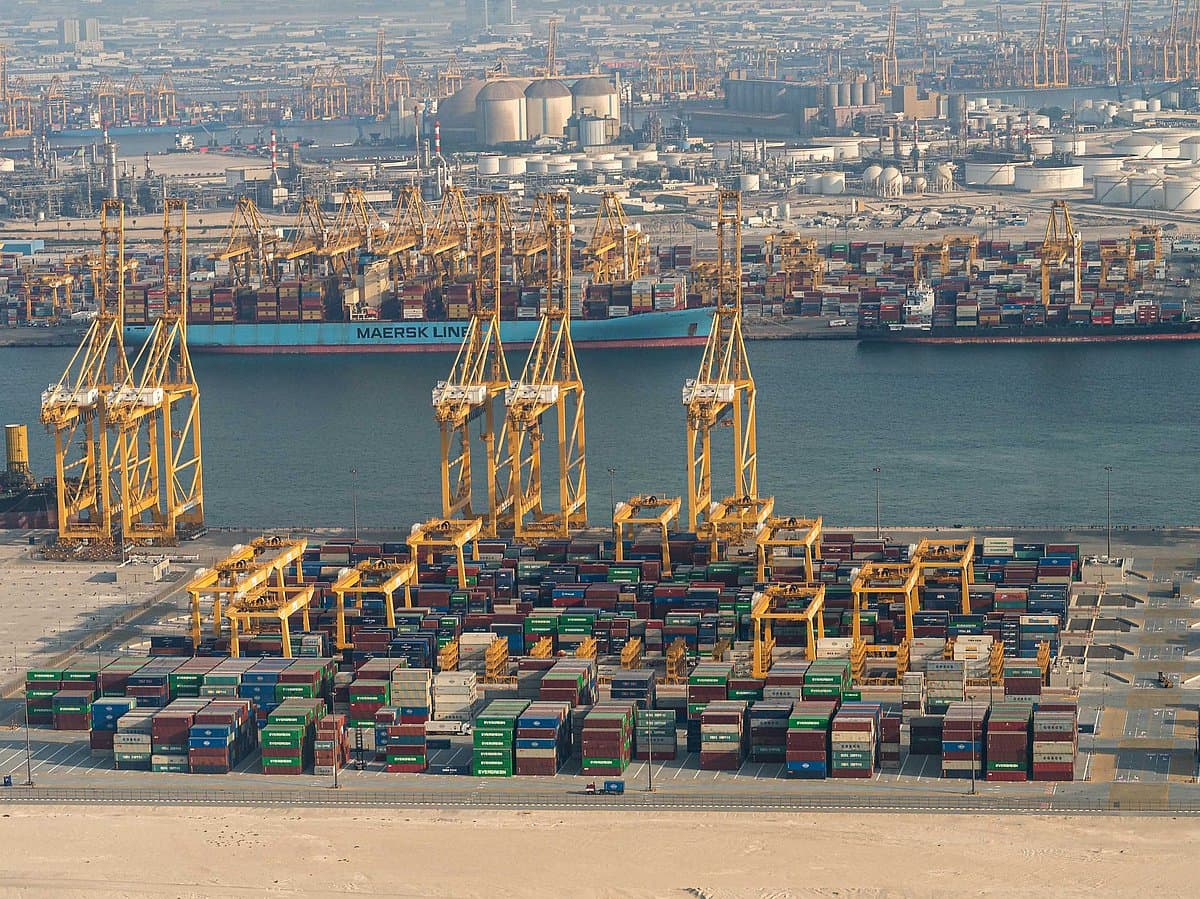
In 2026, the UAE's logistics landscape underwent a significant transformation, driven by a strategic initiative to integrate various modes of transport—maritime, rail, air, and land. This multi-modal logistics network is not just about improving infrastructure; it’s about creating a seamless flow of goods that enhances the UAE's position as a global trade hub.
The initiative is spearheaded by federal and emirate-level authorities, including Sharjah Ports, Etihad Rail, and DP World, among others. By establishing logistics corridors that connect key ports like Khorfakkan and Jebel Ali with air freight facilities at Al Maktoum International Airport, the UAE is effectively reducing transit times and costs for businesses. This integration allows for real-time rerouting and better adaptability to market demands, which is crucial in today’s volatile global supply chain environment.
The UAE's focus on enhancing its logistics capabilities comes in response to regional maritime disruptions and geopolitical uncertainties that have highlighted the vulnerabilities of traditional trade routes. By diversifying its logistics network, the UAE aims to mitigate risks associated with reliance on single gateways, thereby ensuring a more resilient supply chain. The establishment of green corridors with Oman and the expansion of land transport operator onboarding are examples of how the UAE is proactively addressing these challenges.
Moreover, the economic implications are significant. The record non-oil foreign trade of Dh1.937 trillion in the first half of 2026, alongside a 3% real GDP growth, underscores the effectiveness of this initiative. The UAE is not only enhancing its logistics infrastructure but also attracting multinational corporations, such as Novo Nordisk, to establish global distribution hubs within its borders. This influx of investment is expected to create jobs and stimulate further economic growth, reinforcing the UAE's role as a resilient global trade hub.
As the logistics network continues to expand, the UAE is poised to become a critical player in the global supply chain, offering businesses enhanced connectivity and reduced vulnerabilities. This shift is likely to have lasting effects on trade dynamics in the region and beyond.
Who feels it first (and how)
- Logistics companies: Increased operational efficiency and reduced costs.
- Manufacturers: Improved access to diversified trade routes and reduced supply chain vulnerabilities.
- Multinational corporations: Attraction to the UAE for establishing distribution hubs and operational bases.
- Local businesses: Enhanced connectivity leading to better market access and growth opportunities.
What to watch next
- Investment trends: Monitor the influx of multinational corporations establishing operations in the UAE, as this will indicate the effectiveness of the logistics expansion.
- Trade volume growth: Keep an eye on non-oil trade volumes to assess the impact of the new logistics corridors on economic performance.
- Infrastructure developments: Watch for updates on the completion of key projects like the East Midfield terminal and Al Falah Logistics Park, as these will further enhance capacity.
The UAE is expanding its multi-modal logistics network to enhance supply chain resilience.
Increased foreign investment and job creation in the logistics and manufacturing sectors.
The long-term impact of geopolitical factors on trade routes and logistics operations.
Frequently Asked Questions
- Why it matters?
- The UAE's integrated logistics infrastructure is pivotal for maintaining supply chain resilience amid global disruptions.
- What happened (in 30 seconds)?
- The UAE expanded its multi-modal logistics network through coordinated developments in ports, rail, air freight, and free zones in 2026. Key players like Sharjah Ports and Etihad Rail are enhancing connectivity between maritime, land, air, and rail corridors. Record non-oil foreign trade reached Dh1.937 trillion in the first half of 2026, reflecting the initiative's impact on economic growth.
- What's really happening?
- In 2026, the UAE's logistics landscape underwent a significant transformation, driven by a strategic initiative to integrate various modes of transport—maritime, rail, air, and land. This multi-modal logistics network is not just about improving infrastructure; it’s about creating a seamless flow of goods that enhances the UAE's position as a global trade hub. The initiative is spearheaded by federal and emirate-level authorities, including Sharjah Ports, Etihad Rail, and DP World, among other
- Who feels it first (and how)?
- Logistics companies: Increased operational efficiency and reduced costs. Manufacturers: Improved access to diversified trade routes and reduced supply chain vulnerabilities. Multinational corporations: Attraction to the UAE for establishing distribution hubs and operational bases. Local businesses: Enhanced connectivity leading to better market access and growth opportunities.
- What to watch next?
- Investment trends: Monitor the influx of multinational corporations establishing operations in the UAE, as this will indicate the effectiveness of the logistics expansion. Trade volume growth: Keep an eye on non-oil trade volumes to assess the impact of the new logistics corridors on economic performance. Infrastructure developments: Watch for updates on the completion of key projects like the East Midfield terminal and Al Falah Logistics Park, as these will further enhance capacity.
UAE-based newspaper covering Gulf politics, society, and international developments.
"Gulf News is one of the UAE’s most prominent English-language publications."
— A47 Editor
UAE expands multi-modal logistics network as global trade evolves
The United Arab Emirates (UAE) has announced an expansion of its multi-modal logistics network, aiming to enhance supply chain resilience as global trade dynamics evolve. This initiative includes significant investments in ports, rail, and air freigh...
A curated Gulf News feed featuring major stories across news, business, opinion, and lifestyle.
"Gulf News is a major UAE newspaper whose featured stories feed reflects a broad editorial mix shaped for a Gulf audience."
— A47 Editor
UAE expands multi-modal logistics network as global trade evolves
The United Arab Emirates (UAE) has announced an expansion of its multi-modal logistics network, aiming to enhance supply chain resilience as global trade dynamics evolve. This initiative includes significant investments in ports, rail, and air freigh...
Business and economy coverage focused on Dubai, the UAE, Saudi Arabia, and the wider Middle East.
"Arabian Business is a well-known regional business outlet with strong focus on Gulf markets, leadership, and investment stories."
— A47 Editor
UAE expands ports, rail and logistics network as non-oil foreign trade hits record $527bn
The UAE has announced an expansion of its ports, rail, air freight, and logistics network as non-oil foreign trade reached a record $527 billion in the first half of 2026. This growth reflects the country's strategic focus on diversifying its economy...
Business, markets, economy, and corporate news with strong UAE and regional relevance.
"Emirates 24|7 business coverage tends to center UAE markets, property, regulation, and regional economic developments."
— A47 Editor
UAE expands logistics network to boost supply chain resilience
The United Arab Emirates is set to expand its integrated supply chain infrastructure by 2026, enhancing its logistics network to include maritime, land, air, rail, and free zone operations. This transformation aims to shift the UAE from a traditional...