
FCC Approves Foreign Investment in Paramount Skydance-Warner Bros. Discovery Merger
Why it matters
This decision marks a significant shift in foreign investment regulations, potentially altering the landscape of U.S. media ownership.
What happened (in 30 seconds)
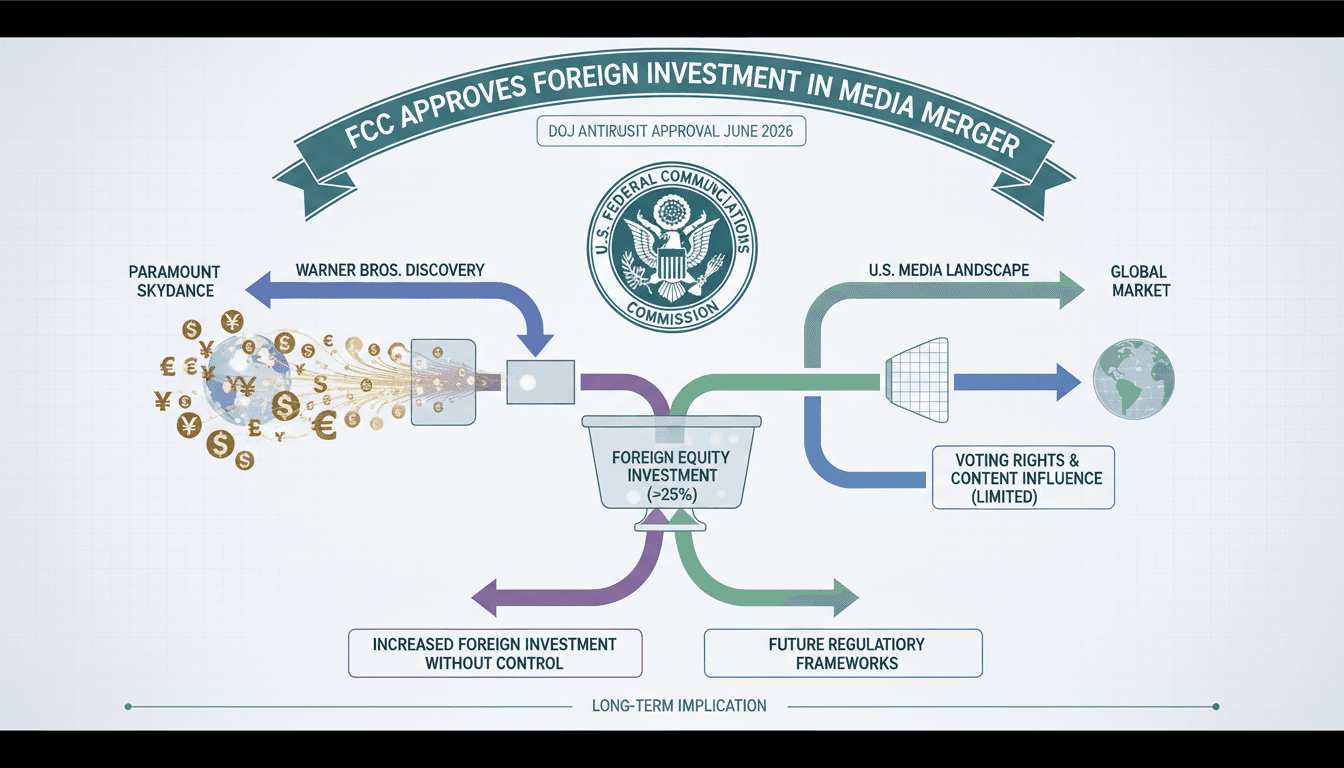
- On September 17, 2026, the FCC approved foreign equity investments exceeding 25% in the Paramount Skydance-Warner Bros. Discovery merger.
- Foreign investors, including Saudi Arabia's Public Investment Fund and Qatar Investment Authority, can now hold up to 49.5% in non-voting shares.
- Strict conditions prevent these investors from influencing content, management, or accessing U.S. citizen data.
The context you actually need
- The merger, valued at $111 billion, was initially agreed upon in February 2026 and cleared by the DOJ in June 2026 without remedies.
- Previous FCC rules limited foreign ownership to 25% without specific approval, raising national security concerns among lawmakers.
- The ruling allows substantial foreign investment while maintaining U.S. control over content and operations, reflecting a balancing act between capital influx and regulatory oversight.
What's really happening
The FCC's approval of foreign equity investments in the Paramount Skydance-Warner Bros. Discovery merger is a pivotal moment in the media landscape, driven by both economic incentives and regulatory frameworks. The merger itself, valued at $111 billion, is backed by significant non-voting equity from Middle Eastern sovereign wealth funds, totaling approximately $24 billion. This influx of capital is crucial for media companies looking to expand their reach and capabilities in an increasingly competitive global market.
The decision to allow foreign investors to hold up to 49.5% in non-voting shares reflects a strategic shift in U.S. policy towards foreign investment in critical sectors. By permitting this level of investment, the FCC aims to attract much-needed capital while simultaneously imposing strict conditions to mitigate concerns about foreign influence. These conditions include prohibitions on governance rights, access to non-public U.S. data, and any influence over content or operations. This regulatory framework is designed to ensure that while foreign capital can flow into the U.S. media sector, it does not compromise national interests or the integrity of American media.
The approval also highlights the growing importance of international partnerships in the media industry. For instance, the involvement of Abu Dhabi-based L’Imad Holding entities, which contribute 12.8% equity, illustrates how foreign investments can support local media ecosystems without direct operational control. This could lead to enhanced collaboration between U.S. media companies and foreign investors, fostering innovation and growth in content creation and distribution.
However, the ruling is not without controversy. Democratic senators have expressed ongoing concerns about potential foreign influence, despite the FCC's assurances. Advocacy groups like Free Press have opposed the ruling, citing risks associated with foreign sway over American media narratives. As the merger awaits resolution of ongoing antitrust litigation, set for trial in March 2027, the implications of this decision will continue to unfold, potentially reshaping the media landscape for years to come.
Who feels it first (and how)
- Media executives: They will need to navigate new investment dynamics and regulatory conditions.
- Content creators: Changes in funding sources may influence the types of projects that get greenlit.
- Investors: Opportunities for capital investment in U.S. media may increase, but with new limitations.
- Consumers: The nature of content available may shift as foreign investments influence production decisions.
What to watch next
- Antitrust litigation outcomes: The trial set for March 2027 will determine the merger's fate and could set precedents for future foreign investments.
- Market reactions: Watch how media stocks respond to this ruling and any subsequent developments in foreign investment regulations.
- Regulatory changes: Future FCC rulings could further redefine foreign ownership limits and conditions in the media sector.
The FCC has approved foreign equity investments up to 49.5% in the merger.
The merger will face scrutiny in ongoing antitrust litigation, impacting its final approval.
The long-term effects of foreign investment on U.S. media content and operations remain to be seen.
Frequently Asked Questions
- Why it matters?
- This decision marks a significant shift in foreign investment regulations, potentially altering the landscape of U.S. media ownership.
- What happened (in 30 seconds)?
- On September 17, 2026, the FCC approved foreign equity investments exceeding 25% in the Paramount Skydance-Warner Bros. Discovery merger. Foreign investors, including Saudi Arabia's Public Investment Fund and Qatar Investment Authority, can now hold up to 49.5% in non-voting shares. Strict conditions prevent these investors from influencing content, management, or accessing U.S. citizen data.
- What's really happening?
- The FCC's approval of foreign equity investments in the Paramount Skydance-Warner Bros. Discovery merger is a pivotal moment in the media landscape, driven by both economic incentives and regulatory frameworks. The merger itself, valued at $111 billion, is backed by significant non-voting equity from Middle Eastern sovereign wealth funds, totaling approximately $24 billion. This influx of capital is crucial for media companies looking to expand their reach and capabilities in an increasingly com
- Who feels it first (and how)?
- Media executives: They will need to navigate new investment dynamics and regulatory conditions. Content creators: Changes in funding sources may influence the types of projects that get greenlit. Investors: Opportunities for capital investment in U.S. media may increase, but with new limitations. Consumers: The nature of content available may shift as foreign investments influence production decisions.
- What to watch next?
- Antitrust litigation outcomes: The trial set for March 2027 will determine the merger's fate and could set precedents for future foreign investments. Market reactions: Watch how media stocks respond to this ruling and any subsequent developments in foreign investment regulations. Regulatory changes: Future FCC rulings could further redefine foreign ownership limits and conditions in the media sector.
Market-moving headlines impacting equities, bonds, and related risk assets.
"Real-time catalysts and volatility drivers across indices and sectors."
— A47 Editor
US FCC approves foreign investment in Paramount Warner merger
The US Federal Communications Commission (FCC) has approved foreign investment in Paramount's proposed merger with Warner, a significant step in the ongoing regulatory process surrounding the $110 billion acquisition. This approval is crucial as it a...
Hollywood, film, television, and awards coverage.
"The Los Angeles Times is a major West Coast newspaper offering in-depth reporting with a liberal editorial tone and strong regional focus."
— A47 Editor
FCC approves foreign owners for a merged Paramount-Warner Bros.
The Federal Communications Commission (FCC) has approved the merger of Paramount and Warner Bros. Discovery, allowing royal families from Saudi Arabia, Qatar, and Abu Dhabi to hold nearly 50% of the equity in the combined entity. This decision marks ...
U.S. national news with a West Coast perspective.
"The Los Angeles Times is a major West Coast newspaper offering in-depth reporting with a liberal editorial tone and strong regional focus."
— A47 Editor
FCC approves foreign owners for a merged Paramount-Warner Bros.
The Federal Communications Commission (FCC) has approved the merger of Paramount and Warner Bros. Discovery, allowing royal families from Saudi Arabia, Qatar, and Abu Dhabi to hold nearly 50% of the equity in the combined entity. This decision marks ...
International news with cultural insight.
"The Los Angeles Times is a major West Coast newspaper offering in-depth reporting with a liberal editorial tone and strong regional focus."
— A47 Editor
FCC approves foreign owners for a merged Paramount-Warner Bros.
The Federal Communications Commission (FCC) has approved the merger of Paramount and Warner Bros. Discovery, allowing royal families from Saudi Arabia, Qatar, and Abu Dhabi to hold nearly 50% of the equity in the combined entity. This decision marks ...
Hollywood business, film/TV deals, awards, and industry analysis.
"Variety is a leading entertainment trade publication covering Hollywood, film, TV, and media business."
— A47 Editor
FCC Approves 49.5% Foreign Ownership of Paramount-Warner Bros.
The Federal Communications Commission (FCC) has approved Paramount's petition to allow 49.5% of its equity to be held by foreign entities following the completion of the Warner Bros. Discovery merger. This decision is crucial as Paramount, which owns...