
Tata Sons Board Reappoints Chairman Amid Shareholder Opposition
Why it matters
This conflict highlights the tension between corporate governance and shareholder influence, affecting market stability and investor confidence.
What happened (in 30 seconds)
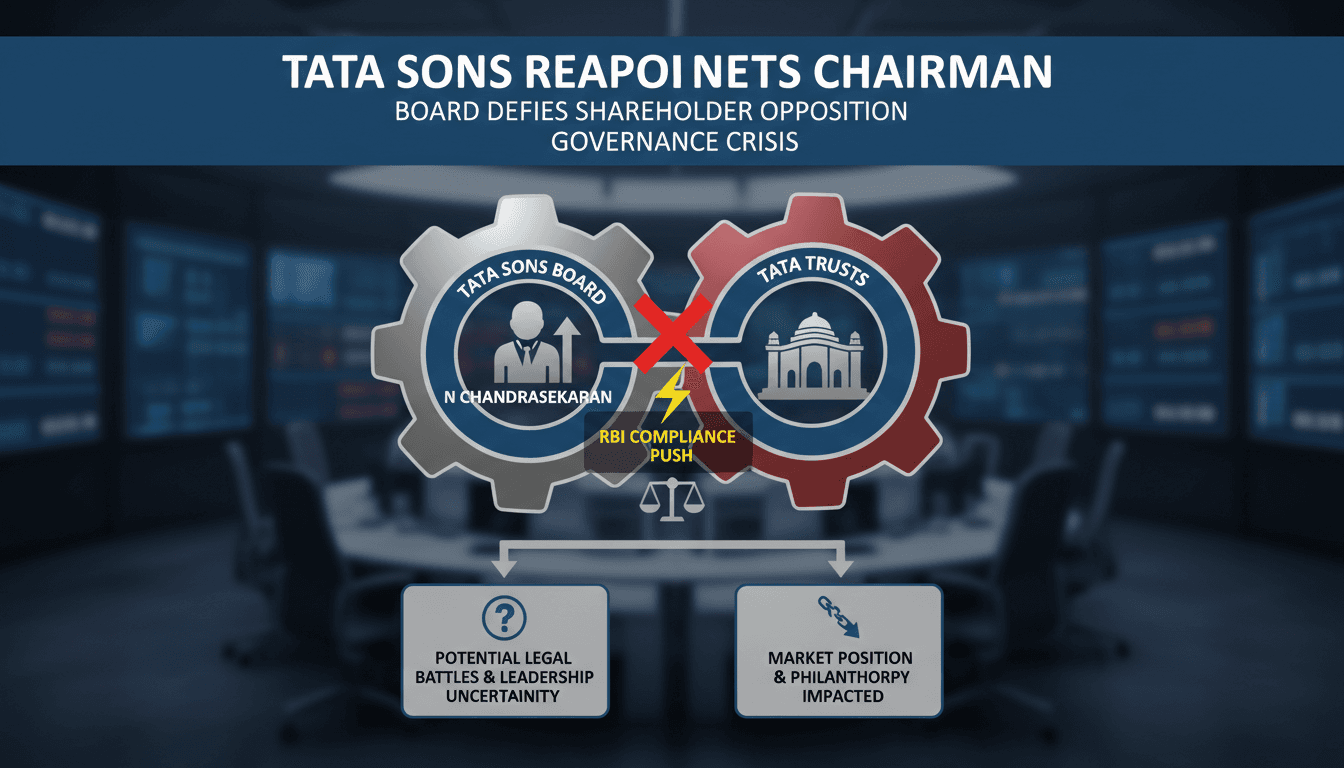
- On September 17, 2026, Tata Sons' board reappointed N Chandrasekaran as executive chairman for another five years.
- Tata Trusts, the largest shareholder, opposed this move, declaring it illegal and reiterating their stance against a public listing.
- Legal challenges and an uncertain outcome at the upcoming AGM loom, potentially destabilizing Tata Sons' leadership and ownership structure.
The context you actually need
- Tata Sons, the holding company of the Tata Group, has historically operated privately, with Tata Trusts controlling 66% of its shares for philanthropic purposes.
- In 2022, the Reserve Bank of India (RBI) classified Tata Sons as an upper-layer non-banking financial company, mandating a public listing that the company sought to avoid.
- Tensions between N Chandrasekaran and Noel Tata have escalated over strategic direction, succession planning, and compliance with RBI regulations.
What's really happening
The board meeting on September 17, 2026, marked a pivotal moment in Tata Sons' governance, as directors voted 4-1 to extend N Chandrasekaran's term despite his earlier announcement to step down in February 2027. This decision directly contradicts the wishes of Tata Trusts, which has significant influence over the company due to its majority shareholding. The Trusts argue that the reappointment violates the company's articles of association, which require majority support from Trusts-nominated directors.
This governance crisis is not merely a boardroom squabble; it reflects deeper issues within the Tata Group's structure and its relationship with regulatory bodies like the RBI. The RBI's classification of Tata Sons as a non-banking financial company has imposed a listing obligation that the company has resisted. The refusal to comply with this requirement has led to increased scrutiny and potential legal repercussions, as the RBI has indicated it may seek court intervention regarding the listing.
The implications of this conflict extend beyond Tata Sons. The outcome could set a precedent for corporate governance in India, particularly regarding the balance of power between majority shareholders and corporate boards. If Tata Trusts successfully challenges the board's decision, it could embolden other shareholders in similar positions, leading to a reevaluation of governance practices across the country.
Market reactions have been mixed, with initial gains in Tata Group stocks followed by declines as uncertainty looms. Investors are particularly concerned about the potential impact on philanthropic funding and the group's ability to navigate business challenges without clear leadership. The ongoing tensions may also affect Tata's reputation, which has historically been associated with ethical business practices and social responsibility.
As the situation unfolds, the stakes are high for all parties involved. The board's defiance of Tata Trusts could lead to a protracted legal battle, further complicating the already intricate dynamics of corporate governance in India.
Who feels it first (and how)
- Investors: Uncertainty may lead to volatility in Tata Group stock prices, affecting retail and institutional investors.
- Employees: Potential leadership changes could impact job security and company culture within Tata companies.
- Philanthropic organizations: Funding for social initiatives may be jeopardized if the governance crisis affects Tata Trusts' financial stability.
- Regulatory bodies: The RBI may face scrutiny over its role in enforcing compliance, impacting its reputation and regulatory approach.
What to watch next
- AGM outcomes: The upcoming annual general meeting will be crucial in determining the legitimacy of the board's actions and the future leadership structure.
- Legal developments: Watch for any court challenges initiated by Tata Trusts, which could reshape the governance landscape for Tata Sons.
- Market reactions: Continued fluctuations in Tata Group stock prices will signal investor confidence and the broader implications of this governance crisis.
The board's decision to reappoint Chandrasekaran has sparked a governance crisis.
Legal challenges from Tata Trusts will emerge, potentially leading to a protracted dispute.
The long-term impact on Tata Group's market position and philanthropic efforts remains uncertain.
Frequently Asked Questions
- Why it matters?
- This conflict highlights the tension between corporate governance and shareholder influence, affecting market stability and investor confidence.
- What happened (in 30 seconds)?
- On September 17, 2026, Tata Sons' board reappointed N Chandrasekaran as executive chairman for another five years. Tata Trusts, the largest shareholder, opposed this move, declaring it illegal and reiterating their stance against a public listing. Legal challenges and an uncertain outcome at the upcoming AGM loom, potentially destabilizing Tata Sons' leadership and ownership structure.
- What's really happening?
- The board meeting on September 17, 2026, marked a pivotal moment in Tata Sons' governance, as directors voted 4-1 to extend N Chandrasekaran's term despite his earlier announcement to step down in February 2027. This decision directly contradicts the wishes of Tata Trusts, which has significant influence over the company due to its majority shareholding. The Trusts argue that the reappointment violates the company's articles of association, which require majority support from Trusts-nominated di
- Who feels it first (and how)?
- Investors: Uncertainty may lead to volatility in Tata Group stock prices, affecting retail and institutional investors. Employees: Potential leadership changes could impact job security and company culture within Tata companies. Philanthropic organizations: Funding for social initiatives may be jeopardized if the governance crisis affects Tata Trusts' financial stability. Regulatory bodies: The RBI may face scrutiny over its role in enforcing compliance, impacting its reputation and regulatory a
- What to watch next?
- AGM outcomes: The upcoming annual general meeting will be crucial in determining the legitimacy of the board's actions and the future leadership structure. Legal developments: Watch for any court challenges initiated by Tata Trusts, which could reshape the governance landscape for Tata Sons. Market reactions: Continued fluctuations in Tata Group stock prices will signal investor confidence and the broader implications of this governance crisis.
International coverage of politics, culture, and current affairs.
"BBC News is widely regarded as a reputable international news organization, known for its impartial tone and public service mandate."
— A47 Editor
Tata Sons: India's corporate crown braces for upheaval amid boardroom revolt
The Tata Sons boardroom has become a battleground as tensions rise over the re-appointment of its chairman, N Chandrasekaran, who has announced he will not seek re-election due to a lack of support from the board. This upheaval signals a critical mom...
Business, markets, economy, and corporate news with strong UAE and regional relevance.
"Emirates 24|7 business coverage tends to center UAE markets, property, regulation, and regional economic developments."
— A47 Editor
What to know about Tata Group clash: Tata Sons vs Tata Trusts over Chandrasekaran, listing and Air India losses
The Tata Group is currently embroiled in a significant internal conflict between its holding company, Tata Sons, and its controlling charity arm, Tata Trusts. This dispute centers around the reappointment of Natarajan Chandrasekaran as chairman and i...
Business, markets, economy, and corporate news with strong UAE and regional relevance.
"Emirates 24|7 business coverage tends to center UAE markets, property, regulation, and regional economic developments."
— A47 Editor
India's Tata reappoints chairman, backs listing in rift with controlling charity
India's Tata Group has reappointed N. Chandrasekaran as chairman, while also considering a public listing, amidst ongoing tensions with the Tata Trusts, which control a significant portion of the conglomerate. This decision highlights a rift within t...