
OpenAI Projects $278 Billion Negative Cash Flow Through 2030
Why it matters
OpenAI's projected cash flow deficit highlights the intense capital demands of scaling AI technologies, impacting investor confidence and market valuations.
What happened (in 30 seconds)
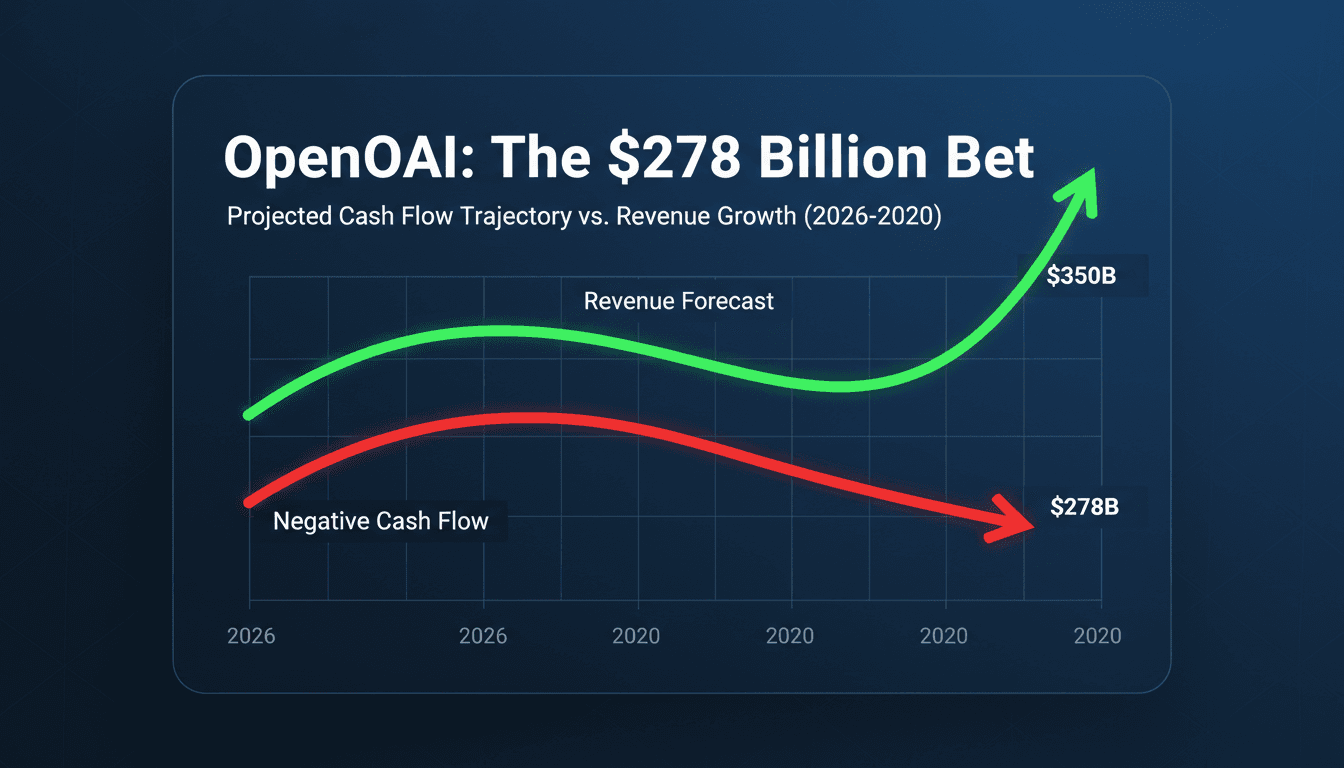
- OpenAI projects a cumulative negative free cash flow of $278 billion from 2026 to 2030, driven by aggressive infrastructure spending.
- Revenue is expected to grow from $36 billion in 2026 to $350 billion by 2030, indicating a tenfold increase.
- The Financial Times reported these figures on September 18, 2026, based on internal projections that OpenAI has not publicly confirmed.
The context you actually need
- OpenAI's funding strategy includes a $122 billion funding round completed in March 2026, with funds expected to be exhausted by 2028.
- The company is in discussions for additional fundraising at a valuation exceeding $1.2 trillion, with an IPO initially anticipated for 2026.
- Intense competition in the generative AI sector necessitates massive investments in computing resources, which are outpacing revenue growth.
What's really happening
OpenAI's ambitious growth strategy is rooted in the competitive landscape of artificial intelligence, where rapid advancements and consumer demand for sophisticated AI models drive the need for substantial investment. The company is projecting a staggering $278 billion in negative free cash flow through 2030, primarily due to its commitment to spending approximately $856 billion on computing infrastructure. This level of expenditure is indicative of the high stakes involved in the AI race, where companies must invest heavily to maintain a competitive edge.
The projected revenue growth from $36 billion in 2026 to $350 billion by 2030 suggests that OpenAI anticipates a significant return on its investments. However, the disparity between cash outflows and inflows raises questions about sustainability and the long-term viability of such a model. Investors and stakeholders are closely monitoring these developments, as the financial health of OpenAI could influence broader market trends in technology and AI.
The report from the Financial Times, which surfaced on September 18, 2026, has been corroborated by multiple outlets, emphasizing the credibility of the projections. OpenAI's decision to remain silent on these figures adds an element of uncertainty, leaving investors to speculate on the company's financial strategies and future fundraising efforts. The ongoing discussions about a potential IPO and the need for additional capital underscore the urgency of OpenAI's situation.
As the company navigates these challenges, it faces pressure not only from investors but also from competitors who are equally eager to capture market share in the rapidly evolving AI sector. The implications of OpenAI's financial trajectory extend beyond its own operations, potentially affecting investor sentiment and funding dynamics across the tech landscape.
Who feels it first (and how)
- Investors: Those with stakes in AI and tech sectors will closely monitor OpenAI's financial health and fundraising efforts.
- Tech companies: Competitors may adjust their strategies based on OpenAI's cash flow situation and market positioning.
- Startups: Emerging AI startups may find it harder to secure funding if investor confidence wavers due to OpenAI's cash burn.
What to watch next
- Funding rounds: Keep an eye on OpenAI's upcoming fundraising efforts and how they impact its valuation and market perception.
- IPO timeline: Watch for updates on the potential IPO, as delays could signal deeper financial issues or market hesitance.
- Market reactions: Observe how OpenAI's financial projections influence investor sentiment and funding availability for other AI ventures.
OpenAI's projected negative cash flow of $278 billion through 2030.
Increased scrutiny from investors and potential delays in IPO plans.
The long-term sustainability of OpenAI's business model given its aggressive spending.
Frequently Asked Questions
- Why it matters?
- OpenAI's projected cash flow deficit highlights the intense capital demands of scaling AI technologies, impacting investor confidence and market valuations.
- What happened (in 30 seconds)?
- OpenAI projects a cumulative negative free cash flow of $278 billion from 2026 to 2030, driven by aggressive infrastructure spending. Revenue is expected to grow from $36 billion in 2026 to $350 billion by 2030, indicating a tenfold increase. The Financial Times reported these figures on September 18, 2026, based on internal projections that OpenAI has not publicly confirmed.
- What's really happening?
- OpenAI's ambitious growth strategy is rooted in the competitive landscape of artificial intelligence, where rapid advancements and consumer demand for sophisticated AI models drive the need for substantial investment. The company is projecting a staggering $278 billion in negative free cash flow through 2030, primarily due to its commitment to spending approximately $856 billion on computing infrastructure. This level of expenditure is indicative of the high stakes involved in the AI race, where
- Who feels it first (and how)?
- Investors: Those with stakes in AI and tech sectors will closely monitor OpenAI's financial health and fundraising efforts. Tech companies: Competitors may adjust their strategies based on OpenAI's cash flow situation and market positioning. Startups: Emerging AI startups may find it harder to secure funding if investor confidence wavers due to OpenAI's cash burn.
- What to watch next?
- Funding rounds: Keep an eye on OpenAI's upcoming fundraising efforts and how they impact its valuation and market perception. IPO timeline: Watch for updates on the potential IPO, as delays could signal deeper financial issues or market hesitance. Market reactions: Observe how OpenAI's financial projections influence investor sentiment and funding availability for other AI ventures.
U.S. company headlines: M&A, product launches, legal/regulatory actions, and leadership moves.
"U.S.-centric corporate tape; good for tracking single-name catalysts."
— A47 Editor
OpenAI expects $278 billion cash burn through 2030 - FT
OpenAI has projected a significant cash burn of $278 billion through 2030, driven by substantial investments in infrastructure and increasing competitive pressures in the AI market. This forecast highlights the financial challenges the company antici...
Macro commentary, policy analysis, growth/inflation themes, and global outlooks.
"Contextual macro coverage that complements day-to-day market headlines."
— A47 Editor
OpenAI forecasts cash burn near $280 billion by 2030, FT reports
OpenAI has projected a staggering cash burn of approximately $280 billion by 2030, as reported by the Financial Times. This forecast reflects the company's significant investments in infrastructure amidst intense competitive pressures in the AI marke...
Curated tech headlines including AI stories.
"Influential aggregator surfacing the day’s top tech/AI links."
— A47 Editor
Leaked presentation: OpenAI expects negative free cash flow of $278B from 2026 to 2030 and projects its revenue will grow from $36B this year to $350B in 2030 (Financial Times)
A leaked presentation reveals that OpenAI anticipates a staggering negative free cash flow of $278 billion from 2026 to 2030, while projecting its revenue to increase from $36 billion this year to $350 billion by 2030. This forecast highlights the fi...
Technology business and AI-related headlines.
"Data-driven tech newsroom with global scope."
— A47 Editor
OpenAI Sees Burning Through $278 Billion by 2030: FT
OpenAI has projected a staggering negative free cash flow of $278 billion from 2026 to the end of 2030, as reported by the Financial Times. This forecast highlights the company's anticipated financial challenges amid its ongoing expansion and investm...
Technology business news, market impacts, and innovation trends.
"Bloomberg is a premier financial and tech news provider, respected for its in-depth reporting and analytical rigor."
— A47 Editor
OpenAI Sees Burning Through $278 Billion by 2030: FT
OpenAI has projected a staggering negative free cash flow of $278 billion from 2026 to the end of 2030, as reported by the Financial Times. This forecast highlights the company's anticipated financial challenges amid its ongoing expansion and investm...
Editor-curated FT homepage stories spanning markets, business, world, and opinion.
"The Financial Times is a globally respected business publication with a centrist/center-left tone and strong markets focus."
— A47 Editor
OpenAI expects to burn $280bn by 2030
OpenAI has projected a staggering $280 billion in negative cash flows by 2030 as it invests heavily in infrastructure while facing significant price pressures in the competitive AI market. This forecast highlights the financial challenges the company...