
Iraq Begins Direct Crude Oil Exports Beyond Strait of Hormuz
Why it matters
Iraq's new export strategy enhances its control over oil logistics, potentially stabilizing regional supply and impacting global oil prices.
What happened (in 30 seconds)
- Iraq completed its first VLCC tanker transit past the Strait of Hormuz on October 3-4, 2026, carrying 2 million barrels of crude oil.
- The Iraqi Oil Tankers Company shifted transport responsibility from buyers to the state, allowing for greater market access and pricing flexibility.
- Ongoing discussions are underway to expand Iraq's tanker fleet, aiming to enhance export capacity and competitiveness.
The context you actually need
- Iraq relies on oil for approximately 90% of its state revenue, with pre-conflict exports averaging 3.3-3.5 million barrels per day.
- The Strait of Hormuz has been a critical chokepoint, with geopolitical tensions, particularly the US-Iran conflict, constraining shipping routes.
- Previous practices required buyers to arrange tankers, limiting Iraq's control over logistics and pricing.
What's really happening
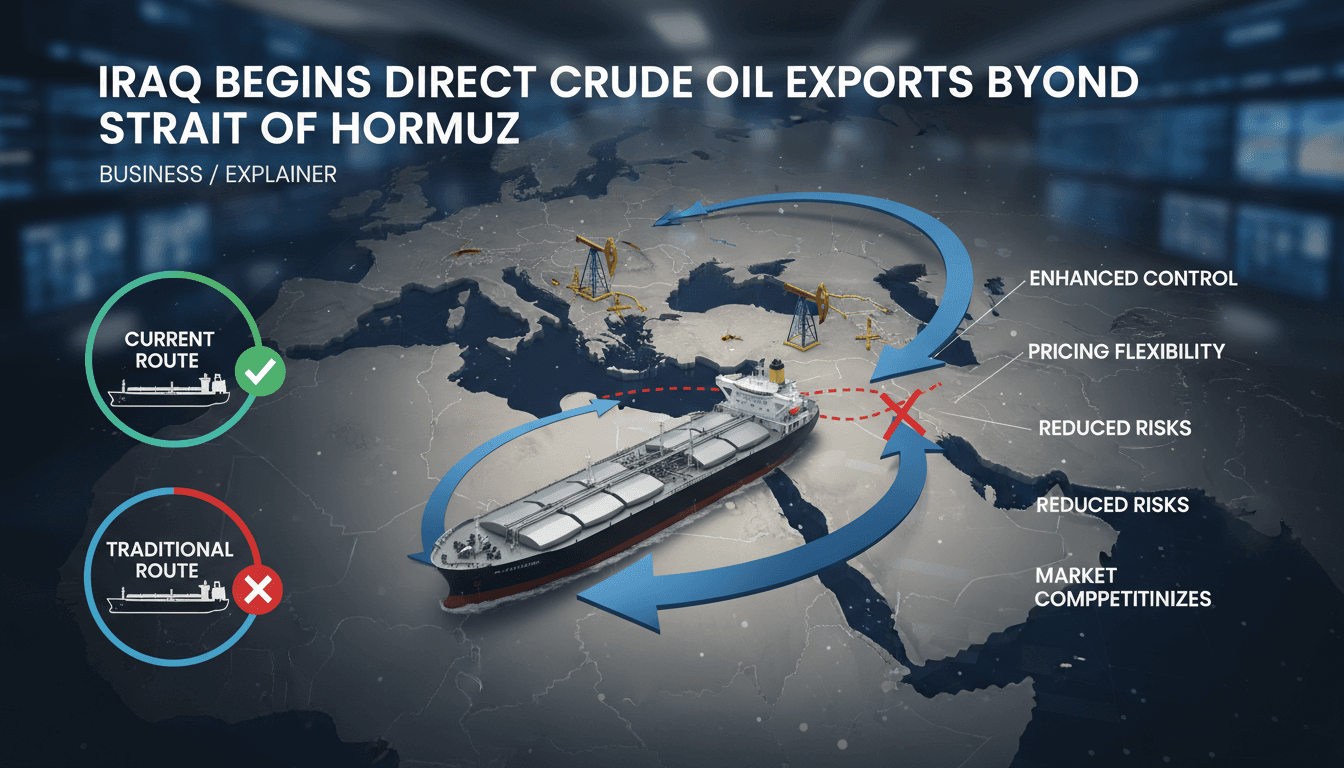
On October 3-4, 2026, Iraq's state-owned Iraqi Oil Tankers Company successfully loaded and dispatched a very large crude carrier (VLCC) with 2 million barrels of crude oil, marking a significant shift in its export strategy. This is the first time in decades that Iraq has arranged for a tanker to transit the Strait of Hormuz, a vital shipping lane for global oil. The move allows the State Organization for Marketing of Oil (SOMO) to take charge of logistics, enhancing its ability to negotiate better pricing and access broader markets.
Historically, Iraq's oil exports have been heavily reliant on buyers arranging their own tankers to collect crude at Basra terminals. This practice limited Iraq's control over the logistics chain and exposed it to market fluctuations and geopolitical risks. With the ongoing US-Iran conflict creating instability in the region, Iraq's decision to manage its own transport logistics is a strategic pivot aimed at mitigating these risks.
The Iraqi Oil Tankers Company, under the leadership of Director General Ali Qais Abdul Jabbar, is now exploring the acquisition of specialized tankers to expand its fleet. This initiative is crucial for Iraq to enhance its export capabilities and compete more effectively with regional peers, such as the Abu Dhabi National Oil Company, which is also expanding its shipping capacity.
The implications of this shift are significant. By taking control of the transport process, Iraq can reduce the discounts typically associated with its crude oil, as the delivery risk now shifts to the seller. This could lead to improved revenue for the Iraqi government, which is heavily dependent on oil exports for its budget. As of September 2026, Iraq's exports averaged 2.6 million barrels per day, and with this new strategy, there is potential for increased volumes and better pricing.
While immediate price spikes have not been reported, market observers are closely monitoring the situation. The focus remains on long-term fleet development and exploring alternative pipeline routes to further enhance Iraq's export capabilities. This strategic shift not only strengthens Iraq's position in the global oil market but also has broader implications for regional stability and pricing dynamics.
Who feels it first (and how)
- Energy sector professionals: Changes in oil pricing and logistics will directly impact their operations and profitability.
- Investors in oil markets: Fluctuations in Iraqi oil exports could influence investment strategies and market forecasts.
- Consumers in the UAE and Gulf region: Potential changes in oil prices may affect fuel costs and economic sentiment.
What to watch next
- Expansion of Iraq's tanker fleet: Monitoring the acquisition of new tankers will indicate Iraq's commitment to this strategy and its potential impact on exports.
- Regional oil price fluctuations: Observing how this shift affects oil prices in the Gulf will provide insights into market dynamics.
- Geopolitical developments: Any changes in the US-Iran conflict could influence Iraq's export strategy and logistics.
Iraq has successfully completed its first VLCC transit past the Strait of Hormuz.
Iraq will continue to expand its tanker fleet and enhance its export capabilities.
The long-term impact on global oil prices and regional stability remains to be seen.
Frequently Asked Questions
- Why it matters?
- Iraq's new export strategy enhances its control over oil logistics, potentially stabilizing regional supply and impacting global oil prices.
- What happened (in 30 seconds)?
- Iraq completed its first VLCC tanker transit past the Strait of Hormuz on October 3-4, 2026, carrying 2 million barrels of crude oil. The Iraqi Oil Tankers Company shifted transport responsibility from buyers to the state, allowing for greater market access and pricing flexibility. Ongoing discussions are underway to expand Iraq's tanker fleet, aiming to enhance export capacity and competitiveness.
- What's really happening?
- On October 3-4, 2026, Iraq's state-owned Iraqi Oil Tankers Company successfully loaded and dispatched a very large crude carrier (VLCC) with 2 million barrels of crude oil, marking a significant shift in its export strategy. This is the first time in decades that Iraq has arranged for a tanker to transit the Strait of Hormuz, a vital shipping lane for global oil. The move allows the State Organization for Marketing of Oil (SOMO) to take charge of logistics, enhancing its ability to negotiate bet
- Who feels it first (and how)?
- Energy sector professionals: Changes in oil pricing and logistics will directly impact their operations and profitability. Investors in oil markets: Fluctuations in Iraqi oil exports could influence investment strategies and market forecasts. Consumers in the UAE and Gulf region: Potential changes in oil prices may affect fuel costs and economic sentiment.
- What to watch next?
- Expansion of Iraq's tanker fleet: Monitoring the acquisition of new tankers will indicate Iraq's commitment to this strategy and its potential impact on exports. Regional oil price fluctuations: Observing how this shift affects oil prices in the Gulf will provide insights into market dynamics. Geopolitical developments: Any changes in the US-Iran conflict could influence Iraq's export strategy and logistics.
Global markets, investing, and macroeconomics from a premier financial newsroom.
"Bloomberg is respected for in-depth financial reporting and data-driven analysis."
— A47 Editor
Iraq Shifts Oil Strategy by Arranging Tanker to Move Past Hormuz
Iraq's state tanker company has arranged a very large crude carrier to transport 2 million barrels of oil beyond the Strait of Hormuz, indicating a strategic shift in its oil export strategy aimed at reducing reliance on the Persian Gulf.
UAE-based English-language newspaper covering regional politics, economics, and global affairs.
"The National reflects Emirati policy perspectives while maintaining international editorial standards."
— A47 Editor
Iraq transports its oil through Strait of Hormuz as US-Iran war chokes exports
Iraq is currently transporting its oil through the Strait of Hormuz as geopolitical tensions, particularly the ongoing conflict between the US and Iran, severely impact its oil exports. This strategic waterway remains crucial for Iraq's oil trade, es...
Oil, metals, and agriculture: supply/demand headlines, OPEC chatter, inventories, and price action.
"Solid tape for energy and metals traders tracking macro and micro catalysts."
— A47 Editor
Iraq’s state tanker firm moves crude through Hormuz strait
Iraq's state tanker firm has commenced the transportation of crude oil through the strategically significant Strait of Hormuz, utilizing a very large crude carrier to move 2 million barrels. This operation marks a notable shift in Iraq's oil export s...