
Senior U.S. Energy Executives Resign From Alaska LNG Startup Over Alleged Undisclosed Novatek Control
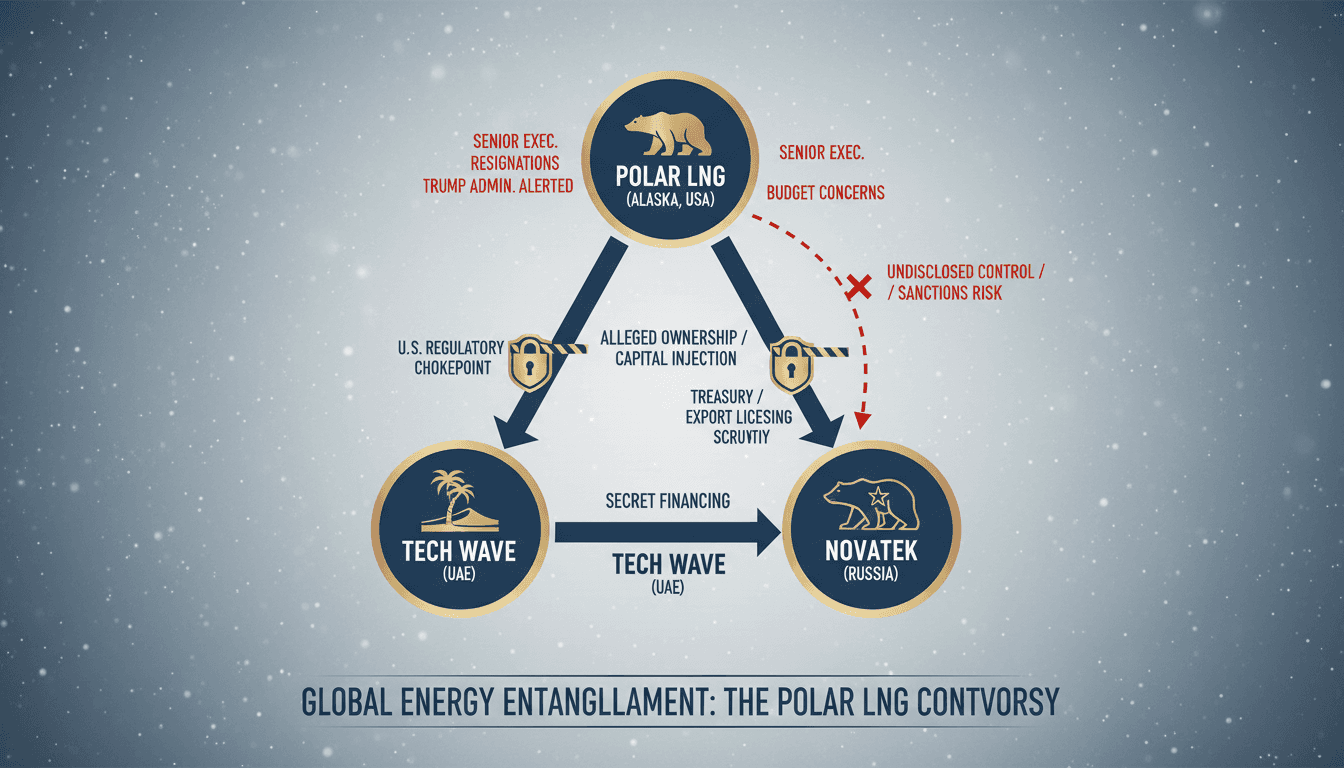
Cross-border capital structures using Gulf corporate wrappers face immediate regulatory friction when exposed to tightening U.S. sanctions enforcement.
Why it matters
The sudden leadership walkout at Polar LNG demonstrates how hidden ultimate beneficial ownership can paralyze a $25 billion energy asset overnight under evolving Western compliance standards.
What happened (in 30 seconds)
- Executive exodus hits Alaska startup: Polar LNG Chief Executive Joel Riddle, Chief Financial Officer Dan Chandra, and other senior leaders resigned in September 2026 after discovering undisclosed Russian financing and operational steering behind the venture.
- Gulf ownership structure exposed: While the project was nominally owned by UAE-based entity Tech Wave, summer 2026 budget reviews revealed that Russian gas producer Novatek was providing capital, directing strategy, and attempting to supply Arctic industrial equipment.
- Sanctions risks alerted to Washington: Outgoing executives notified the Trump administration in early September 2026 after legal memorandums indicated high exposure to U.S. sanctions regimes, leading to the appointment of Tim Talkington as acting chief executive.
The context you actually need
- A $25 billion export ambition: Launched in March 2026, Polar LNG aimed to monetize gas from Alaska's North Slope, positioning itself alongside U.S. energy export priorities while attempting to secure regulatory permits to import Russian-designed liquefaction hardware.
- Novatek's restricted global maneuvering: Subject to targeted U.S. sanctions restrictions on financing and equipment imports, Novatek utilized indirect structures to deploy capital and commercial technology beyond its domestic Arctic basins.
- Tightening congressional oversight: The executive resignations coincided with the passage of the Lindsey Graham sanctions bill on September 18, 2026, which sharpened scrutiny on foreign investment vehicles linked to Russian state-aligned energy firms.
What's really happening
The conflict inside Polar LNG exposes the structural breaking point between Western executive liability and cross-border energy financing. When Polar LNG was established in March 2026, its structural blueprint appeared designed to navigate dual commercial objectives: commercializing stranded North Slope natural gas under domestic energy expansion policies, while tapping specialized Arctic LNG operational designs. To mitigate the geopolitical exposure of working with Novatek—a company constrained by U.S. technology export controls and capital limitations—the project assigned formal corporate ownership to Tech Wave, an entity incorporated in the UAE.
This proxy structure held until the summer 2026 budgetary review cycle. Internal oversight revealed that Tech Wave was not an independent Gulf-based principal acting on its own balance sheet. Instead, capital disbursements and core managerial directives were coming directly from Novatek. For U.S. corporate fiduciaries, that distinction was critical. Operating under the understanding that their funding originated from standard UAE private investment capital, executives found themselves managing an enterprise directed by an entity under targeted U.S. sanctions regimes.
The legal mechanics escalated rapidly. A legal analysis prepared by Baker Botts warned that perceived Novatek control created immediate risks for the project’s export licenses and federal regulatory approvals. Importing Russian industrial hardware into an American critical infrastructure asset presents acute compliance exposure. When executives realized that Novatek was steering operational decisions rather than acting as a distant commercial partner, personal legal liability entered the calculation.
On September 19, 2026, Joel Riddle stepped down, followed by his chief financial officer, executive vice president, and executions manager. Before exiting, the executive team briefed the Trump administration on the capital flow trail.
Rather than withdrawing, Novatek signaled an intent to convert its informal leverage into an official minority equity stake. The appointment of Tim Talkington, a former Goldman Sachs Russia executive, as acting CEO signals an effort to stabilize the venture. Yet this transition leaves Polar LNG trapped in a fundamental structural trade-off: an energy export asset located on U.S. soil cannot easily operationalize Russian equipment and capital without triggering enforcement measures from federal trade regulators.
Who feels it first (and how)
- Corporate fiduciaries and compliance officers: Senior executives managing cross-border joint ventures now face heightened personal exposure if underlying capital sources diverge from initial disclosures.
- UAE institutional investors and holding entities: Private equity sponsors and special-purpose vehicles in Dubai and Abu Dhabi encounter intensified due diligence from Western counterparties seeking to rule out indirect Russian beneficial ownership.
- Arctic infrastructure developers: Energy engineers and procurement teams in Alaska face indefinite project delays as permits for imported Russian-made liquefaction equipment undergo federal review.
- Global commodity trade financiers: Tier-one debt syndicates and export credit agencies will apply stricter know-your-customer criteria on midstream energy infrastructure backed by layered offshore ownership tiers.
What to watch next
- Novatek's formal minority filing: A shift from undisclosed steering to an official equity filing will test whether U.S. foreign investment screening boards permit minority Russian participation in Alaskan export terminals.
- Regulatory enforcement actions: Determinations by U.S. trade agencies regarding equipment import licenses will indicate whether any cross-border hardware transfers breach existing technology export bans.
- Implementation of the Graham sanctions bill: Regulatory guidance stemming from the September 18, 2026 legislation will establish whether corporate holding entities in third-party jurisdictions like the UAE face secondary sanctions for routing Russian capital.
Joel Riddle, Dan Chandra, Jim Smith, and Jody Trantham resigned from Polar LNG in September 2026; Tech Wave is the registered owner; Novatek supplied capital and direction for the $25 billion project; Tim Talkington took over as acting CEO.
Polar LNG's pending applications for federal export and equipment licenses will face prolonged holds or outright denials following the executive notifications submitted to the Trump administration.
Whether Novatek can legally finalize a minority equity interest under U.S. foreign investment controls, and whether Tech Wave will face formal secondary sanctions exposure for its role as the ownership intermediary.
Frequently Asked Questions
- Why it matters?
- The sudden leadership walkout at Polar LNG demonstrates how hidden ultimate beneficial ownership can paralyze a $25 billion energy asset overnight under evolving Western compliance standards.
- What happened (in 30 seconds)?
- Executive exodus hits Alaska startup: Polar LNG Chief Executive Joel Riddle, Chief Financial Officer Dan Chandra, and other senior leaders resigned in September 2026 after discovering undisclosed Russian financing and operational steering behind the venture. Gulf ownership structure exposed: While the project was nominally owned by UAE-based entity Tech Wave, summer 2026 budget reviews revealed that Russian gas producer Novatek was providing capital, directing strategy, and attempting to supply
- What's really happening?
- The conflict inside Polar LNG exposes the structural breaking point between Western executive liability and cross-border energy financing. When Polar LNG was established in March 2026, its structural blueprint appeared designed to navigate dual commercial objectives: commercializing stranded North Slope natural gas under domestic energy expansion policies, while tapping specialized Arctic LNG operational designs. To mitigate the geopolitical exposure of working with Novatek—a company constrained
- Who feels it first (and how)?
- Corporate fiduciaries and compliance officers: Senior executives managing cross-border joint ventures now face heightened personal exposure if underlying capital sources diverge from initial disclosures. UAE institutional investors and holding entities: Private equity sponsors and special-purpose vehicles in Dubai and Abu Dhabi encounter intensified due diligence from Western counterparties seeking to rule out indirect Russian beneficial ownership. Arctic infrastructure developers: Energy engine
- What to watch next?
- Novatek's formal minority filing: A shift from undisclosed steering to an official equity filing will test whether U.S. foreign investment screening boards permit minority Russian participation in Alaskan export terminals. Regulatory enforcement actions: Determinations by U.S. trade agencies regarding equipment import licenses will indicate whether any cross-border hardware transfers breach existing technology export bans. Implementation of the Graham sanctions bill: Regulatory guidance stemming
U.S. business news, corporate developments, and economy.
"The Wall Street Journal is respected for deep financial and economic reporting with a center-right editorial perspective."
— A47 Editor
U.S. Energy Execs Say They Quit Startup Over Undisclosed Russian Funding
Senior executives at Polar LNG, an energy startup, say they resigned after concluding the company had received undisclosed Russian funding, and they raised their concerns with the Trump administration, according to The Wall Street Journal.
U.S. company headlines: M&A, product launches, legal/regulatory actions, and leadership moves.
"U.S.-centric corporate tape; good for tracking single-name catalysts."
— A47 Editor
Alaska LNG developer faces scrutiny over funding from sanctioned Russian firm - FT
The Alaska LNG project is under scrutiny due to its funding ties with a Russian firm that is currently sanctioned, raising concerns about the implications for international relations and compliance with sanctions.
Editor-curated FT homepage stories spanning markets, business, world, and opinion.
"The Financial Times is a globally respected business publication with a centrist/center-left tone and strong markets focus."
— A47 Editor
US executives quit $25bn gas venture over claims of secret Russian control
Executives from Polar Train LNG have resigned from a $25 billion liquefied natural gas (LNG) project in Alaska, citing undisclosed Russian control by the gas giant Novatek, which allegedly financed and managed the project without U.S. approval. This ...