
UK Energy Operators Forecast Adequate Supplies Amid Rising Prices and Tight Margins
Why it matters
The forecasts highlight the fragility of energy supply amid geopolitical tensions, affecting prices and availability for consumers.
What happened (in 30 seconds)
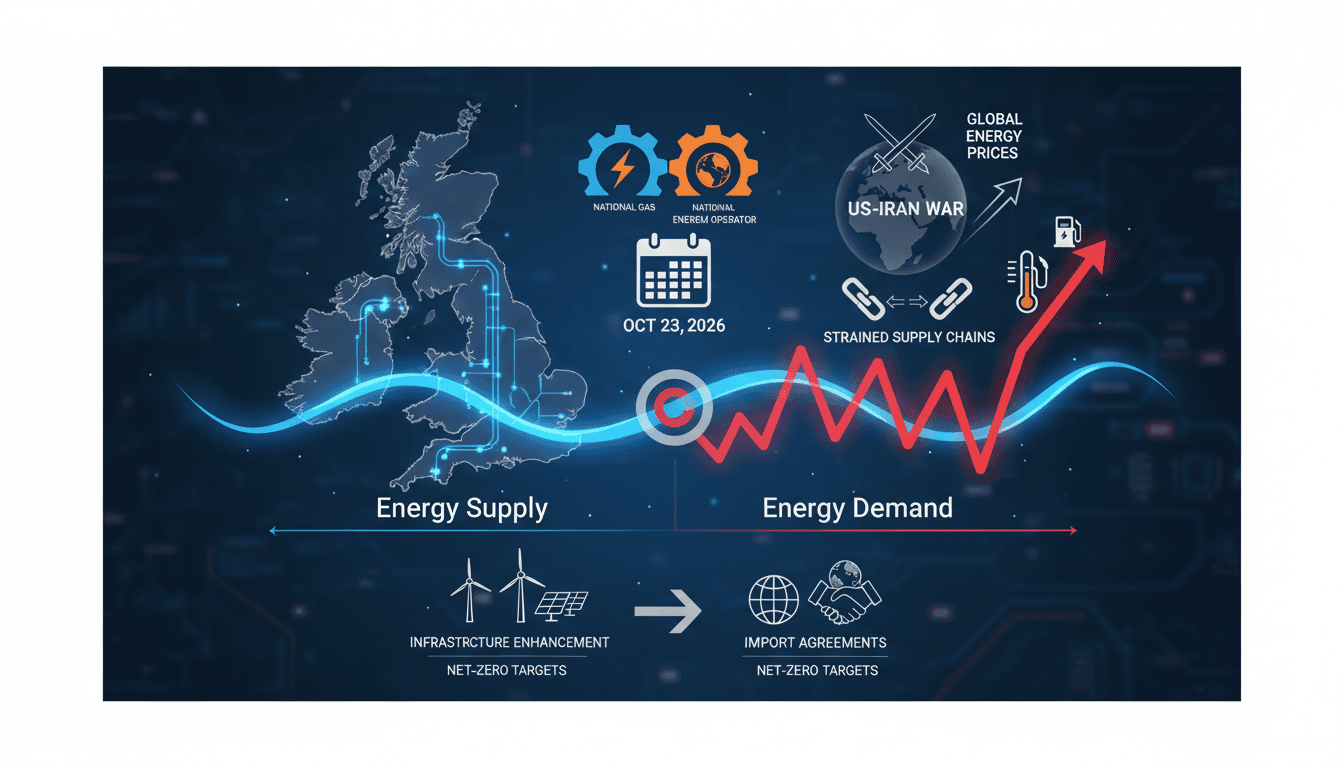
- UK energy operators National Gas and NESO issued winter outlooks on October 23, 2026, confirming adequate supply despite tight margin days.
- Gas demand is projected to peak at 493 million cubic metres per day, with a supply capacity of 592 mcm/day, providing a buffer.
- Electricity margins are forecasted at 5.9 GW, or 9.5% above peak demand, with a new Belgian interconnector deal enhancing import flexibility.
The context you actually need
- Global energy prices surged due to the US-Iran war, with gas and power prices rising approximately 180% and 120%, respectively.
- UK gas imports have declined in recent years due to maintenance costs and shifting domestic demand patterns.
- Ofgem is consulting on recovering costs related to the Belgian interconnector agreement, indicating ongoing price pressures for consumers.
What's really happening
The winter forecasts from National Gas and the National Energy System Operator (NESO) reveal a complex interplay of supply and demand dynamics in the UK energy market. The backdrop of the US-Iran war, which began in February 2026, has significantly impacted global energy prices, leading to a dramatic increase in costs for consumers. With gas prices soaring by approximately 180% and electricity prices by 120%, the UK is navigating a precarious energy landscape.
Despite these challenges, operators have expressed confidence in their ability to meet peak demand. National Gas projects that peak gas demand will reach 493 million cubic metres per day, while supply capacity is expected to be 592 mcm/day, providing a buffer of 99 mcm/day under normal conditions. This buffer is crucial for maintaining stability during tight supply margin days, particularly in December and January when demand typically spikes due to colder weather.
The NESO's forecast of a 5.9 GW electricity margin, which is 9.5% above peak demand, further underscores the resilience of the UK's energy infrastructure. This margin is essential for ensuring that the electricity supply remains stable, even during periods of high demand. The recent agreement with the Belgian interconnector, approved by Ofgem, adds an additional layer of flexibility to gas imports, allowing the UK to better manage its energy needs.
However, the forecasts also highlight the ongoing challenges faced by the energy sector. The decline in UK gas imports via interconnectors in recent years, driven by maintenance costs and changing domestic demand patterns, has created a more vulnerable energy landscape. Operators have acknowledged the need for ongoing grid upgrades to support net-zero targets, indicating that while the current forecasts are positive, the long-term sustainability of the energy supply remains a concern.
As energy prices continue to rise, the impact on consumers is becoming increasingly pronounced. Market analysts have noted that the upward pressure on consumer bills is likely to persist, particularly through the Ofgem price cap mechanism. This situation underscores the importance of monitoring energy supply dynamics and the geopolitical factors that influence them.
Who feels it first (and how)
- Consumers: Households facing higher energy bills due to increased wholesale prices.
- Businesses: Energy-intensive sectors that may see rising operational costs.
- Energy operators: Companies managing supply and demand amid fluctuating prices.
- Government agencies: Regulatory bodies like Ofgem involved in price cap mechanisms and consultations.
What to watch next
- Consumer energy bills: Monitor how rising wholesale prices affect the Ofgem price cap and consumer costs.
- Geopolitical developments: Keep an eye on the US-Iran conflict and its impact on global energy prices.
- Infrastructure upgrades: Watch for announcements regarding grid improvements aimed at supporting net-zero targets.
UK energy operators have sufficient supply capacity to meet projected demand.
Consumer energy bills will continue to rise due to elevated wholesale prices.
The long-term impact of geopolitical tensions on energy supply and pricing.
Frequently Asked Questions
- Why it matters?
- The forecasts highlight the fragility of energy supply amid geopolitical tensions, affecting prices and availability for consumers.
- What happened (in 30 seconds)?
- UK energy operators National Gas and NESO issued winter outlooks on October 23, 2026, confirming adequate supply despite tight margin days. Gas demand is projected to peak at 493 million cubic metres per day, with a supply capacity of 592 mcm/day, providing a buffer. Electricity margins are forecasted at 5.9 GW, or 9.5% above peak demand, with a new Belgian interconnector deal enhancing import flexibility.
- What's really happening?
- The winter forecasts from National Gas and the National Energy System Operator (NESO) reveal a complex interplay of supply and demand dynamics in the UK energy market. The backdrop of the US-Iran war, which began in February 2026, has significantly impacted global energy prices, leading to a dramatic increase in costs for consumers. With gas prices soaring by approximately 180% and electricity prices by 120%, the UK is navigating a precarious energy landscape. Despite these challenges, operator
- Who feels it first (and how)?
- Consumers: Households facing higher energy bills due to increased wholesale prices. Businesses: Energy-intensive sectors that may see rising operational costs. Energy operators: Companies managing supply and demand amid fluctuating prices. Government agencies: Regulatory bodies like Ofgem involved in price cap mechanisms and consultations.
- What to watch next?
- Consumer energy bills: Monitor how rising wholesale prices affect the Ofgem price cap and consumer costs. Geopolitical developments: Keep an eye on the US-Iran conflict and its impact on global energy prices. Infrastructure upgrades: Watch for announcements regarding grid improvements aimed at supporting net-zero targets.
UAE-based English-language newspaper covering regional politics, economics, and global affairs.
"The National reflects Emirati policy perspectives while maintaining international editorial standards."
— A47 Editor
UK power supply forecasts warn of 'tight winter days' as costs soar
The UK is facing forecasts of 'tight winter days' for power supply as costs soar, raising concerns about the reliability of its energy infrastructure amid ongoing economic challenges. Recent failures in the power grid have highlighted deeper issues w...
UK and international business news, economics, and corporate coverage.
"The Guardian’s business section covers finance and markets with a progressive editorial tone."
— A47 Editor
Some of Europe’s highest energy costs expected in Britain this winter
Great Britain is projected to face some of the highest energy costs in Europe this winter, as official forecasts indicate a reliance on costly imports to meet energy demand. The country is expected to secure enough gas and electricity, but at signifi...
UK and global business, economy, and markets coverage.
"Sky News is often seen as a center-right outlet in the UK, known for rolling news and breaking business stories."
— A47 Editor
Winter energy supply secure but possible 'tight days' for electricity - grid operators
Britain's national grid operators have confirmed that the country's energy supplies are secure for the winter season, despite anticipating increased gas demand during peak times and the potential for 'tight days' regarding electricity availability.
UK politics, business, and social stories.
"Sky News is a UK-based 24-hour channel known for fast-breaking news and political coverage."
— A47 Editor
Winter energy supply secure but possible 'tight days' for electricity - grid operators
Britain's national grid operators have confirmed that the country's energy supplies are secure for the winter season, despite anticipating increased gas demand during peak times and the potential for 'tight days' regarding electricity availability.