
Startups Pursue Cell-Cultured and Fermentation-Based Chocolate Alternatives as Cocoa Supply Shortages Persist
Why it matters
The industrial shift from farm-grown cocoa beans to bioreactor-derived fats and fermented grains marks the beginning of dual-track ingredient sourcing for global consumer packaged goods.
What happened (in 30 seconds)
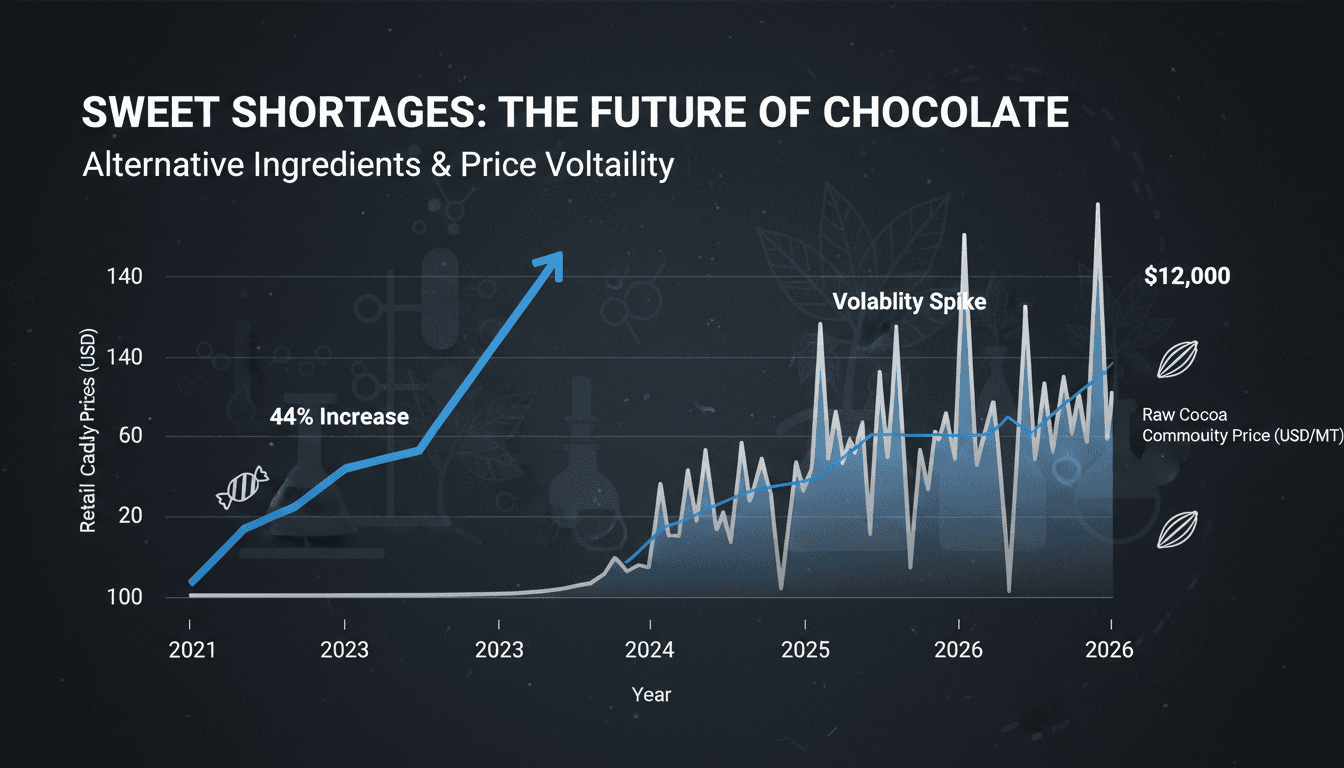
- Candy inflation hit 44%: Bureau of Labor Statistics data cited by The Wall Street Journal on October 30, 2026, confirms candy prices jumped 44% since 2021 as raw cocoa costs crossed peaks above $12,000 per metric ton.
- Biotech startups accelerated market entry: Ventures including Voyage Foods, Celleste Bio, California Cultured, Planet A Foods, and Win-Win deployed cell-cultured cocoa butter and precision fermentation platforms utilizing grapeseed, oats, legumes, and sunflower seeds.
- Multinational conglomerates backed alternative supply: Food giants including Mars, Mondelēz, and Lindt deployed capital into these alternative ingredient developers alongside their traditional agricultural investments to diversify procurement exposure.
The context you actually need
- Extreme geographic concentration created vulnerability: Côte d’Ivoire and Ghana account for roughly 60% to 70% of the world's cocoa bean output, leaving the entire supply chain exposed to localized disruptions.
- Structural farm deficits compounded climate shocks: Decades of underinvestment, aging tree stocks, crop diseases, and shifting weather patterns permanently altered West African harvest yields, outpacing standard cyclical recoveries.
- Reformulation emerged as a margin defense: Facing input costs exceeding $12,000 per metric ton, confectionery manufacturers began turning to hybrid formulations and reduced cocoa volume to defend operating margins.
What's really happening
The transformation of the chocolate industry reflects an incentive realignment caused by structural raw material shortfalls rather than a temporary spike in commodity markets. West Africa’s cocoa belt, which supplies between 60% and 70% of global cocoa beans, has run into long-term agricultural headwinds: aging orchards, endemic plant diseases, chronic underinvestment among smallholders, and erratic weather patterns. When raw cocoa surged past $12,000 per metric ton, the unit economics of mass-market confectionery broke. Confectionery prices climbed 44% between 2021 and 2026, depressing volume demand and forcing food conglomerates to reconsider their exclusive reliance on traditional agriculture.
The resulting innovation wave divides into two distinct biochemical pathways. The first involves cellular agriculture. Startups such as Celleste Bio and California Cultured grow real cocoa cells and harvest cocoa butter inside bioreactors. This method circumvents tropical climate dependency, eliminating acreage requirements and seasonal crop risks, but it carries high capital expenditure burdens and requires novel food regulatory clearances. The second path relies on molecular matching via upcycled plant bases and precision fermentation. Voyage Foods uses roasted grapeseed and upcycled byproducts, while Win-Win and Planet A Foods ferment blends of oats, legumes, and sunflower seeds to duplicate the specific lipid melt-point and volatile flavor profiles of conventional cocoa butter and powder.
These technological pivots alter the corporate calculus for legacy brands. Confectioners like Mondelēz, Mars, and Lindt are not substituting their premium lines wholesale; they are deploying capital into biotech ventures to secure ingredient redundancy. In practice, this means hybrid chocolate formats are entering production pipelines. Industrial candy bars, bakery coatings, and chocolate fillings are quietly substituting a portion of raw cocoa butter with precision-fermented fats or upcycled seed lipids. This operational shift insulates major manufacturers from regional West African harvest failures, creates a ceiling for raw input volatility, and permanently alters the recipe architecture of entry-level and mid-tier confectionery.
Who feels it first (and how)
- Industrial food formulators and procurement leads: Must integrate hybrid lipid ingredients, modify melting profiles, and navigate diverging regional regulatory requirements for novel food labelling.
- Everyday retail shoppers: Encounter sustained retail candy price tags, smaller portions, and reformulated products that incorporate fermented grains and upcycled seeds instead of whole cocoa solids.
- Global luxury and lifestyle hubs like Dubai: High-end hospitality and retail consumers absorb higher baseline pricing for pure cocoa imports while retail shelves increasingly carry hybrid, alternative-confection formats.
- West African agricultural producers: Smallholder farmers in Côte d’Ivoire and Ghana face structural demand erosion in mass-market commercial confectionery if alternative cocoa lipids capture permanent market share.
What to watch next
- Novel food regulatory clearances: Approvals from food safety authorities in the US and Europe will dictate how fast cell-cultured cocoa butter moves from pilot bioreactors into commercial confection lines.
- Ingredient label transparency updates: Watch whether packaging regulators allow hybrid formulations containing fermented sunflower or upcycled grapeseed to retain standard "chocolate" designations or mandate new category terminology.
- Bioreactor cost parity milestones: Tracking whether cellular agriculture startups can lower unit production costs below conventional cocoa butter market pricing will signal when large-scale industrial adoption becomes economically mandatory.
Candy prices rose 44% since 2021; West African cocoa harvests faced structural deficits with peaks over $12,000 per metric ton; food conglomerates like Mars, Mondelēz, and Lindt have invested in alternative supply ventures.
Mass-market confectionery will permanently adopt hybrid formulations, blending real cocoa with alternative fats and fermented plant proteins to mitigate agricultural price volatility.
Whether cell-cultured cocoa butter can scale output quickly enough to undercut traditional plantation economics, and whether consumers will accept synthetic or plant-based alternatives under standard chocolate branding.
Frequently Asked Questions
- Why it matters?
- The industrial shift from farm-grown cocoa beans to bioreactor-derived fats and fermented grains marks the beginning of dual-track ingredient sourcing for global consumer packaged goods.
- What happened (in 30 seconds)?
- Candy inflation hit 44%: Bureau of Labor Statistics data cited by The Wall Street Journal on October 30, 2026, confirms candy prices jumped 44% since 2021 as raw cocoa costs crossed peaks above $12,000 per metric ton. Biotech startups accelerated market entry: Ventures including Voyage Foods, Celleste Bio, California Cultured, Planet A Foods, and Win-Win deployed cell-cultured cocoa butter and precision fermentation platforms utilizing grapeseed, oats, legumes, and sunflower seeds. Multinational
- What's really happening?
- The transformation of the chocolate industry reflects an incentive realignment caused by structural raw material shortfalls rather than a temporary spike in commodity markets. West Africa’s cocoa belt, which supplies between 60% and 70% of global cocoa beans, has run into long-term agricultural headwinds: aging orchards, endemic plant diseases, chronic underinvestment among smallholders, and erratic weather patterns. When raw cocoa surged past $12,000 per metric ton, the unit economics of mass-m
- Who feels it first (and how)?
- Industrial food formulators and procurement leads: Must integrate hybrid lipid ingredients, modify melting profiles, and navigate diverging regional regulatory requirements for novel food labelling. Everyday retail shoppers: Encounter sustained retail candy price tags, smaller portions, and reformulated products that incorporate fermented grains and upcycled seeds instead of whole cocoa solids. Global luxury and lifestyle hubs like Dubai: High-end hospitality and retail consumers absorb higher b
- What to watch next?
- Novel food regulatory clearances: Approvals from food safety authorities in the US and Europe will dictate how fast cell-cultured cocoa butter moves from pilot bioreactors into commercial confection lines. Ingredient label transparency updates: Watch whether packaging regulators allow hybrid formulations containing fermented sunflower or upcycled grapeseed to retain standard "chocolate" designations or mandate new category terminology. Bioreactor cost parity milestones: Tracking whether cellular
Tech business coverage, major deals, product launches, and Silicon Valley trends.
"WSJ’s tech section offers authoritative reporting on the intersection of technology and business, including exclusive industry analysis."
— A47 Editor
How Do You Save the World’s Chocolate Supply? You Reinvent Chocolate
Candy prices have risen 44% since 2021, and two groups of innovators are working to address a growing shortage of cocoa beans that is pressuring the global chocolate supply, according to a report from WSJ Tech.
Reports on arts, film, culture, literature, and entertainment industry developments.
"Dow Jones Arts & Culture offers coverage of visual arts, theater, music, and cultural events with a WSJ-backed journalistic lens."
— A47 Editor
How Do You Save the World’s Chocolate Supply? You Reinvent Chocolate
Candy prices are up 44% since 2021, and two groups of innovators are working to address a growing shortage of cocoa beans that threatens the global chocolate supply, according to a Dow Jones Arts & Culture report.
U.S. business news, corporate developments, and economy.
"The Wall Street Journal is respected for deep financial and economic reporting with a center-right editorial perspective."
— A47 Editor
How Do You Save the World’s Chocolate Supply? You Reinvent Chocolate
Candy prices have risen 44% since 2021, and two groups of innovators are working to address a growing shortage of cocoa beans, according to a Wall Street Journal report on the world's chocolate supply.