
Qatar halts LNG production plans following tanker attack in Strait of Hormuz
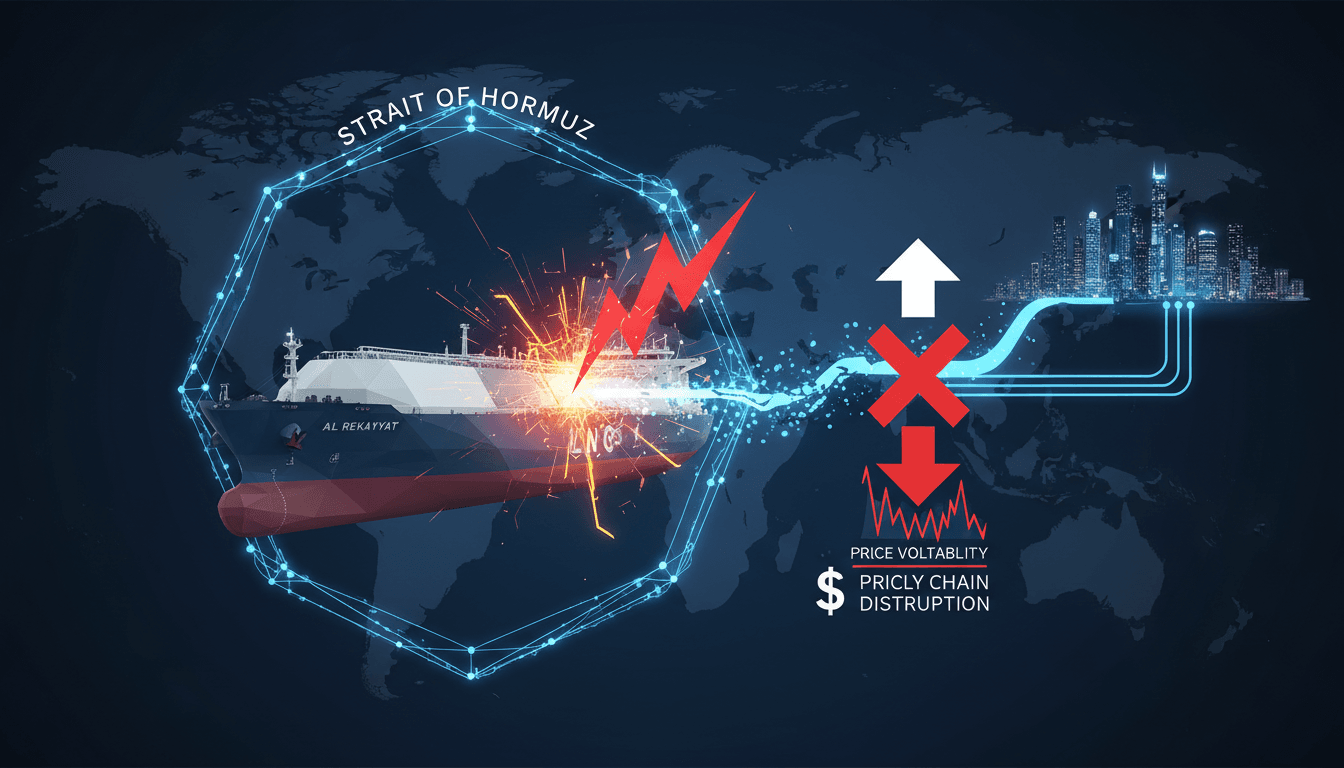
Here's what it means for you.
The recent attack on the Al Rekayyat tanker has significant implications for Qatar's liquefied natural gas (LNG) production and the global energy market. With Qatar being a key player in LNG supply, any disruption could lead to fluctuations in prices and availability. Stakeholders in the energy sector should closely monitor developments, as increased security measures may alter maritime operations in the region. The incident highlights the vulnerabilities of energy supply routes, particularly in geopolitically sensitive areas like the Strait of Hormuz. As tensions escalate, the potential for further disruptions remains a concern for global energy stability.
What happened
Qatar has suspended its plans to ramp up liquefied natural gas (LNG) production following an attack on the Al Rekayyat tanker near the Strait of Hormuz. The tanker was struck by a projectile on July 8, 2026, resulting in a fire onboard and raising significant safety concerns. Currently, the Al Rekayyat is stationary and awaiting salvage operations, which complicates the situation further.
This incident has prompted Qatar to freeze its production increase plans, which are critical for meeting rising global energy demand. The attack underscores the risks associated with maritime energy transport in this vital shipping lane.
The Context
The attack on the Qatari tanker occurred in a region known for its strategic importance to global energy supply chains. Qatar's LNG production facility at Ras Laffan is the largest in the world, making the country a pivotal player in the energy market. The timing of this incident is particularly concerning, as it coincides with increasing global demand for LNG.
The vulnerability of energy supply routes has been a longstanding issue, and this attack serves as a stark reminder of the potential threats faced by maritime operations. Stakeholders, including governments and energy companies, must now reassess their security protocols in light of this incident.
Takeaway
As tensions in the Strait of Hormuz rise, the future of Qatar's LNG production may face significant challenges. The incident may lead to increased scrutiny and security measures for maritime operations in the region, which could further impact global LNG prices and supply chains.
Monitoring the situation will be crucial for understanding the broader implications for energy markets. The potential escalation of tensions could result in a ripple effect across global energy supply, necessitating careful observation of developments in the coming weeks.
Pan-Arab news coverage spanning politics, business, sports, and regional affairs.
"Asharq Al-Awsat reflects a broad Arab editorial perspective with strong attention to regional geopolitics."
— A47 Editor
بعد استهداف ناقلتها في «هرمز»... قطر تجمّد خطط زيادة إنتاج الغاز المسال بـ«رأس لفان»
Qatar has decided to freeze its efforts to accelerate the recovery of production levels at the world's largest liquefied natural gas facility, as reported by Bloomberg, following an attack on its tanker in the Strait of Hormuz.
Oil, metals, and agriculture: supply/demand headlines, OPEC chatter, inventories, and price action.
"Solid tape for energy and metals traders tracking macro and micro catalysts."
— A47 Editor
Qatar pauses LNG output ramp-up after tanker attack in Hormuz - Bloomberg
Regional coverage and analysis focused on politics, diplomacy, and business across the Middle East.
"Al-Monitor is known for analytical reporting on Middle East politics and policy developments."
— A47 Editor
Damaged Qatari LNG tanker awaits salvage after strike near Hormuz
The Qatari LNG tanker Al Rekayyat is currently stationary near the Strait of Hormuz, awaiting salvage operations after being struck by a projectile, which resulted in a fire onboard. The incident occurred overnight on July 6, 2026, raising concerns a...