
Samsung to Discontinue Samsung Messages App by July 2026
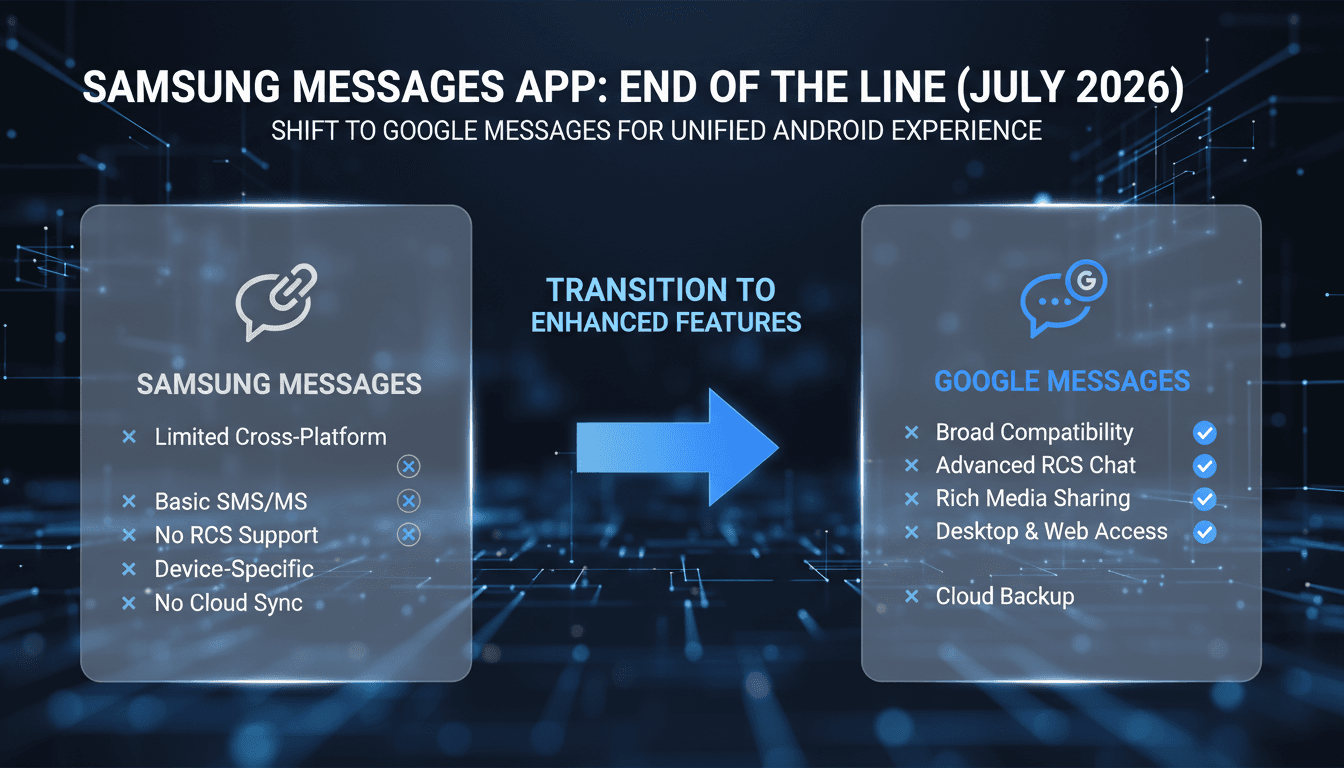
Here's what it means for you.
If you’re a Samsung Galaxy user, you’ll need to adapt to Google Messages by July 2026 to maintain seamless messaging.
Why it matters
This shift underscores the growing dominance of Google’s messaging ecosystem and the standardization of communication tools across Android devices.
What happened (in 30 seconds)
- Samsung announced the discontinuation of its Samsung Messages app effective July 2026.
- Users must transition to Google Messages to access advanced features and RCS interoperability.
- Devices running Android 11 and below will not be affected, but users on Android 12 and higher must migrate.
The context you actually need
- Samsung has integrated Google services into its Galaxy ecosystem, making Google Messages the default on flagship devices since 2024.
- RCS adoption is driving a push for standardized messaging, reducing fragmentation from proprietary apps and enhancing cross-platform communication.
- Samsung Messages will cease all SMS/RCS functionality post-July 2026, prompting users to download Google Messages or face service disruptions.
What's really happening
Samsung's decision to discontinue its Messages app is part of a broader trend in the tech industry towards standardization and interoperability in messaging services. By directing users to Google Messages, Samsung is aligning itself with the industry's shift towards Rich Communication Services (RCS), which offers enhanced features such as high-quality image sharing and AI-driven suggestions. This move is not merely a software update; it reflects a strategic pivot to leverage Google's advanced capabilities in AI and messaging technology.
The integration of Google Messages into Samsung's ecosystem has been a gradual process, beginning with flagship devices in 2024. This transition has been driven by the need for better RCS support and the desire to provide users with a more robust messaging experience. As RCS becomes the standard for messaging on Android, Samsung's decision to phase out its proprietary app is a calculated move to reduce fragmentation and improve user experience.
For users, the transition will be facilitated through in-app prompts that guide them to download Google Messages and set it as their default messaging app. However, this change is not without its challenges. Users of older devices running Android 11 and below will be spared from the immediate need to migrate, but those on Android 12 and higher will face a deadline. Post-July 2026, Samsung Messages will lose all functionality except for emergency services, and downloads from the Galaxy Store will cease.
The implications of this shift are significant, particularly in markets where Samsung holds a substantial share, such as the UAE, where it commands an 18.6% market share. Millions of users in Dubai will need to adapt to this change, and there are concerns about potential RCS disruptions for older devices. Local media outlets are already advising users to check their apps and prepare for the transition, highlighting the urgency of the situation.
Overall, Samsung's discontinuation of its Messages app is a reflection of the tech industry's ongoing evolution towards unified communication platforms. By embracing Google Messages, Samsung is not only enhancing its product offerings but also positioning itself to compete more effectively in a rapidly changing market.
Who feels it first (and how)
- Samsung Galaxy users on Android 12 and higher will need to migrate to Google Messages.
- Tech-savvy individuals who rely on advanced messaging features will likely adapt quickly.
- Older device users may experience temporary disruptions in RCS functionality, affecting their messaging experience.
- Businesses using Samsung devices for communication may need to adjust their messaging strategies.
- Local retailers and service providers may see increased demand for support during the transition period.
What to watch next
- User migration rates: Monitoring how quickly users transition to Google Messages will indicate the effectiveness of Samsung's support efforts.
- RCS adoption metrics: Tracking the growth of RCS usage across Android devices will reveal the impact of this shift on cross-platform communication.
- User feedback: Observing user sentiments on forums and social media will provide insights into the reception of Google Messages compared to Samsung Messages.
Samsung Messages will cease functionality in July 2026.
Users will face a learning curve as they adapt to Google Messages.
The long-term impact on Samsung's market share in messaging services remains to be seen.
Frequently Asked Questions
- Why it matters?
- This shift underscores the growing dominance of Google’s messaging ecosystem and the standardization of communication tools across Android devices.
- What happened (in 30 seconds)?
- Samsung announced the discontinuation of its Samsung Messages app effective July 2026. Users must transition to Google Messages to access advanced features and RCS interoperability. Devices running Android 11 and below will not be affected, but users on Android 12 and higher must migrate.
- What's really happening?
- Samsung's decision to discontinue its Messages app is part of a broader trend in the tech industry towards standardization and interoperability in messaging services. By directing users to Google Messages, Samsung is aligning itself with the industry's shift towards Rich Communication Services (RCS), which offers enhanced features such as high-quality image sharing and AI-driven suggestions. This move is not merely a software update; it reflects a strategic pivot to leverage Google's advanced ca
- Who feels it first (and how)?
- Samsung Galaxy users on Android 12 and higher will need to migrate to Google Messages. Tech-savvy individuals who rely on advanced messaging features will likely adapt quickly. Older device users may experience temporary disruptions in RCS functionality, affecting their messaging experience. Businesses using Samsung devices for communication may need to adjust their messaging strategies. Local retailers and service providers may see increased demand for support during the transition peri
- What to watch next?
- User migration rates: Monitoring how quickly users transition to Google Messages will indicate the effectiveness of Samsung's support efforts. RCS adoption metrics: Tracking the growth of RCS usage across Android devices will reveal the impact of this shift on cross-platform communication. User feedback: Observing user sentiments on forums and social media will provide insights into the reception of Google Messages compared to Samsung Messages.
Breaking news, politics, business, and entertainment from the U.S. and around the world.
"The New York Post is a tabloid-format newspaper known for its sensationalist headlines and conservative-leaning editorial tone."
— A47 Editor
Samsung is discontinuing its texting app, urges users to switch to Google Messages
Samsung has announced the discontinuation of its messaging app, Samsung Messages, effective July, urging users to transition to Google Messages for their texting needs. This decision was communicated through an end-of-service announcement on the comp...
Arabic-language UAE newspaper coverage focused on domestic affairs, public institutions, business, society, and regional developments.
"Al Khaleej coverage generally reflects a mainstream UAE editorial lens with strong attention to public affairs, institutions, and regional developments."
— A47 Editor
«سامسونغ» تعلن إيقاف تطبيقها «رسائل سامسونغ»
Samsung Electronics has announced its decision to discontinue its messaging application, Samsung Messages, starting from July. This move reflects a significant shift in the company's communication strategy and may impact users who rely on the app for...
Capitol Hill news, legislation, and policy insight.
"The Hill specializes in U.S. politics and policy, with a focus on Capitol Hill developments and a reputation for insider reporting."
— A47 Editor
Samsung to discontinue its messaging app
Samsung has announced that it will discontinue its messaging app, advising users to check their app for the specific date when the service will cease operations. This decision marks a significant shift for users who rely on the app for communication.