
Iran's Ghalibaf Declares Military Readiness Amid Renewed Strait of Hormuz Closure
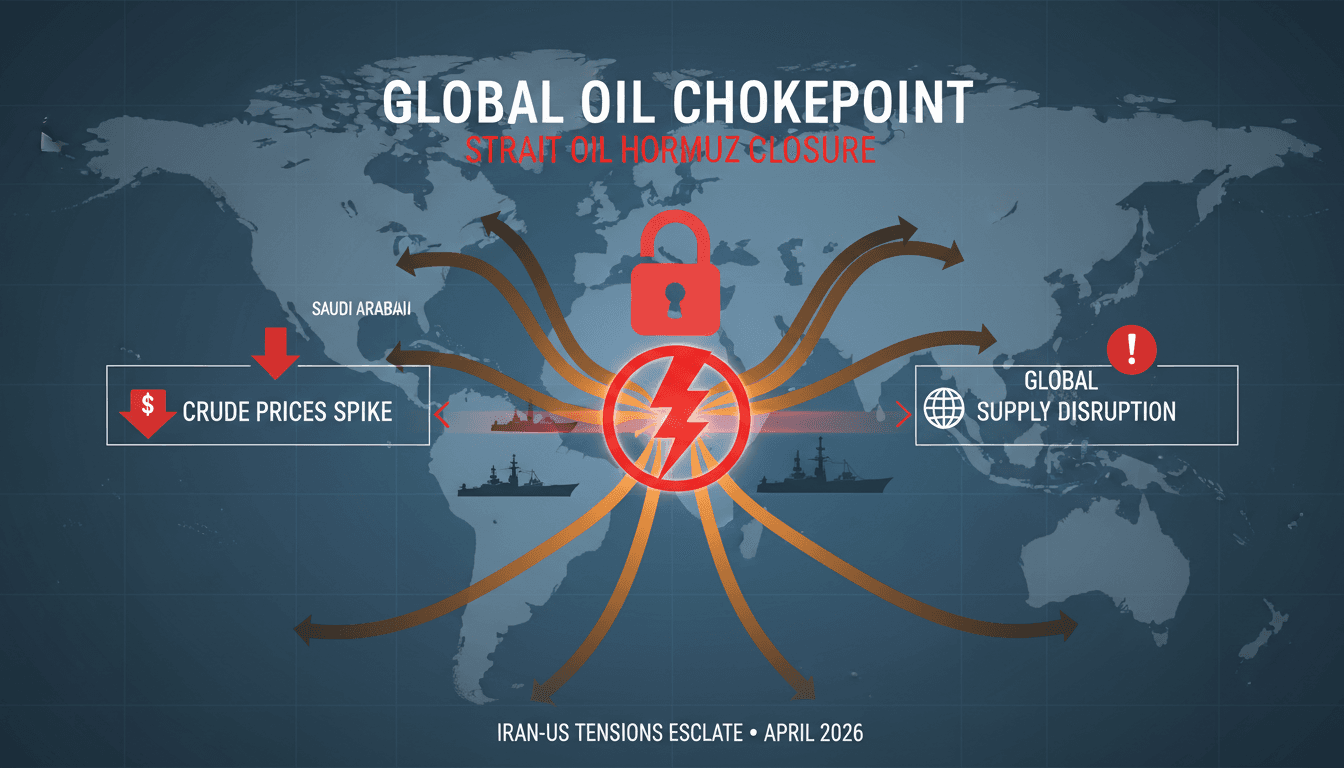
Here's what it means for you.
If you rely on global oil markets, the renewed tensions in the Strait of Hormuz could significantly impact fuel prices and economic stability.
Why it matters
The closure of the Strait of Hormuz disrupts approximately 21 million barrels of oil transit daily, affecting global supply chains and prices.
What happened (in 30 seconds)
- On April 18, 2026, Iranian Parliament Speaker Mohammad Bagher Ghalibaf declared no trust in the U.S. and confirmed full military readiness amid rising tensions.
- Iran re-closed the Strait of Hormuz in response to a persistent U.S. naval blockade, impacting global oil transit.
- The ongoing conflict, termed the 'third imposed war,' escalated following U.S. and Israeli strikes on Iranian targets, leading to immediate Iranian counterstrikes.
The context you actually need
- The 2026 Iran war began on February 28, 2026, with U.S. and Israeli military actions against Iran, prompting Iranian retaliation.
- The Strait of Hormuz is a critical chokepoint for global oil, with about 20% of the world's oil supply passing through it.
- Iran's military capabilities have reportedly strengthened, with the Islamic Revolutionary Guard Corps (IRGC) asserting control over the Strait following drone and missile engagements.
What's really happening
The recent declaration by Ghalibaf is a culmination of escalating tensions that have defined the 2026 Iran war, which began with U.S. and Israeli strikes on Iranian military targets. This conflict has been characterized by rapid military responses from Iran, including the downing of approximately 180 drones, showcasing its enhanced defensive capabilities. The closure of the Strait of Hormuz, a vital artery for global oil transport, is a strategic move by Iran to assert its power and retaliate against what it perceives as U.S. aggression.
The U.S. blockade on Iranian ports has been a significant factor in this standoff, leading to Iran's decision to re-close the Strait after a brief reopening that followed a temporary ceasefire. This ceasefire was only possible due to partial progress in nuclear negotiations, mediated by countries like Pakistan. However, the U.S. violations of this ceasefire have led to renewed hostilities, with Ghalibaf's address emphasizing Iran's readiness to respond to any perceived threats.
The implications of this situation extend beyond military posturing; they resonate deeply within global oil markets. With the Strait of Hormuz re-closed, oil prices have surged, with Brent crude surpassing $120 per barrel. This spike in prices is not just a reflection of immediate supply concerns but also a signal of the broader geopolitical instability that could affect energy security worldwide. The economic ramifications are already being felt in regions like Dubai, where stock markets have lost significant value, and inflation risks are rising due to volatile fuel prices.
Moreover, Ghalibaf's rhetoric indicates a shift in Iran's approach to negotiations, framing them as tools of confrontation rather than dialogue. This could lead to a prolonged period of instability, as Iran continues to assert its military readiness while rejecting U.S. negotiation tactics. The IRGC's control over the Strait and its readiness to retaliate against any threats further complicate the landscape, making it clear that the conflict is far from over.
Who feels it first (and how)
- Oil traders: Immediate fluctuations in oil prices will impact trading strategies and profit margins.
- Consumers: Rising fuel prices will affect transportation costs and everyday expenses.
- Investors in UAE markets: Significant losses in stock markets due to economic instability and oil price volatility.
- Global supply chain managers: Disruptions in oil supply will affect logistics and operational costs.
What to watch next
- Oil price trends: Monitor Brent crude prices for indications of market stability or further escalation.
- U.S. military responses: Any renewed military action from the U.S. could escalate tensions and impact global markets.
- Diplomatic negotiations: Watch for developments in talks mediated by third parties, as they could signal potential de-escalation or further conflict.
The Strait of Hormuz is critical for global oil transit, and its closure will impact oil prices.
Continued military readiness from Iran and potential U.S. responses will shape the conflict's trajectory.
The long-term effects on global oil supply and economic stability remain uncertain as tensions evolve.
Frequently Asked Questions
- Why it matters?
- The closure of the Strait of Hormuz disrupts approximately 21 million barrels of oil transit daily, affecting global supply chains and prices.
- What happened (in 30 seconds)?
- On April 18, 2026, Iranian Parliament Speaker Mohammad Bagher Ghalibaf declared no trust in the U.S. and confirmed full military readiness amid rising tensions. Iran re-closed the Strait of Hormuz in response to a persistent U.S. naval blockade, impacting global oil transit. The ongoing conflict, termed the 'third imposed war,' escalated following U.S. and Israeli strikes on Iranian targets, leading to immediate Iranian counterstrikes.
- What's really happening?
- The recent declaration by Ghalibaf is a culmination of escalating tensions that have defined the 2026 Iran war, which began with U.S. and Israeli strikes on Iranian military targets. This conflict has been characterized by rapid military responses from Iran, including the downing of approximately 180 drones, showcasing its enhanced defensive capabilities. The closure of the Strait of Hormuz, a vital artery for global oil transport, is a strategic move by Iran to assert its power and retaliate ag
- Who feels it first (and how)?
- Oil traders: Immediate fluctuations in oil prices will impact trading strategies and profit margins. Consumers: Rising fuel prices will affect transportation costs and everyday expenses. Investors in UAE markets: Significant losses in stock markets due to economic instability and oil price volatility. Global supply chain managers: Disruptions in oil supply will affect logistics and operational costs.
- What to watch next?
- Oil price trends: Monitor Brent crude prices for indications of market stability or further escalation. U.S. military responses: Any renewed military action from the U.S. could escalate tensions and impact global markets. Diplomatic negotiations: Watch for developments in talks mediated by third parties, as they could signal potential de-escalation or further conflict.
Arabic-language coverage of international news and geopolitics.
"RT Arabic is a Russian state-funded outlet often criticized for promoting Kremlin-aligned narratives."
— A47 Editor
قالیباف: لا ثقة لنا بالعدو وقواتنا في جهوزية كاملة
Iranian Parliament Speaker Mohammad Baqer Qalibaf stated that the country's response to what he termed the 'third imposed war' has begun immediately. He emphasized the complete readiness of Iranian forces amid ongoing tensions.
Jordanian news and regional updates.
"Roya News is a Jordanian outlet focused on breaking news and local affairs."
— A47 Editor
قاليباف: ترمب طلب وقف إطلاق النار لأننا كنا المنتصرين في ساحة المعركة
Iranian Parliament Speaker Mohammad Baqer Qalibaf stated that former U.S. President Donald Trump requested a ceasefire because Iran was victorious on the battlefield. This remark highlights the ongoing tensions and the complex dynamics between Iran a...
Pan-Arab political news and analysis.
"Al-Quds Al-Arabi is a London-based Arabic newspaper known for political coverage."
— A47 Editor
رئيس الأركان الباكستاني يلتقي قاليباف خلال اليوم الثاني من زيارته طهران
On April 16, 2026, in Tehran, Iranian Parliament Speaker Mohammad Baqer Qalibaf met with Pakistani Chief of Army Staff Asim Munir, who is leading a delegation involved in negotiations with the United States. The meeting took place during Munir's visi...
Arabic-language coverage of political affairs and current events.
"Okaz political coverage typically follows mainstream Saudi framing on national and regional affairs."
— A47 Editor
واشنطن وطهران.. رسائل باكستانية تربط النووي بوقف النار في لبنان
Iranian media reported a meeting between Iranian Parliament Speaker Mohammad Baqer Qalibaf and the Pakistani Army Chief in Tehran, while a Pakistani Foreign Ministry spokesperson stated that no dates have been set for talks between the U.S. and Iran....