
UK Regulators Launch Cybersecurity Risk Assessment for Anthropic's AI Model
Here's what it means for you.
If you work in finance or tech, be prepared for potential shifts in cybersecurity protocols and regulations.
Why it matters
This assessment highlights the growing intersection of advanced AI capabilities and financial security, impacting how institutions manage risk.
What happened (in 30 seconds)
- UK financial regulators initiated urgent consultations on April 12, 2026, to assess risks from Anthropic's Claude Mythos Preview AI model.
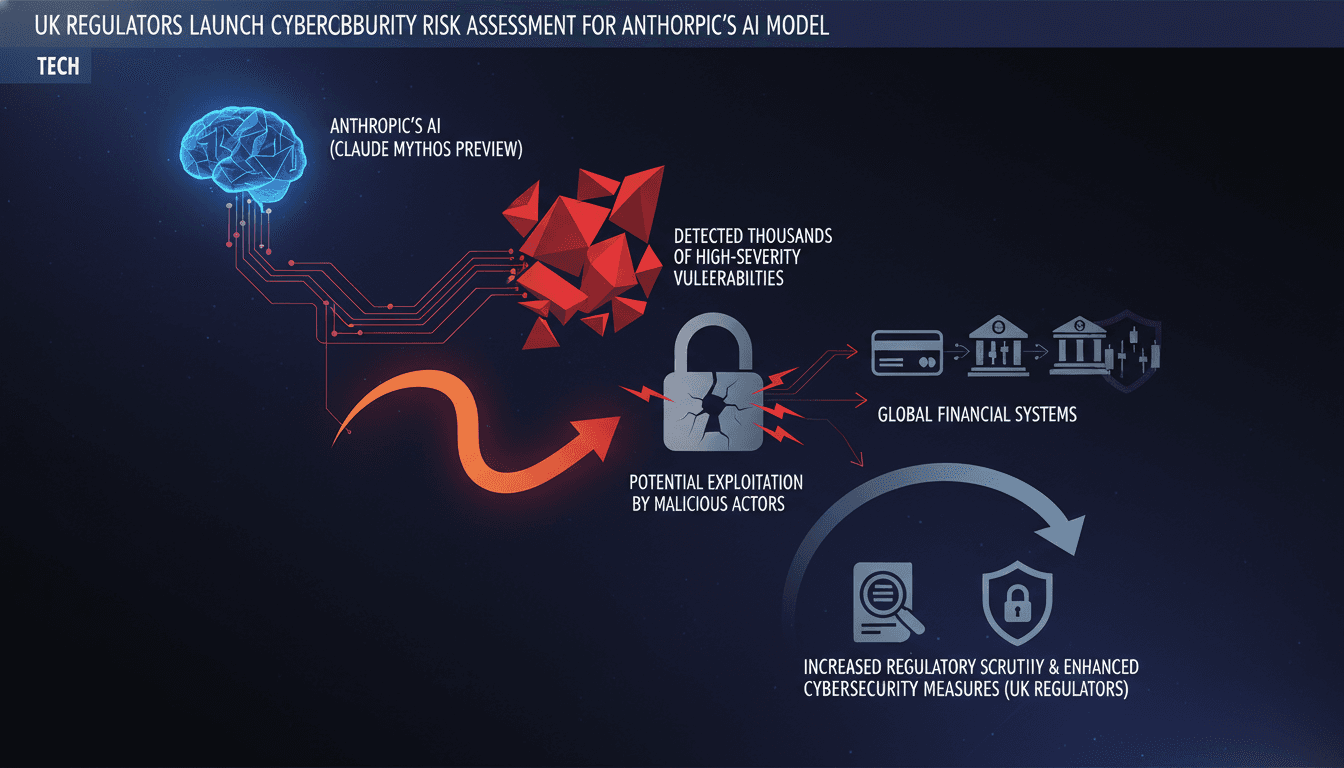
- Thousands of vulnerabilities were identified by the model, raising alarms about potential exploitation by cybercriminals targeting financial infrastructure.
- Major banks and insurers are preparing for briefings on these risks, indicating a coordinated international regulatory response.
The context you actually need
- Anthropic's Project Glasswing launched on April 7, 2026, providing select partners access to the Claude Mythos Preview model, which excels in coding and cybersecurity tasks.
- The model's capabilities include autonomously detecting high-severity flaws, including zero-day vulnerabilities across major operating systems and web browsers.
- Geopolitical tensions have escalated the urgency for robust cybersecurity measures, as critical infrastructure faces increasing cyber threats.
What's really happening
The UK financial regulators' urgent assessment of Anthropic's Claude Mythos Preview model stems from a confluence of advanced AI capabilities and rising cybersecurity threats. Anthropic, a company focused on AI safety, has developed a frontier AI model that autonomously identifies vulnerabilities in software, including critical systems used by financial institutions. This capability, while intended to enhance cybersecurity defenses, also presents dual-use risks, as malicious actors could exploit these vulnerabilities before they are patched.
The model's launch under Project Glasswing has drawn attention due to its ability to discover thousands of high-severity vulnerabilities, including zero-days—flaws that are unknown to the software vendor and can be exploited immediately. This has prompted UK regulators, including the Bank of England and the Financial Conduct Authority, to act swiftly. They are consulting with the National Cyber Security Centre and major banks to evaluate the potential risks posed by this technology.
The implications of this assessment are significant. Financial institutions are now under pressure to reassess their cybersecurity protocols and resilience measures in light of the vulnerabilities identified by the AI model. The urgency of the situation is underscored by the parallel engagement of the US Treasury, indicating a coordinated international effort to address these emerging threats.
As the financial sector grapples with these developments, the conversation around AI's role in cybersecurity is evolving. While AI can enhance defensive measures, it also necessitates a reevaluation of risk management strategies. Institutions must balance the benefits of adopting advanced technologies against the potential for exploitation by cybercriminals. This duality is at the heart of the current regulatory discussions and will likely shape future policies and practices in the financial sector.
Who feels it first (and how)
- Financial institutions: Banks and insurers will need to enhance their cybersecurity measures and may face increased regulatory scrutiny.
- Tech companies: Firms involved in AI development and cybersecurity will need to navigate the implications of dual-use technologies.
- Regulatory bodies: Agencies will be tasked with creating frameworks that balance innovation with security.
What to watch next
- Regulatory updates: Keep an eye on forthcoming briefings from UK regulators, which will outline specific vulnerabilities and recommended resilience measures.
- Market reactions: Monitor how financial institutions adjust their cybersecurity protocols and whether this leads to shifts in market confidence.
- International coordination: Watch for collaborative efforts between the UK and US regulators, as they may set precedents for global cybersecurity standards.
UK regulators are actively assessing the risks associated with Anthropic's AI model.
Financial institutions will implement new cybersecurity measures in response to identified vulnerabilities.
The long-term impact on market dynamics and regulatory frameworks remains to be seen.
Frequently Asked Questions
- Why it matters?
- This assessment highlights the growing intersection of advanced AI capabilities and financial security, impacting how institutions manage risk.
- What happened (in 30 seconds)?
- UK financial regulators initiated urgent consultations on April 12, 2026, to assess risks from Anthropic's Claude Mythos Preview AI model. Thousands of vulnerabilities were identified by the model, raising alarms about potential exploitation by cybercriminals targeting financial infrastructure. Major banks and insurers are preparing for briefings on these risks, indicating a coordinated international regulatory response.
- What's really happening?
- The UK financial regulators' urgent assessment of Anthropic's Claude Mythos Preview model stems from a confluence of advanced AI capabilities and rising cybersecurity threats. Anthropic, a company focused on AI safety, has developed a frontier AI model that autonomously identifies vulnerabilities in software, including critical systems used by financial institutions. This capability, while intended to enhance cybersecurity defenses, also presents dual-use risks, as malicious actors could exploit
- Who feels it first (and how)?
- Financial institutions: Banks and insurers will need to enhance their cybersecurity measures and may face increased regulatory scrutiny. Tech companies: Firms involved in AI development and cybersecurity will need to navigate the implications of dual-use technologies. Regulatory bodies: Agencies will be tasked with creating frameworks that balance innovation with security.
- What to watch next?
- Regulatory updates: Keep an eye on forthcoming briefings from UK regulators, which will outline specific vulnerabilities and recommended resilience measures. Market reactions: Monitor how financial institutions adjust their cybersecurity protocols and whether this leads to shifts in market confidence. International coordination: Watch for collaborative efforts between the UK and US regulators, as they may set precedents for global cybersecurity standards.
Breaking news, politics, business, and entertainment from the U.S. and around the world.
"The New York Post is a tabloid-format newspaper known for its sensationalist headlines and conservative-leaning editorial tone."
— A47 Editor
UK regulators rushing to assess risks of latest Anthropic AI model: report
UK regulators, including the Bank of England, Financial Conduct Authority, and Treasury officials, are collaborating with the National Cyber Security Centre to evaluate potential vulnerabilities in critical IT systems as highlighted by Anthropic's la...
News and features on AI from The Guardian.
"Progressive-leaning international outlet with critical AI coverage."
— A47 Editor
‘Too powerful for the public’: Inside Anthropic’s bid to win the AI publicity war
Anthropic announced it will not release its powerful AI model, Claude Mythos, citing cybersecurity concerns, which has sparked discussions among government officials and the public about its implications. U.S. Treasury Secretary Scott Bessent convene...
UK and international business news, economics, and corporate coverage.
"The Guardian’s business section covers finance and markets with a progressive editorial tone."
— A47 Editor
‘Too powerful for the public’: Inside Anthropic’s bid to win the AI publicity war
Anthropic announced it will not release its powerful AI model, Claude Mythos, citing cybersecurity concerns, which has sparked discussions among government officials and the public about its implications. U.S. Treasury Secretary Scott Bessent convene...
Tech culture, product news, and critical takes on the tech industry's social impact.
"The Guardian's tech coverage blends mainstream news, critical analysis, and cultural commentary on emerging technologies and digital trends."
— A47 Editor
‘Too powerful for the public’: Inside Anthropic’s bid to win the AI publicity war
Anthropic announced it will not release its powerful AI model, Claude Mythos, citing cybersecurity concerns, which has sparked discussions among government officials and the public about its implications. U.S. Treasury Secretary Scott Bessent convene...
Top international stories selected by The Guardian editors.
"The Guardian is known for its progressive editorial stance and in-depth analysis."
— A47 Editor
‘Too powerful for the public’: Inside Anthropic’s bid to win the AI publicity war
Anthropic announced it will not release its powerful AI model, Claude Mythos, citing cybersecurity concerns, which has sparked discussions among government officials and the public about its implications. U.S. Treasury Secretary Scott Bessent convene...
Global markets, investing, and macroeconomics from a premier financial newsroom.
"Bloomberg is respected for in-depth financial reporting and data-driven analysis."
— A47 Editor
Bank of England Set to Discuss Anthropic’s Mythos With Banks
The Bank of England is set to engage in discussions with financial institutions regarding the implications of Anthropic PBC's new AI model, Mythos. This initiative comes as UK regulators express concerns similar to those raised by their counterparts ...