
Hebrew University Poll Shows Israeli Opposition to Iran Ceasefire Amid Ongoing War Weariness
Here's what it means for you.
As global professionals navigate an increasingly volatile geopolitical landscape, understanding the implications of conflict fatigue can inform strategic decision-making and investment.
The Vibe
A palpable sense of war weariness is settling over Israel, with public sentiment sharply divided on the future of military engagement.
What it signals
This shift indicates a critical juncture in public opinion that could reshape political dynamics and economic stability. The widespread opposition to the ceasefire with Iran reflects a deeper anxiety about national security and the effectiveness of current leadership, which may influence investment flows and diplomatic relations in the region.
Why it's happening now
1. The recent escalation of violence, including civilian casualties from Iranian missile strikes, has intensified public despair and skepticism about military objectives. 2. A significant economic toll, with the UAE suffering $120 billion in losses due to the conflict, underscores the interconnectedness of regional stability and global markets. 3. Political pressures are mounting as Prime Minister Netanyahu's support wanes, with opposition parties gaining traction amid dissatisfaction with unfulfilled war goals.
Who it's for (and who it leaves out)
The core beneficiaries of this shift are political opposition groups and citizens advocating for peace, while those aligned with the current administration may feel increasingly marginalized as public sentiment shifts.
What to watch next
1. Monitor the outcomes of ongoing Lebanon talks in Washington, particularly regarding Hezbollah's role and Israel's military strategy. 2. Keep an eye on public opinion trends in Israel, especially as they relate to Netanyahu's Likud party and potential shifts in Knesset power dynamics.
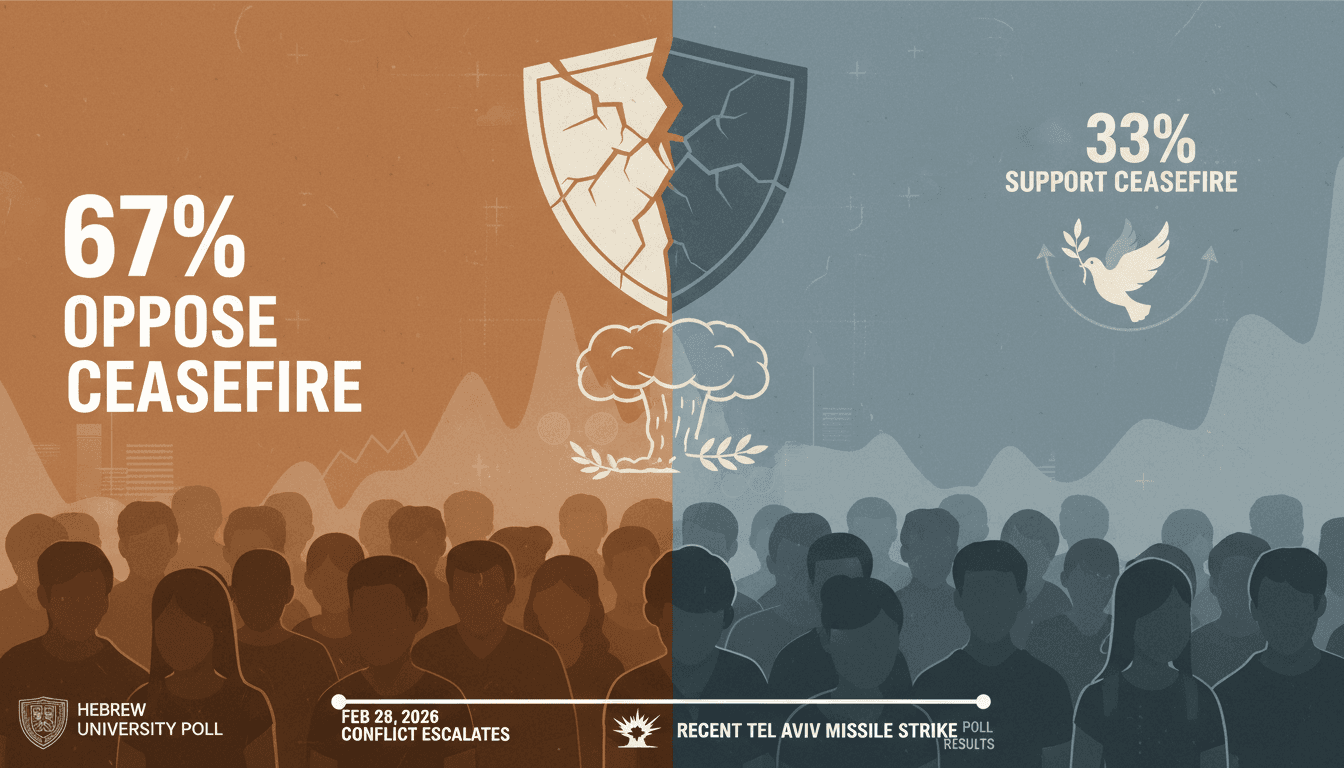
Visual Directive: A striking infographic illustrating the divide in Israeli public opinion on military engagement and ceasefire negotiations.
Public sentiment in Israel is increasingly weary of ongoing military conflict.
Opposition to the current administration may grow, impacting future elections and policy decisions.
The long-term implications for regional stability and economic recovery remain uncertain.
International coverage of politics, culture, and current affairs.
"BBC News is widely regarded as a reputable international news organization, known for its impartial tone and public service mandate."
— A47 Editor
Israelis war-weary but most oppose Iran ceasefire, poll suggests
A recent poll indicates that while Israelis are increasingly weary of ongoing conflicts, a significant majority oppose a ceasefire with Iran, reflecting concerns about the effectiveness of military actions against Hezbollah and Iran.
Regional coverage and analysis focused on politics, diplomacy, and business across the Middle East.
"Al-Monitor is known for analytical reporting on Middle East politics and policy developments."
— A47 Editor
Israelis oppose Iran ceasefire, divided over whether to respect it, poll says
A recent poll conducted by the Hebrew University of Jerusalem reveals that nearly two-thirds of Israelis oppose the ceasefire agreement between the U.S. and Iran, which was brokered by Pakistan. The survey indicates a division among the public regard...
Regional and international reporting focused on Middle Eastern politics, diplomacy, and economics.
"Asharq Al-Awsat is a Saudi-owned international newspaper reflecting mainstream Gulf political perspectives."
— A47 Editor
Israelis Oppose Iran Ceasefire, Divided Over Whether to Respect It, Poll Says
A recent poll indicates that Israelis largely oppose a ceasefire with Iran and are divided on whether to respect it, reflecting deep-seated concerns about security and regional stability. This sentiment comes amid ongoing military tensions and confli...