
U.S. Congressional Budget Hearings Address War Spending Amid Iran Ceasefire Tensions
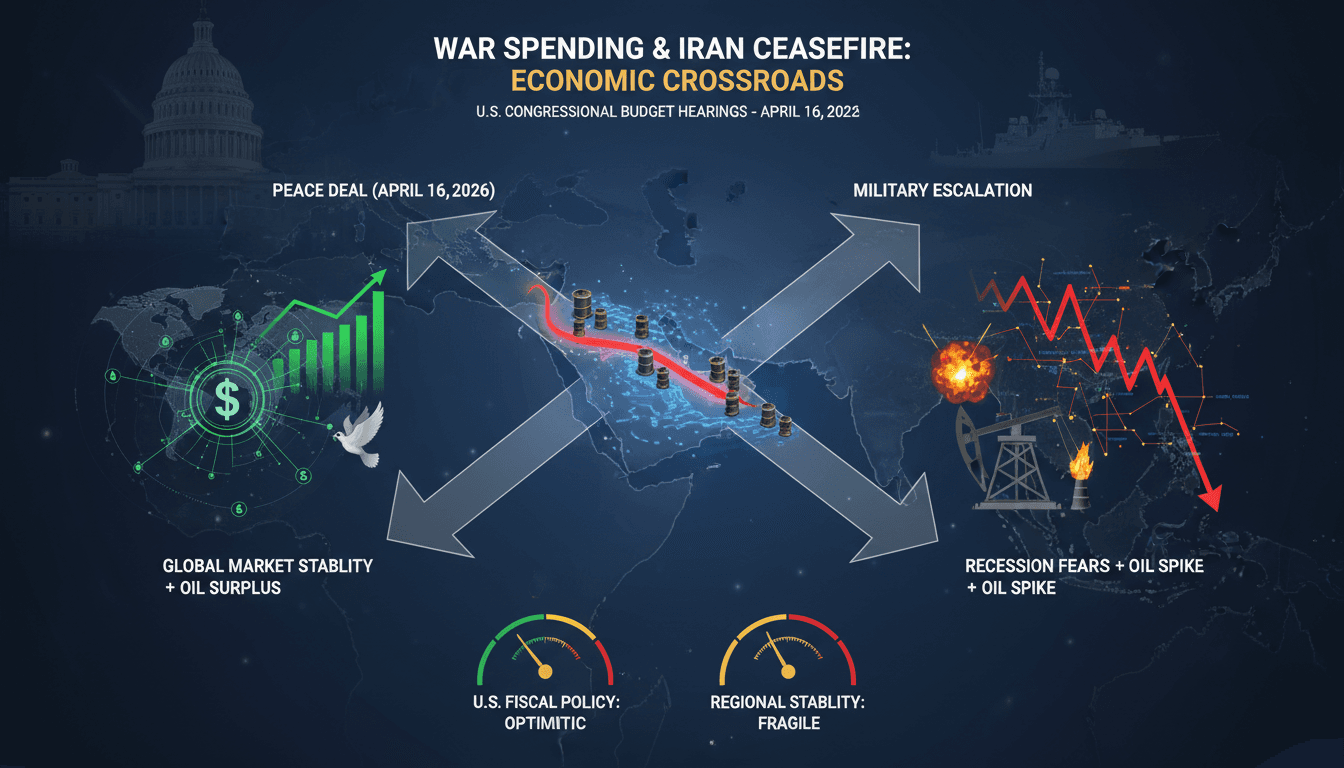
Here's what it means for you.
The ongoing U.S.-Iran conflict and budgetary decisions could significantly impact global markets and energy prices.
Why it matters
The fiscal decisions made in Congress will shape U.S. military engagement and influence global oil supply chains.
What happened (in 30 seconds)
- Congress held hearings on the 2026 and 2027 budgets, focusing on military spending amid the U.S.-Iran conflict.
- Defense Secretary Pete Hegseth issued a warning to Iran, demanding a ceasefire deal by April 21 or face renewed military action.
- Thirteen ships were turned back from the Strait of Hormuz due to the U.S. blockade, disrupting oil exports.
The context you actually need
- The U.S.-Iran conflict escalated in late 2025 following American strikes on Iranian nuclear facilities, leading to a blockade of Iranian ports.
- A fragile ceasefire was established in early April 2026, mediated by Pakistan, but is now at risk as negotiations stall.
- Congressional scrutiny has intensified over the fiscal implications of military spending, with the Trump administration seeking supplemental funding without full cost disclosures.
What's really happening
The U.S. Congressional budget hearings on April 16, 2026, are pivotal in determining the future of U.S. military engagement in the Middle East, particularly regarding Iran. Health and Human Services Secretary Robert F. Kennedy Jr., Office of Management and Budget Director Russ Vought, and Army Secretary Dan Driscoll provided testimony that reflects the administration's priorities amid a backdrop of escalating conflict. The hearings are not just about numbers; they are a reflection of the U.S. government's strategic posture in a volatile region.
Defense Secretary Pete Hegseth's ultimatum to Iran underscores the urgency of the situation. With the ceasefire hanging by a thread, the U.S. is prepared to escalate military action if diplomatic efforts fail. The statement that U.S. forces are "locked and loaded" indicates a readiness to strike Iranian infrastructure, which could have far-reaching consequences for global oil markets. The blockade of the Strait of Hormuz, a critical chokepoint for oil shipments, has already led to disruptions, with 13 ships turned back, signaling the potential for further escalation.
The hearings also highlight the tension between military spending and domestic priorities. As Congress debates the fiscal year 2026 and 2027 budgets, the implications of war expenditures are under scrutiny. The Trump administration's request for supplemental funding raises questions about transparency and accountability, particularly as the costs of military operations continue to rise. This scrutiny is compounded by the ongoing protests against military spending, reflecting public concern over the allocation of resources.
The geopolitical landscape is further complicated by the economic ramifications of the conflict. The U.S.-enforced blockade has already disrupted global oil shipments, leading to increased prices and volatility in energy markets. This situation is particularly relevant for regions like Dubai, where higher energy costs and supply chain strains are felt acutely. The interconnectedness of global markets means that decisions made in Washington can have immediate effects on economies far beyond U.S. borders.
Who feels it first (and how)
- Energy sector professionals: Increased oil prices and supply chain disruptions will impact jobs and profitability.
- Consumers in the UAE: Higher energy costs will affect living expenses and real estate markets.
- Military contractors: Potential increases in defense spending could lead to more contracts and job opportunities.
- Global investors: Market volatility may affect investment strategies and risk assessments.
What to watch next
- April 21 deadline: The outcome of negotiations with Iran will determine whether military action escalates, impacting global oil prices.
- Congressional budget decisions: The approval or rejection of military funding requests will shape U.S. defense posture and fiscal priorities.
- Market reactions: Watch for fluctuations in the S&P 500 and oil prices as geopolitical tensions evolve.
The U.S. is prepared to escalate military action if a ceasefire deal is not reached.
Global oil prices will remain volatile as tensions in the Strait of Hormuz continue.
The long-term effects of U.S. military spending on domestic programs and international relations.
Frequently Asked Questions
- Why it matters?
- The fiscal decisions made in Congress will shape U.S. military engagement and influence global oil supply chains.
- What happened (in 30 seconds)?
- Congress held hearings on the 2026 and 2027 budgets, focusing on military spending amid the U.S.-Iran conflict. Defense Secretary Pete Hegseth issued a warning to Iran, demanding a ceasefire deal by April 21 or face renewed military action. Thirteen ships were turned back from the Strait of Hormuz due to the U.S. blockade, disrupting oil exports.
- What's really happening?
- The U.S. Congressional budget hearings on April 16, 2026, are pivotal in determining the future of U.S. military engagement in the Middle East, particularly regarding Iran. Health and Human Services Secretary Robert F. Kennedy Jr., Office of Management and Budget Director Russ Vought, and Army Secretary Dan Driscoll provided testimony that reflects the administration's priorities amid a backdrop of escalating conflict. The hearings are not just about numbers; they are a reflection of the U.S. go
- Who feels it first (and how)?
- Energy sector professionals: Increased oil prices and supply chain disruptions will impact jobs and profitability. Consumers in the UAE: Higher energy costs will affect living expenses and real estate markets. Military contractors: Potential increases in defense spending could lead to more contracts and job opportunities. Global investors: Market volatility may affect investment strategies and risk assessments.
- What to watch next?
- April 21 deadline: The outcome of negotiations with Iran will determine whether military action escalates, impacting global oil prices. Congressional budget decisions: The approval or rejection of military funding requests will shape U.S. defense posture and fiscal priorities. Market reactions: Watch for fluctuations in the S&P 500 and oil prices as geopolitical tensions evolve.
Capitol Hill news, legislation, and policy insight.
"The Hill specializes in U.S. politics and policy, with a focus on Capitol Hill developments and a reputation for insider reporting."
— A47 Editor
Live updates: Congress grills Kennedy, Vought, Driscoll; Trump taps new CDC nominee
President Trump announced Dr. Erica Schwartz as his nominee to lead the Centers for Disease Control and Prevention (CDC), following a 10-day ceasefire agreement between Israel and Lebanon. Schwartz previously served as deputy surgeon general during T...
UAE-based English-language newspaper covering regional politics, economics, and global affairs.
"The National reflects Emirati policy perspectives while maintaining international editorial standards."
— A47 Editor
Hegseth tells Iran 'choose wisely, we're watching you'
U.S. Defense Secretary Pete Hegseth issued a warning to Iran, urging the nation to make wise choices as tensions escalate over its actions in the Strait of Hormuz. This statement comes amid ongoing U.S. naval blockades and Iran's recent declaration o...