
U.S. Treasury Extends Sanctions Waiver on Russian Oil Amid Iran War Energy Crisis
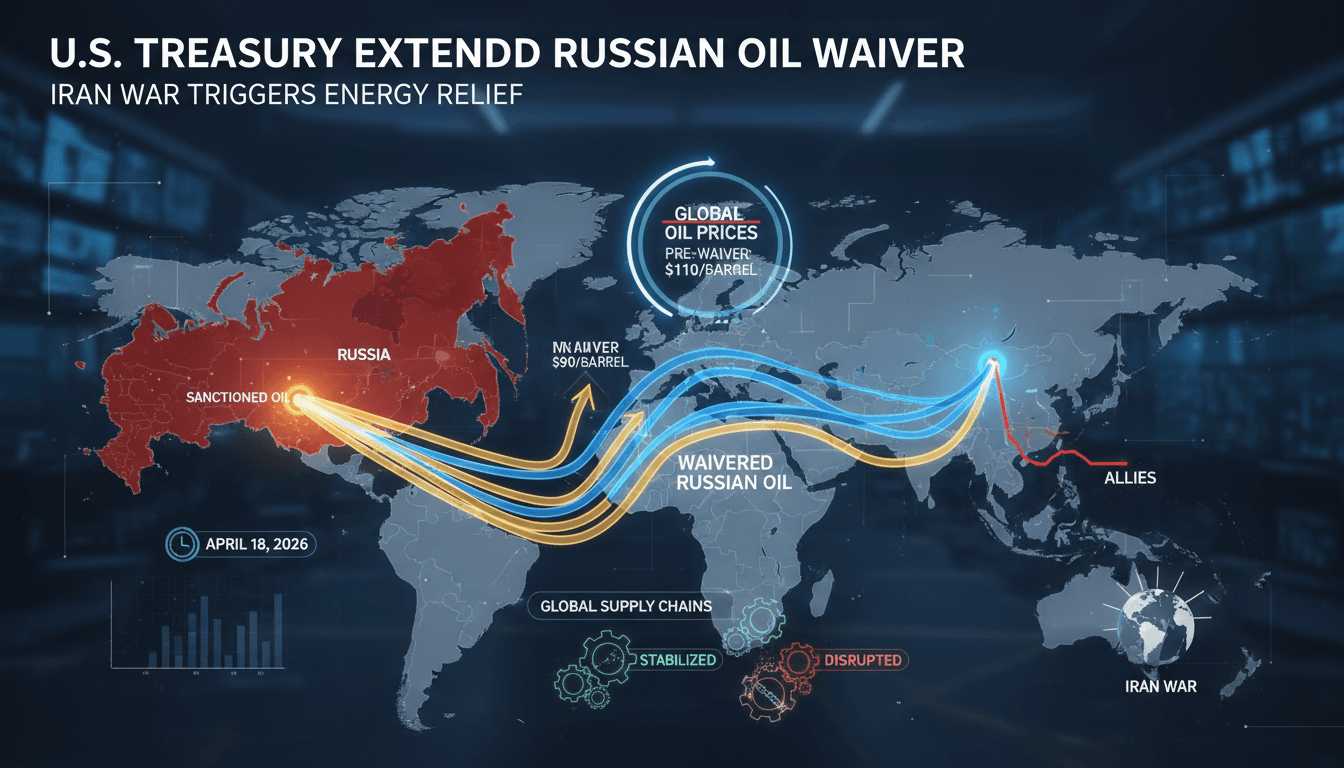
Here's what it means for you.
If you’re in the energy sector or rely on fuel imports, this waiver could impact pricing and supply chains in the coming weeks.
Why it matters
This extension reflects the U.S. balancing act between geopolitical strategy and immediate energy needs amid global shortages.
What happened (in 30 seconds)
- On April 18, 2026, the U.S. Treasury Department extended a sanctions waiver on Russian oil, reversing a prior denial from Secretary Scott Bessent.
- The waiver allows transactions for Russian crude oil loaded onto tankers as of April 17, 2026, and is effective until May 16, 2026.
- Global oil prices fell by 9% to around $90 per barrel following the announcement, indicating market reactions to the renewed supply.
The context you actually need
- Sanctions were imposed on Russian energy exports after the 2022 invasion of Ukraine, aiming to limit Moscow's revenue streams.
- The ongoing Iran war has severely disrupted global oil supplies, damaging over 80 Middle Eastern oil facilities and closing the Strait of Hormuz.
- Pressure from allies like India has intensified, as soaring oil prices and supply shortages have made alternative sources critical.
What's really happening
The U.S. Treasury's decision to extend the sanctions waiver on Russian oil is a complex interplay of geopolitical strategy and immediate economic necessity. Initially, sanctions were imposed on Russian energy exports to curb funding for its military actions following the invasion of Ukraine in 2022. However, the recent escalation of the Iran war has created significant disruptions in global oil supplies, leading to a precarious energy landscape.
The damage to over 80 oil facilities in the Middle East and the closure of the Strait of Hormuz have exacerbated the situation, resulting in soaring oil prices and supply shortages. In this context, the U.S. Treasury's extension of the waiver allows for the sale, delivery, and offloading of Russian oil, which is crucial for stabilizing the market. This decision comes despite Secretary Bessent's earlier statement that no renewal would occur, highlighting a shift in policy driven by urgent economic pressures.
The waiver extension is expected to affect approximately 100 million barrels of Russian oil, providing a temporary relief to global markets. The immediate aftermath saw a 9% drop in oil prices, indicating that the market is responding positively to the prospect of increased supply. However, this move has drawn criticism for its inconsistency, as it contradicts previous statements from the Treasury Secretary, potentially undermining the credibility of U.S. policy.
Moreover, the waiver is not without its limitations; it explicitly excludes transactions involving Iran, Cuba, or North Korea, maintaining a focus on curbing adversarial regimes while attempting to stabilize the energy market. This balancing act reflects the U.S. government's broader strategy of navigating complex international relations while addressing domestic and allied energy needs.
As the situation evolves, the implications of this waiver will resonate across various sectors, particularly in energy-dependent economies. The extension is a clear signal that the U.S. is prioritizing immediate energy stability over long-term sanctions goals, a trade-off that could have lasting effects on international relations and market dynamics.
Who feels it first (and how)
- Energy companies: They may see fluctuations in oil prices and supply chain adjustments.
- Consumers: Increased fuel prices could impact transportation and living costs.
- Allied nations: Countries reliant on oil imports may experience relief from supply shortages.
- Investors: Market volatility may affect investment strategies in energy sectors.
What to watch next
- Oil price trends: Monitor how prices react in the coming weeks as the waiver impacts supply.
- Geopolitical developments: Keep an eye on the Iran war and its effects on Middle Eastern oil production.
- U.S. policy shifts: Watch for any further changes in U.S. sanctions or energy policies that could affect global markets.
The waiver is active until May 16, 2026, allowing transactions for Russian oil.
Oil prices may stabilize or fluctuate based on market reactions to the waiver.
The long-term implications of this waiver on U.S. foreign policy and sanctions strategy.
Frequently Asked Questions
- Why it matters?
- This extension reflects the U.S. balancing act between geopolitical strategy and immediate energy needs amid global shortages.
- What happened (in 30 seconds)?
- On April 18, 2026, the U.S. Treasury Department extended a sanctions waiver on Russian oil, reversing a prior denial from Secretary Scott Bessent. The waiver allows transactions for Russian crude oil loaded onto tankers as of April 17, 2026, and is effective until May 16, 2026. Global oil prices fell by 9% to around $90 per barrel following the announcement, indicating market reactions to the renewed supply.
- What's really happening?
- The U.S. Treasury's decision to extend the sanctions waiver on Russian oil is a complex interplay of geopolitical strategy and immediate economic necessity. Initially, sanctions were imposed on Russian energy exports to curb funding for its military actions following the invasion of Ukraine in 2022. However, the recent escalation of the Iran war has created significant disruptions in global oil supplies, leading to a precarious energy landscape. The damage to over 80 oil facilities in the Middl
- Who feels it first (and how)?
- Energy companies: They may see fluctuations in oil prices and supply chain adjustments. Consumers: Increased fuel prices could impact transportation and living costs. Allied nations: Countries reliant on oil imports may experience relief from supply shortages. Investors: Market volatility may affect investment strategies in energy sectors.
- What to watch next?
- Oil price trends: Monitor how prices react in the coming weeks as the waiver impacts supply. Geopolitical developments: Keep an eye on the Iran war and its effects on Middle Eastern oil production. U.S. policy shifts: Watch for any further changes in U.S. sanctions or energy policies that could affect global markets.
Corporate leadership, finance, technology, and market trends.
"Fortune covers financial trends, leadership, and innovation with a pragmatic editorial approach."
— A47 Editor
U.S. extends waiver on Russian oil sanctions to ease Iran war shortages, just days after Treasury Secretary Scott Bessent ruled it out
The U.S. has extended a waiver on sanctions against Russian oil for 30 days, allowing deliveries that were loaded on tankers as of Friday. This decision comes amid ongoing geopolitical tensions and is aimed at alleviating shortages caused by the conf...
Sports reporting with a focus on Saudi and regional competitions.
"Okaz sports coverage is broad and audience-friendly, with strong attention to Saudi teams and leagues."
— A47 Editor
أمريكا تجدد إعفاء مشتريات نفط روسيا لمدة 30 يوماً
The Trump administration has renewed a waiver allowing countries to purchase Russian oil and petroleum products already loaded on ships for an additional month, from April 17 to May 16, amid accusations from lawmakers that the U.S. government is bein...
Pan-Arab news coverage spanning politics, business, sports, and regional affairs.
"Asharq Al-Awsat reflects a broad Arab editorial perspective with strong attention to regional geopolitics."
— A47 Editor
أميركا تجدد الإعفاء من العقوبات على شراء النفط الروسي
The U.S. administration, under President Donald Trump, has renewed the exemption allowing countries to purchase Russian oil and petroleum products that are already loaded at sea for approximately one month. This decision reflects ongoing consideratio...
Regional coverage and analysis focused on politics, diplomacy, and business across the Middle East.
"Al-Monitor is known for analytical reporting on Middle East politics and policy developments."
— A47 Editor
US extends sanctions waiver on purchases of Russian oil
The U.S. Treasury Department has extended a sanctions waiver for one month, allowing the purchase of Russian oil and petroleum products that are currently at sea. This decision follows a previous indication from Treasury Secretary Scott Bessent that ...
Macro commentary, policy analysis, growth/inflation themes, and global outlooks.
"Contextual macro coverage that complements day-to-day market headlines."
— A47 Editor
U.S. extends Russian oil sanctions waiver amid global supply squeeze
The United States has extended a waiver allowing for the import of Russian oil, a decision made amid a global supply squeeze and rising energy prices influenced by geopolitical tensions, particularly the ongoing conflict in Iran. This waiver is cruci...
European current affairs, EU politics, and regional developments.
"France 24 is viewed as a globally focused outlet with balanced coverage and a European perspective."
— A47 Editor
US issues sanctions waiver on Russian oil sales again
The Trump administration has issued a one-month sanctions waiver allowing the sale of Russian oil and petroleum products already loaded at sea, despite earlier indications that such a measure would not be renewed. This decision comes amid rising glob...
Oil, metals, and agriculture: supply/demand headlines, OPEC chatter, inventories, and price action.
"Solid tape for energy and metals traders tracking macro and micro catalysts."
— A47 Editor
US renews Russian oil waiver after pressure from countries dealing with Iran war price shocks
The United States has renewed a waiver allowing for the import of Russian oil, a decision influenced by pressures from countries affected by rising energy prices due to the ongoing conflict in Iran. This extension comes amid a global supply squeeze a...
Arabic-language coverage of international news and geopolitics.
"RT Arabic is a Russian state-funded outlet often criticized for promoting Kremlin-aligned narratives."
— A47 Editor
إعفاءات أمريكية جديدة .. الخزانة الأمريكية حول النفط الروسي
The U.S. Treasury Department has granted approval for the purchase of Russian oil already at sea for the second time since the outbreak of the war with Iran, as the Trump administration seeks to address tight oil markets.
Business, markets, economy, and corporate news with strong UAE and regional relevance.
"Emirates 24|7 business coverage tends to center UAE markets, property, regulation, and regional economic developments."
— A47 Editor
US renews Russian oil waiver after pressure from countries dealing with Iran war price shocks US renews Russian oil waiver after pressure from countries dealing with Iran war price shocks
The Trump administration has renewed a waiver allowing countries to purchase sanctioned Russian oil at sea for an additional month, despite criticism from lawmakers regarding leniency towards Moscow amid the ongoing war in Ukraine. This waiver, effec...
Capitol Hill news, legislation, and policy insight.
"The Hill specializes in U.S. politics and policy, with a focus on Capitol Hill developments and a reputation for insider reporting."
— A47 Editor
Trump administration reverses course, extends Russian oil sanctions waiver
The Trump administration has extended a waiver on sanctions for Russian oil and petroleum products, allowing purchases from April 18 through May 16, despite earlier statements indicating that such waivers would not be renewed. This decision reflects ...
Pan-Arab news coverage spanning politics, business, sports, and regional affairs.
"Asharq Al-Awsat reflects a broad Arab editorial perspective with strong attention to regional geopolitics."
— A47 Editor
الولايات المتحدة تمدد إعفاء النفط الروسي الموجود في عرض البحر من العقوبات
The U.S. government, under President Donald Trump, has issued a one-month exemption allowing the sale of Russian oil currently on tankers at sea, aimed at alleviating rising energy prices.
Jordanian news and regional updates.
"Roya News is a Jordanian outlet focused on breaking news and local affairs."
— A47 Editor
تراجع أمريكي مفاجئ: إدارة ترمب تمنح إعفاء لمدة شهر لبيع النفط الروسي “العالق” في البحار
The Trump administration has issued a one-month exemption allowing the sale of Russian oil that has been stranded at sea. This unexpected decision comes amid ongoing tensions regarding energy supplies and sanctions related to Russia's actions.
Arabic-language economic and business reporting with strong UAE market relevance.
"Emarat Al Youm business coverage often centers UAE property, banking, consumer issues, and economic policy."
— A47 Editor
الخزانة الأميركية تسمح بتسليم وبيع النفط الروسي المحمّل على متن السفن حتى 16 مايو الخزانة الأميركية تسمح بتسليم وبيع النفط الروسي المحمّل على متن السفن حتى 16 مايو
The U.S. Department of the Treasury has issued a general license related to Russia, allowing the delivery and sale of Russian crude oil and products loaded on ships until May 16. This decision is part of the ongoing regulatory framework concerning Ru...