
Iran Initiates Direct Talks with U.S. in Pakistan Amid Ongoing Regional Tensions
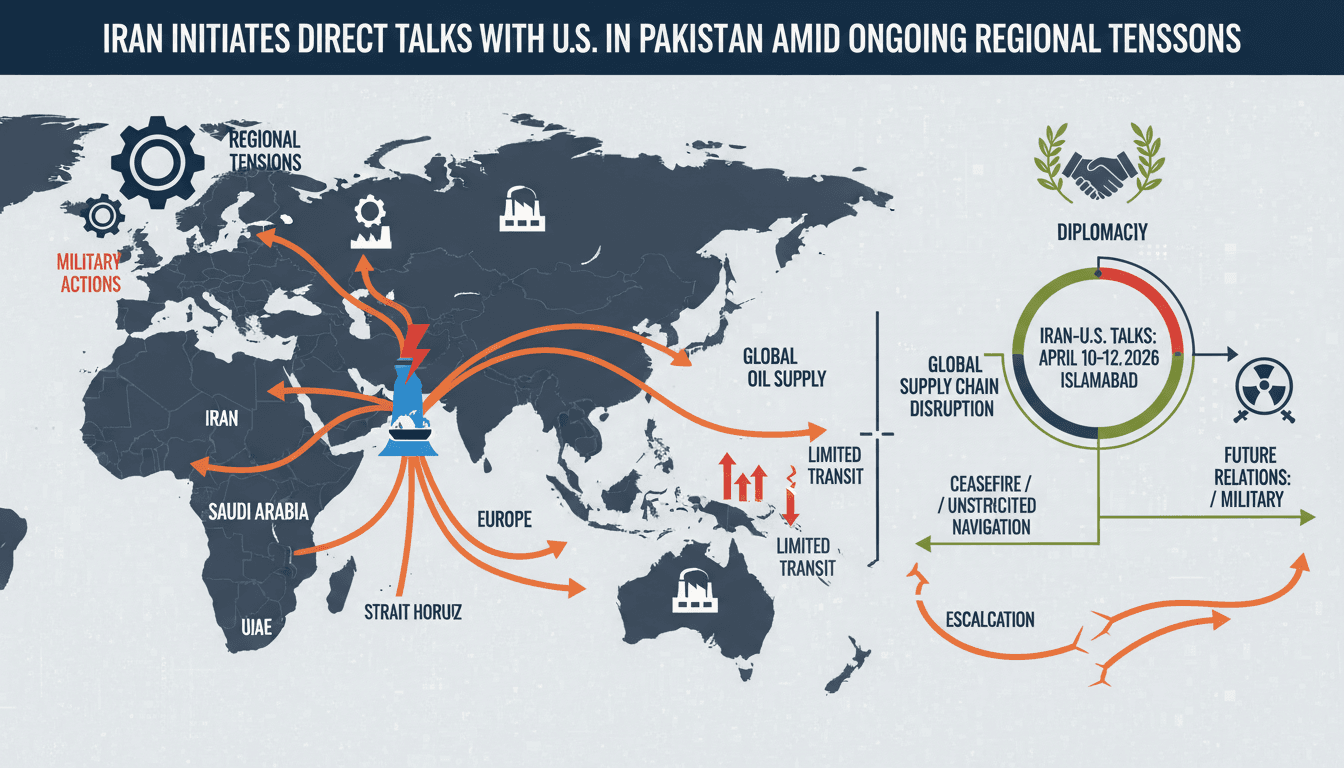
Here's what it means for you.
The ongoing tensions in the Middle East could impact global oil prices and supply chains, affecting your business operations and costs.
Why it matters
The negotiations between Iran and the U.S. have significant implications for global energy markets and geopolitical stability.
What happened (in 30 seconds)
- Iran is preparing for direct negotiations with the U.S. in Islamabad, scheduled for April 10-12, 2026.
- A two-week ceasefire is tenuously observed amid ongoing Israeli military operations against Hezbollah in Lebanon and restrictions in the Strait of Hormuz.
- U.S. officials emphasize that military presence in the region will persist until a "real agreement" is reached.
The context you actually need
- The conflict escalated on February 28, 2026, when U.S. and Israeli forces launched airstrikes against Iranian military targets, prompting retaliatory actions from Iran.
- Iran's blockade of the Strait of Hormuz has disrupted about one-fifth of global oil shipments, significantly affecting international energy markets.
- Diplomatic mediation by Pakistan has led to a temporary ceasefire, but the situation remains fragile with ongoing violence in Lebanon and limited oil transit.
What's really happening
The current diplomatic efforts between Iran and the U.S. represent a critical juncture in a long-standing conflict that has implications for regional and global stability. The U.S. and Israel initiated a military campaign against Iran on February 28, 2026, targeting its nuclear facilities and military infrastructure. This escalation was a response to perceived threats from Iran's nuclear ambitions and its support for proxy militias across the region. In retaliation, Iran launched missile and drone strikes against U.S. bases and allied Gulf states, while simultaneously imposing a blockade on the Strait of Hormuz, a vital maritime route for global oil shipments.
The ceasefire brokered by Pakistan on April 7, 2026, was intended to halt hostilities and create a platform for negotiations. However, the ceasefire has been marred by ongoing Israeli airstrikes against Hezbollah in Lebanon, which have resulted in significant casualties and further complicated the situation. The U.S. has maintained a strong military presence in the region, with 50,000 troops deployed, signaling its commitment to countering Iranian influence and ensuring regional security.
Iran's participation in the talks is contingent upon the cessation of Israeli military actions in Lebanon and the restoration of free navigation through the Strait of Hormuz. The Iranian government has issued a 10-point proposal demanding sanctions relief and a halt to Israeli operations, which U.S. officials have deemed unrealistic. The negotiations are set against a backdrop of heightened tensions and a precarious ceasefire, with both sides leveraging military and diplomatic strategies to gain an upper hand.
The implications of these talks extend beyond immediate military concerns. Should a permanent agreement be reached, it could reshape the geopolitical landscape in the Middle East, impacting energy markets and international relations. Conversely, failure to achieve a consensus may lead to renewed hostilities, further destabilizing the region and exacerbating global economic uncertainties.
Who feels it first (and how)
- Energy Sector: Companies reliant on oil imports may face fluctuating prices and supply disruptions.
- Logistics and Shipping Firms: Restrictions in the Strait of Hormuz could lead to increased shipping costs and delays.
- Investors: Market volatility in response to geopolitical tensions may affect stock prices and investment strategies.
- Consumers: Rising fuel and grocery prices could impact household budgets, particularly in regions dependent on imported goods.
What to watch next
- Negotiation Outcomes: The success or failure of the talks in Islamabad will influence regional stability and energy prices.
- Military Movements: Any escalation in military actions by Israel or Iran could disrupt the ceasefire and lead to broader conflict.
- Market Reactions: Monitor Brent crude oil prices and stock market fluctuations as indicators of investor sentiment regarding the situation.
The ceasefire is currently in place, but it is fragile and subject to violations.
Continued military presence by the U.S. in the region until a satisfactory agreement is reached.
The long-term effects of the negotiations on Iran's nuclear program and regional influence.
Frequently Asked Questions
- Why it matters?
- The negotiations between Iran and the U.S. have significant implications for global energy markets and geopolitical stability.
- What happened (in 30 seconds)?
- Iran is preparing for direct negotiations with the U.S. in Islamabad, scheduled for April 10-12, 2026. A two-week ceasefire is tenuously observed amid ongoing Israeli military operations against Hezbollah in Lebanon and restrictions in the Strait of Hormuz. U.S. officials emphasize that military presence in the region will persist until a "real agreement" is reached.
- What's really happening?
- The current diplomatic efforts between Iran and the U.S. represent a critical juncture in a long-standing conflict that has implications for regional and global stability. The U.S. and Israel initiated a military campaign against Iran on February 28, 2026, targeting its nuclear facilities and military infrastructure. This escalation was a response to perceived threats from Iran's nuclear ambitions and its support for proxy militias across the region. In retaliation, Iran launched missile and dro
- Who feels it first (and how)?
- Energy Sector: Companies reliant on oil imports may face fluctuating prices and supply disruptions. Logistics and Shipping Firms: Restrictions in the Strait of Hormuz could lead to increased shipping costs and delays. Investors: Market volatility in response to geopolitical tensions may affect stock prices and investment strategies. Consumers: Rising fuel and grocery prices could impact household budgets, particularly in regions dependent on imported goods.
- What to watch next?
- Negotiation Outcomes: The success or failure of the talks in Islamabad will influence regional stability and energy prices. Military Movements: Any escalation in military actions by Israel or Iran could disrupt the ceasefire and lead to broader conflict. Market Reactions: Monitor Brent crude oil prices and stock market fluctuations as indicators of investor sentiment regarding the situation.
Macro commentary, policy analysis, growth/inflation themes, and global outlooks.
"Contextual macro coverage that complements day-to-day market headlines."
— A47 Editor
Iran prepares for U.S. talks as Hormuz curbs and Lebanon fighting cloud truce
Iran is preparing for talks with the U.S. amid a fragile two-week ceasefire, which is intended to ease military tensions in the Middle East, particularly concerning the Strait of Hormuz and ongoing conflicts in Lebanon. The ceasefire is contingent up...
Conservative-leaning political and national coverage.
"The Washington Times is a conservative-leaning newspaper known for its political coverage and advocacy of right-of-center viewpoints."
— A47 Editor
Trump warns U.S. military ready for 'next conquest,' will remain near Iran until 'real' deal reached
President Trump has issued a stark warning to Iran, stating that the U.S. military is prepared for action and will remain in the region until a legitimate agreement is reached. He emphasized that additional ammunition and weapons are on standby, indi...
Oil, metals, and agriculture: supply/demand headlines, OPEC chatter, inventories, and price action.
"Solid tape for energy and metals traders tracking macro and micro catalysts."
— A47 Editor
Trump says US military to stay around Iran; threatens action if Tehran fails to comply with deal
Former President Donald Trump announced that U.S. military forces will remain stationed near Iran and threatened potential actions if Tehran does not adhere to the terms of a recent ceasefire agreement. This announcement follows a two-week ceasefire ...