
Argentina's Congress Amends Glacier Protection Law to Facilitate Mining Activities
Here's what it means for you.
As global demand for lithium and copper rises, this legislative shift could impact supply chains and investment opportunities in your sector.
Why it matters
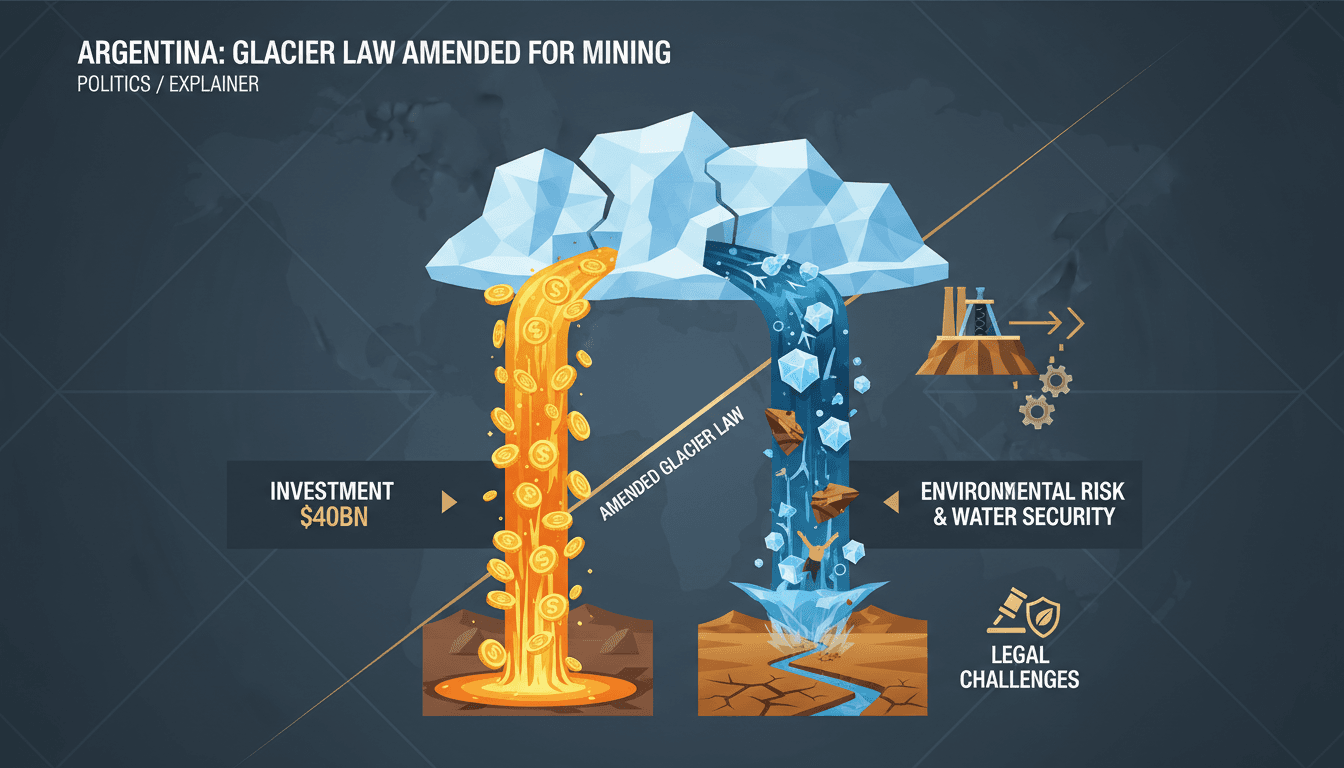
This reform could unlock up to $40 billion in mining investments, reshaping Argentina's economic landscape and influencing global mineral markets.
What happened (in 30 seconds)
- On April 8, 2026, Argentina's Chamber of Deputies approved a reform to the Glacier Protection Law, following Senate passage in February.
- The legislation allows provinces to designate protected areas, facilitating mining in glacial and periglacial zones, despite environmental protests.
- Opposition groups are preparing constitutional challenges, citing concerns over water security for 70% of the population.
The context you actually need
- The original Glacier Protection Law, enacted in 2010, prohibited mining in all glacial and periglacial environments, safeguarding public water reserves.
- President Javier Milei's government introduced reforms amid an economic crisis, aiming to attract investments and boost mining exports, particularly lithium.
- Argentina is a leading lithium producer, with projections indicating a tripling of production by 2030, crucial for electric vehicle batteries and renewable energy technologies.
What's really happening
The recent amendment to Argentina's Glacier Protection Law represents a significant shift in the country’s approach to environmental regulation and economic development. Initially enacted in 2010, the law was designed to protect glaciers and periglacial environments, recognizing them as vital public water reserves. However, as Argentina grapples with an ongoing economic crisis, President Javier Milei's administration has sought to deregulate and stimulate investment in the mining sector, particularly for lithium, copper, and silver.
The reform, passed by a narrow margin in Congress, transfers authority from the federal government to provincial governments, allowing them to classify areas based on their "relevant hydrological function." This change is intended to resolve ambiguities in the original law that some stakeholders viewed as barriers to investment. The government estimates that the reform could unlock up to $40 billion in mining projects, positioning Argentina as a key player in the global mineral market, especially as demand for lithium surges due to the electric vehicle boom.
Environmental groups, including Greenpeace, have voiced strong opposition, arguing that the law undermines critical water resources for millions of Argentines. Protests erupted during the legislative process, with activists emphasizing the importance of water over mineral extraction. The potential for legal challenges looms, as opposition lawmakers and environmental organizations prepare to contest the amendment on constitutional grounds, citing violations of national environmental standards.
Provincial governors in mining-heavy regions have expressed support for the reform, arguing that they possess the expertise to manage sustainable mining practices. They believe that local governance will lead to better oversight and environmental management. However, the broader implications of this shift remain contentious, particularly regarding water security and environmental degradation.
As the law awaits official promulgation, the immediate market response has been muted, with no significant shifts in mining stocks reported. However, the long-term effects on Argentina's economy, environmental health, and global mineral supply chains are yet to be fully realized.
Who feels it first (and how)
- Environmental activists: Increased pressure to mobilize against mining activities and advocate for water protection.
- Mining companies: Opportunities for investment and expansion in Argentina's mineral-rich regions.
- Local communities: Potential impacts on water security and livelihoods, especially in areas near mining operations.
- Investors: Changes in risk profiles and investment strategies based on new regulatory landscapes.
- Global supply chains: Adjustments in sourcing strategies for lithium and copper, particularly for electric vehicle manufacturers.
What to watch next
- Legal challenges: Monitor the outcomes of constitutional challenges from opposition groups, which could delay or alter the implementation of the law.
- Investment announcements: Keep an eye on new mining project investments and partnerships in Argentina, signaling confidence in the revised regulatory environment.
- Public sentiment: Track ongoing protests and public opinion regarding environmental concerns, which could influence future political decisions.
The amendment has been approved by both chambers of Congress and is awaiting official promulgation.
Legal challenges will arise, potentially impacting the law's implementation and public perception of the government.
The long-term environmental impacts of increased mining activities on water resources and local ecosystems.
Frequently Asked Questions
- Why it matters?
- This reform could unlock up to $40 billion in mining investments, reshaping Argentina's economic landscape and influencing global mineral markets.
- What happened (in 30 seconds)?
- On April 8, 2026, Argentina's Chamber of Deputies approved a reform to the Glacier Protection Law, following Senate passage in February. The legislation allows provinces to designate protected areas, facilitating mining in glacial and periglacial zones, despite environmental protests. Opposition groups are preparing constitutional challenges, citing concerns over water security for 70% of the population.
- What's really happening?
- The recent amendment to Argentina's Glacier Protection Law represents a significant shift in the country’s approach to environmental regulation and economic development. Initially enacted in 2010, the law was designed to protect glaciers and periglacial environments, recognizing them as vital public water reserves. However, as Argentina grapples with an ongoing economic crisis, President Javier Milei's administration has sought to deregulate and stimulate investment in the mining sector, particu
- Who feels it first (and how)?
- Environmental activists: Increased pressure to mobilize against mining activities and advocate for water protection. Mining companies: Opportunities for investment and expansion in Argentina's mineral-rich regions. Local communities: Potential impacts on water security and livelihoods, especially in areas near mining operations. Investors: Changes in risk profiles and investment strategies based on new regulatory landscapes. Global supply chains: Adjustments in sourcing strategies for li
- What to watch next?
- Legal challenges: Monitor the outcomes of constitutional challenges from opposition groups, which could delay or alter the implementation of the law. Investment announcements: Keep an eye on new mining project investments and partnerships in Argentina, signaling confidence in the revised regulatory environment. Public sentiment: Track ongoing protests and public opinion regarding environmental concerns, which could influence future political decisions.
Global political, business, and cultural coverage from WSJ international desks.
"The Wall Street Journal offers extensive international reporting with a reputation for financial insight and a center-right editorial stance."
— A47 Editor
Argentina’s Milei Eases Glacier Protections to Unlock Copper Investments
Argentina's lower house of parliament has approved a controversial bill that eases protections for glaciers, allowing mining activities in the sensitive regions of the Andes mountains. This legislative change, supported by President Javier Milei, aim...
U.S. business news, corporate developments, and economy.
"The Wall Street Journal is respected for deep financial and economic reporting with a center-right editorial perspective."
— A47 Editor
Argentina’s Milei Eases Glacier Protections to Unlock Copper Investments
President Javier Milei of Argentina has eased protections for glaciers to facilitate copper mining investments, a move that has sparked protests and legal challenges from environmentalists. This change to a long-standing law aims to attract global mi...
UK and international business news, economics, and corporate coverage.
"The Guardian’s business section covers finance and markets with a progressive editorial tone."
— A47 Editor
Argentina approves Milei’s glacier mining bill amid environmental protests
Argentina's congress has approved a controversial bill that allows mining in ecologically sensitive glacier regions of the Andes, a move supported by President Javier Milei. This legislative change eases existing protections, facilitating the extract...
International coverage from The Guardian's global desks.
"The Guardian is known for its progressive editorial stance and in-depth analysis."
— A47 Editor
Argentina approves Milei’s glacier mining bill amid environmental protests
Argentina's congress has approved a controversial bill that allows mining in ecologically sensitive glacier regions of the Andes, a move supported by President Javier Milei. This legislative change eases existing protections, facilitating the extract...
International coverage of politics, culture, and current affairs.
"BBC News is widely regarded as a reputable international news organization, known for its impartial tone and public service mandate."
— A47 Editor
Argentina passes bill loosening protection of its glaciers
Argentina's lower house of parliament has passed a controversial bill that loosens protections for glaciers, facilitating mining activities in these sensitive regions of the Andes mountains. This decision has drawn significant backlash from environme...
Comprehensive coverage of Middle Eastern and global issues.
"Al Jazeera is a prominent voice from the Global South, especially the Middle East, with an emphasis on underreported stories."
— A47 Editor
Argentina MPs approve bill allowing mining in glaciers
Argentina's lower house of parliament has approved a controversial bill that permits mining activities in glacier regions of the Andes mountains, a decision that has sparked widespread protests. Thousands of demonstrators, including scientists and ac...
Global news coverage with extensive reporting on Middle Eastern conflicts and geopolitics.
"Al Jazeera is a Qatar-based broadcaster known for wide regional coverage and alternative perspectives."
— A47 Editor
Argentina MPs approve bill allowing mining in glaciers
Argentina's lower house of parliament has approved a controversial bill that permits mining activities in glacier regions of the Andes mountains, a decision that has sparked widespread protests. Thousands of demonstrators, including scientists and ac...