
Israeli Airstrike Causes Collateral Damage to Tehran Synagogue Amid Ongoing Conflict
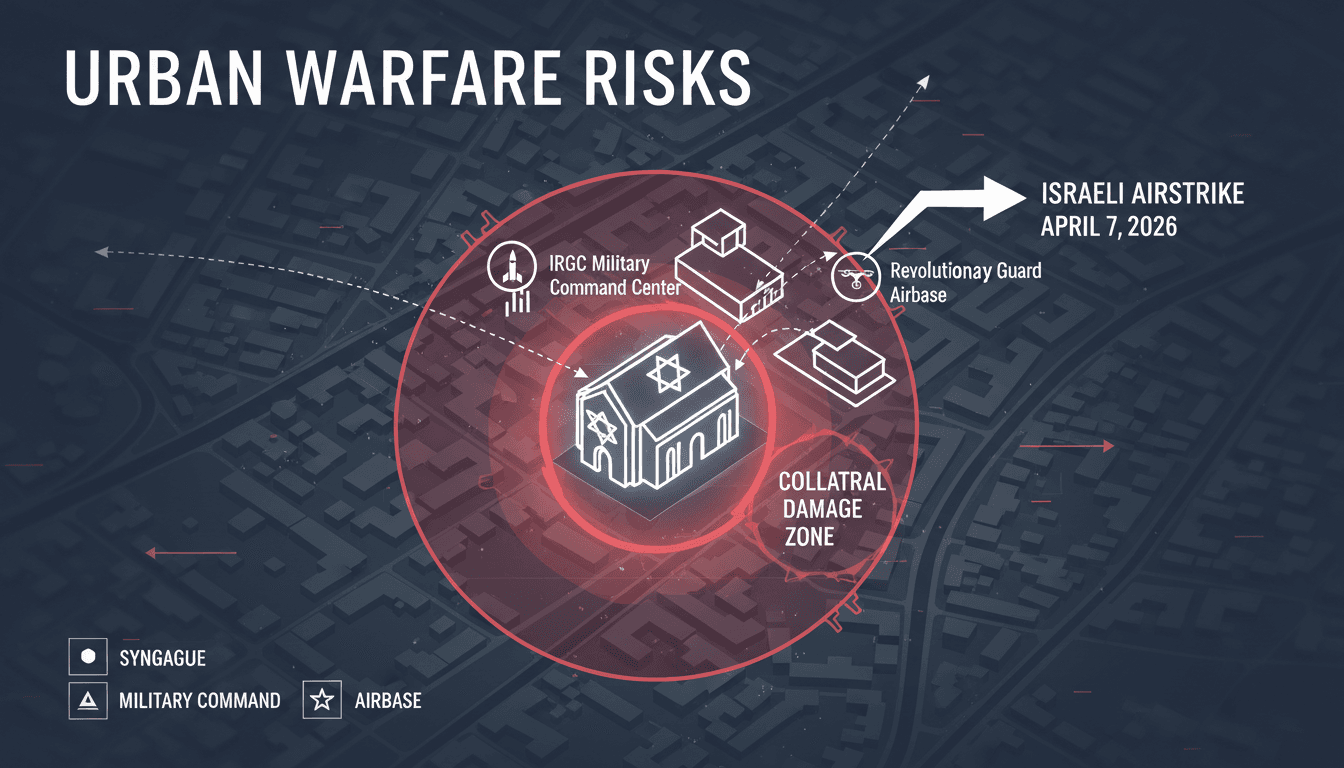
Here's what it means for you.
The ongoing conflict in the Middle East is reshaping regional stability and impacting global markets.
Why it matters
The destruction of a significant religious site amid military operations highlights the fragile balance between military objectives and civilian safety.
What happened (in 30 seconds)
- On April 7, 2026, the Rafi-Nia Synagogue in Tehran was heavily damaged during an Israeli airstrike targeting an Iranian military commander.
- Israeli Defense Forces (IDF) confirmed the strike aimed at a military target and expressed regret over the collateral damage to the synagogue.
- No casualties were reported, but the incident has intensified propaganda and tensions in the ongoing US-Israel-Iran war.
The context you actually need
- The airstrike occurred during the 2026 US-Israel-Iran war, which began on February 28, 2026, following escalating tensions over the Strait of Hormuz.
- Iran's Jewish community, the largest in the Middle East outside Israel, has parliamentary representation and recognizes Judaism as a minority religion.
- Collateral damage from military operations raises concerns about the protection of cultural and religious sites in conflict zones.
What's really happening
The airstrike on April 7, 2026, was part of a broader military strategy by the IDF aimed at neutralizing Iranian military capabilities amid escalating hostilities. The precision strike targeted a senior commander at the Khatam al-Anbiya headquarters, a critical military facility in Tehran. The IDF employed advanced munitions and surveillance to minimize civilian casualties, yet the proximity of the Rafi-Nia Synagogue to the target area led to significant collateral damage.
As reported by Iranian media, the synagogue was completely destroyed, with footage showing civil defense workers sifting through the rubble, uncovering Hebrew texts and Torah scrolls. This incident underscores the complexities of urban warfare, where narrow streets and densely populated areas increase the risk of collateral damage. The IDF's acknowledgment of the damage and expression of regret reflect an awareness of the potential backlash from targeting sites of cultural and religious significance.
The implications of this strike extend beyond immediate physical damage. It has fueled propaganda efforts on both sides, with Iranian officials condemning the attack as a desecration during Jewish holidays. This incident may also exacerbate tensions within Iran, particularly among its Jewish community, which has historically navigated a delicate existence within a predominantly Muslim nation.
Furthermore, the strike has broader market implications. The ongoing conflict has led to volatility in oil prices and disrupted trade routes, particularly affecting Dubai, a key regional hub. Residents have faced flight cancellations and economic losses, contributing to an estimated €515 million impact across the Middle East due to aviation disruptions.
The destruction of the Rafi-Nia Synagogue serves as a stark reminder of the human cost of military conflicts and the challenges of safeguarding cultural heritage in war zones. As the conflict continues, the potential for further collateral damage raises critical questions about the ethics of military engagement and the protection of civilian infrastructure.
Who feels it first (and how)
- Iranian Jewish community: Directly affected by the loss of a cultural and religious site.
- Local businesses in Tehran: Potential decline in tourism and local economic activity due to increased tensions.
- Airline and travel sectors: Facing disruptions and cancellations impacting regional travel and trade.
- Oil markets: Subject to volatility due to geopolitical tensions and military actions.
What to watch next
- Military responses: Monitor for potential retaliatory actions from Iran or further Israeli strikes, which could escalate the conflict.
- International diplomatic efforts: Watch for any attempts by global powers to mediate the conflict, especially regarding the protection of cultural sites.
- Economic indicators: Keep an eye on oil prices and trade flows through Dubai, as these will reflect the broader impact of the conflict on regional economies.
The Rafi-Nia Synagogue was damaged due to an Israeli airstrike.
Increased tensions and propaganda efforts from both Iran and Israel following the incident.
The long-term impact on Iran's Jewish community and the potential for further military escalations.
Frequently Asked Questions
- Why it matters?
- The destruction of a significant religious site amid military operations highlights the fragile balance between military objectives and civilian safety.
- What happened (in 30 seconds)?
- On April 7, 2026, the Rafi-Nia Synagogue in Tehran was heavily damaged during an Israeli airstrike targeting an Iranian military commander. Israeli Defense Forces (IDF) confirmed the strike aimed at a military target and expressed regret over the collateral damage to the synagogue. No casualties were reported, but the incident has intensified propaganda and tensions in the ongoing US-Israel-Iran war.
- What's really happening?
- The airstrike on April 7, 2026, was part of a broader military strategy by the IDF aimed at neutralizing Iranian military capabilities amid escalating hostilities. The precision strike targeted a senior commander at the Khatam al-Anbiya headquarters, a critical military facility in Tehran. The IDF employed advanced munitions and surveillance to minimize civilian casualties, yet the proximity of the Rafi-Nia Synagogue to the target area led to significant collateral damage. As reported by Irania
- Who feels it first (and how)?
- Iranian Jewish community: Directly affected by the loss of a cultural and religious site. Local businesses in Tehran: Potential decline in tourism and local economic activity due to increased tensions. Airline and travel sectors: Facing disruptions and cancellations impacting regional travel and trade. Oil markets: Subject to volatility due to geopolitical tensions and military actions.
- What to watch next?
- Military responses: Monitor for potential retaliatory actions from Iran or further Israeli strikes, which could escalate the conflict. International diplomatic efforts: Watch for any attempts by global powers to mediate the conflict, especially regarding the protection of cultural sites. Economic indicators: Keep an eye on oil prices and trade flows through Dubai, as these will reflect the broader impact of the conflict on regional economies.
English-language reporting on Saudi politics, policy, and society.
"Saudi Gazette reflects mainstream Saudi institutional perspectives."
— A47 Editor
Synagogue in Tehran ‘completely destroyed’ in Israeli attack
A synagogue in Tehran, known as the Rafi-Nia Synagogue, was completely destroyed in an Israeli airstrike, according to Iranian officials. The attack occurred during Jewish holidays, leaving Torah scrolls buried under the rubble, as reported by Homayo...
Global news coverage with extensive reporting on Middle Eastern conflicts and geopolitics.
"Al Jazeera is a Qatar-based broadcaster known for wide regional coverage and alternative perspectives."
— A47 Editor
Synagogue in Tehran ‘completely destroyed’ in US-Israeli attack
A synagogue in Tehran was reportedly completely destroyed in a US-Israeli missile strike, which also resulted in the deaths of at least 15 individuals across Iran during the night. This attack is part of a series of military actions that have escalat...
Comprehensive coverage of Middle Eastern and global issues.
"Al Jazeera is a prominent voice from the Global South, especially the Middle East, with an emphasis on underreported stories."
— A47 Editor
Synagogue in Tehran ‘completely destroyed’ in US-Israeli attack
A synagogue in Tehran was reportedly completely destroyed in a US-Israeli missile strike, which also resulted in the deaths of at least 15 individuals across Iran during the night. This attack is part of a series of military actions that have escalat...
Regional and international reporting focused on Middle Eastern politics, diplomacy, and economics.
"Asharq Al-Awsat is a Saudi-owned international newspaper reflecting mainstream Gulf political perspectives."
— A47 Editor
Strikes ‘Completely Destroyed’ Synagogue in Iranian Capital
Strikes have completely destroyed a synagogue in the Iranian capital, marking a significant loss for the local community and highlighting ongoing tensions in the region. The incident underscores the fragile state of religious sites and the impact of ...
Pan-Arab news coverage spanning politics, business, sports, and regional affairs.
"Asharq Al-Awsat reflects a broad Arab editorial perspective with strong attention to regional geopolitics."
— A47 Editor
غارات على طهران دمّرت كنيساً يهودياً بالكامل
Iranian media reported that a Jewish synagogue in Tehran was completely destroyed in American-Israeli airstrikes on the city. This incident highlights the ongoing tensions and military actions in the region, particularly involving Iran and its advers...