
Study Links AI Overreliance to Decreased Workplace Confidence and Ownership
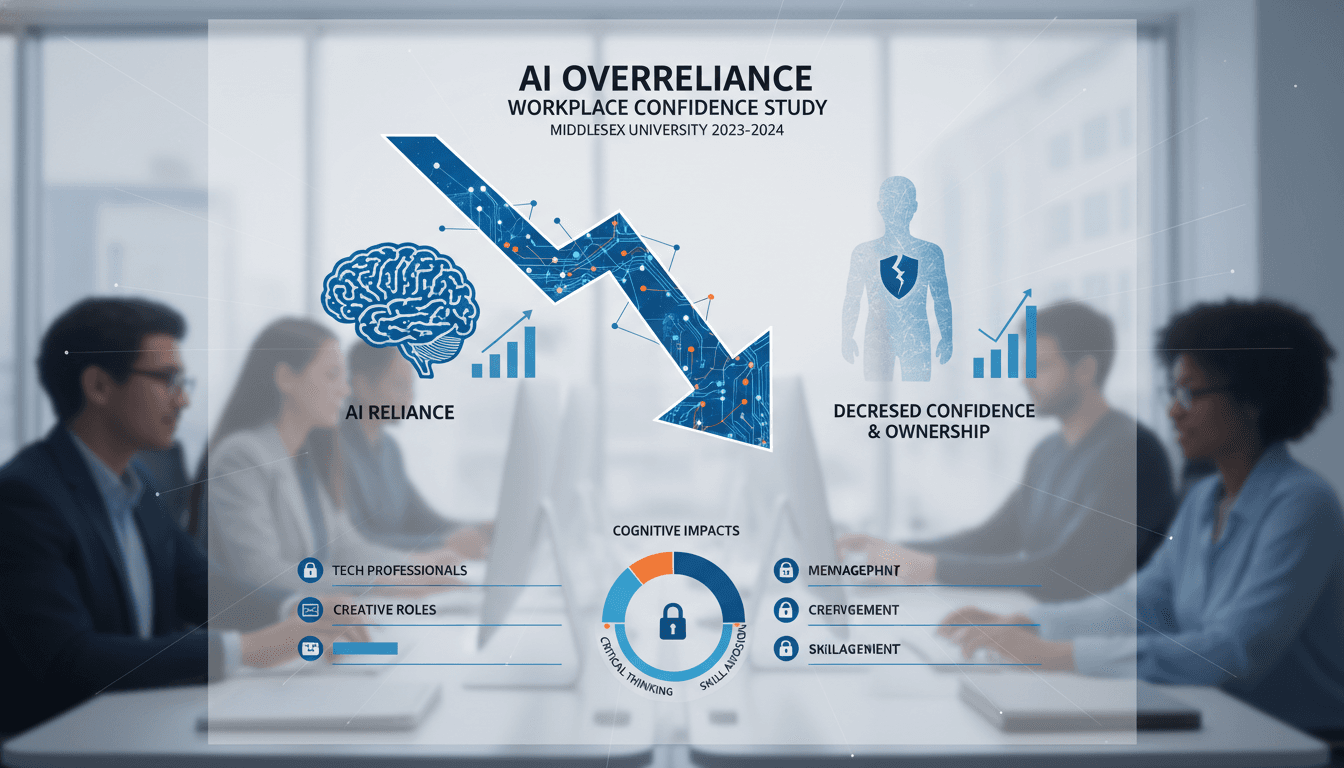
Here's what it means for you.
Your confidence and ownership in work tasks may be at risk as AI tools become more integrated into daily operations.
Why it matters
The findings from this study highlight a critical need for balance in AI usage to maintain cognitive engagement and job satisfaction.
What happened (in 30 seconds)
- A study published on April 16, 2026, by Middlesex University revealed that heavy reliance on AI diminishes users' confidence and sense of ownership.
- Nearly 2,000 adults participated in tasks involving AI for project prioritization and planning, showing a negative correlation between AI reliance and personal confidence.
- Participants reported trading speed for depth, indicating a conscious choice to prioritize efficiency over critical thinking.
The context you actually need
- AI tools have proliferated since 2023, raising concerns about their cognitive impacts on critical thinking and decision-making autonomy.
- Previous research indicated risks associated with AI hallucinations and overreliance, prompting further investigation into subjective experiences like confidence.
- The study's findings suggest that as AI becomes more integrated into workplaces, the potential for reduced cognitive engagement and job satisfaction increases.
What's really happening
The 2026 Middlesex University study, led by Ph.D. candidate Sarah Baldeo, examined the psychological effects of AI reliance in workplace tasks. With nearly 2,000 adult participants, the research focused on how using AI for tasks such as project prioritization, strategy explanation, and planning with incomplete information impacted users' confidence and ownership of their work.
The analysis revealed a troubling trend: as reliance on AI increased, participants reported lower confidence in their independent reasoning and a diminished sense of ownership over their outputs. This correlation suggests that while AI tools can enhance efficiency, they may simultaneously erode the cognitive engagement necessary for deeper thinking and personal investment in work tasks.
Participants noted that they often made minimal alterations to AI-generated content, indicating a passive acceptance of AI outputs rather than an active engagement with the material. This phenomenon was particularly pronounced among men, who reported greater reliance on AI than women. The study highlighted a conscious trade-off where users prioritized speed over depth, with one participant remarking on the faster but shallower nature of their thinking when using AI.
The implications of these findings are significant, especially in a rapidly evolving workplace landscape where AI tools are becoming ubiquitous. As organizations increasingly adopt AI for efficiency, the potential for reduced critical thinking and decision-making autonomy raises concerns about long-term cognitive impacts. The study underscores the importance of fostering a culture of AI literacy and encouraging employees to engage actively with their work rather than relying solely on AI-generated outputs.
In regions like the UAE, where AI adoption is notably high—97% of residents use AI, with 85% employing it for work tasks—the risks associated with overreliance are particularly pressing. Government staff in the UAE reported only 23% high confidence in generative AI outputs, suggesting a disconnect between usage and trust in AI-generated information. This scenario exposes potential risks of confidence erosion amid rapid integration and job displacement concerns for one-third of public sector roles.
Who feels it first (and how)
- Corporate employees: Those in roles heavily reliant on AI for decision-making may experience diminished confidence and ownership.
- Public sector workers: Government employees in the UAE face unique challenges with AI integration, impacting their job satisfaction and trust in outputs.
- AI developers and trainers: Professionals tasked with creating and implementing AI tools must consider the cognitive impacts on end-users.
What to watch next
- AI literacy training initiatives: As organizations recognize the need for balance, expect increased investment in training programs to enhance employee engagement with AI tools.
- Employee feedback mechanisms: Companies may implement systems to gauge employee confidence and satisfaction levels regarding AI usage, influencing future AI integration strategies.
- Regulatory discussions on AI: Watch for potential guidelines or frameworks aimed at ensuring responsible AI usage in workplaces, particularly in high-adoption regions like the UAE.
Heavy reliance on AI correlates with reduced confidence and ownership in work tasks.
Organizations will seek to implement AI literacy training to mitigate cognitive impacts.
The long-term effects of AI overreliance on job satisfaction and cognitive engagement remain to be fully understood.
Frequently Asked Questions
- Why it matters?
- The findings from this study highlight a critical need for balance in AI usage to maintain cognitive engagement and job satisfaction.
- What happened (in 30 seconds)?
- A study published on April 16, 2026, by Middlesex University revealed that heavy reliance on AI diminishes users' confidence and sense of ownership. Nearly 2,000 adults participated in tasks involving AI for project prioritization and planning, showing a negative correlation between AI reliance and personal confidence. Participants reported trading speed for depth, indicating a conscious choice to prioritize efficiency over critical thinking.
- What's really happening?
- The 2026 Middlesex University study, led by Ph.D. candidate Sarah Baldeo, examined the psychological effects of AI reliance in workplace tasks. With nearly 2,000 adult participants, the research focused on how using AI for tasks such as project prioritization, strategy explanation, and planning with incomplete information impacted users' confidence and ownership of their work. The analysis revealed a troubling trend: as reliance on AI increased, participants reported lower confidence in their
- Who feels it first (and how)?
- Corporate employees: Those in roles heavily reliant on AI for decision-making may experience diminished confidence and ownership. Public sector workers: Government employees in the UAE face unique challenges with AI integration, impacting their job satisfaction and trust in outputs. AI developers and trainers: Professionals tasked with creating and implementing AI tools must consider the cognitive impacts on end-users.
- What to watch next?
- AI literacy training initiatives: As organizations recognize the need for balance, expect increased investment in training programs to enhance employee engagement with AI tools. Employee feedback mechanisms: Companies may implement systems to gauge employee confidence and satisfaction levels regarding AI usage, influencing future AI integration strategies. Regulatory discussions on AI: Watch for potential guidelines or frameworks aimed at ensuring responsible AI usage in workplaces, particularly
Latest tech news, product reviews, and analysis for consumers and professionals.
"CNET delivers accessible and detailed technology reporting, including trusted product reviews and how-to guides."
— A47 Editor
Speed vs. Depth: How Does Using AI for Work Affect Our Confidence?
A study by the American Psychological Association reveals a negative correlation between the use of artificial intelligence (AI) in the workplace and employees' confidence in their abilities. As AI adoption increases, workers may feel less capable, p...
AI/ML research and technology news.
"Sister site to Phys.org focusing on tech research."
— A47 Editor
Overreliance on AI programs may undermine confidence at work, study finds
A recent study published in Technology, Mind, and Behavior reveals that overreliance on artificial intelligence (AI) tools may not only fail to diminish cognitive abilities but also undermine individuals' confidence in their independent reasoning and...