
NASA's Artemis II Mission Achieves Historic Crewed Lunar Flyby
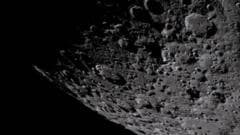
Here's what it means for you.
The Artemis II mission sets the stage for a new era of lunar exploration that could influence global aerospace markets and inspire future STEM careers.
Why it matters
This mission marks a significant step toward sustainable human presence on the Moon, impacting international collaborations and investments in space technology.
What happened (in 30 seconds)
- Artemis II launched on April 1, 2026, achieving the closest human approach to the Moon since 1972.
- The crew conducted a seven-hour flyby on April 6, capturing images of the far side of the Moon and witnessing a solar eclipse.
- The mission surpassed Apollo 13's distance record, reaching over 252,000 statute miles from Earth.
The context you actually need
- NASA's Artemis program aims to establish a sustainable lunar presence, building on the uncrewed Artemis I test flight in November 2022.
- The Orion spacecraft was tested for deep-space missions, validating systems necessary for future lunar landings.
- International collaboration is essential, with agencies like the UAE's MBRSC monitoring the mission and promoting local STEM education.
What's really happening
The Artemis II mission is not just a nostalgic return to lunar exploration; it represents a pivotal moment in the evolution of space travel. Launched on April 1, 2026, from Kennedy Space Center, the mission is part of NASA's broader Artemis program, which aims to establish a sustainable human presence on the Moon by the end of the decade. This mission is the first crewed deep-space flight since Apollo 17 in 1972, marking a significant leap in human spaceflight capabilities.
During the seven-hour flyby on April 6, the crew of four astronauts—Reid Wiseman, Victor Glover, Christina Koch, and Jeremy Hansen—achieved several milestones. They observed the Moon's far side for the first time, identified potential new craters, and captured stunning images of previously unseen lunar features. This data is crucial for future lunar missions, as understanding the Moon's surface will inform landing site selection and resource utilization strategies.
The mission also included a 40-minute communication blackout, a unique aspect that fostered crew bonding and teamwork. This blackout occurred as the spacecraft passed behind the Moon, highlighting the challenges of deep-space communication. Following this, the crew experienced a solar eclipse that allowed them to study the Sun's corona, providing valuable scientific data that could have implications for solar research and understanding space weather.
The Artemis II mission is a demonstration of advanced spacecraft systems, validating technologies that will be essential for future lunar landings and potential Mars missions. The successful execution of this mission not only boosts public enthusiasm for space exploration but also has positive repercussions for the aerospace industry. Companies like Boeing and Lockheed Martin, which are integral to the Artemis program, have seen stock gains as a result of the mission's success.
Moreover, the Artemis program is fostering international collaboration, with agencies like the UAE's MBRSC participating in monitoring and educational initiatives. This global interest in lunar exploration is likely to inspire a new generation of STEM professionals, as educational programs and partnerships expand in response to the excitement generated by missions like Artemis II.
Who feels it first (and how)
- Aerospace companies: Increased investment and stock performance in firms involved in the Artemis program.
- STEM educators: Opportunities to engage students with real-world applications of space science and technology.
- International space agencies: Enhanced collaboration and shared research initiatives in lunar exploration.
What to watch next
- Future Artemis missions: The success of Artemis II will set the tone for subsequent missions, including Artemis III, which aims to land astronauts on the Moon.
- Commercial space partnerships: Watch for new collaborations between NASA and private aerospace firms, which could reshape the landscape of space exploration.
- Public engagement initiatives: Increased outreach efforts to promote STEM education in response to heightened interest in space exploration.
Artemis II successfully completed its lunar flyby and is returning to Earth.
The mission will lead to increased investments in aerospace and STEM education initiatives.
The long-term impact on international space policy and collaboration remains to be seen.
Frequently Asked Questions
- Why it matters?
- This mission marks a significant step toward sustainable human presence on the Moon, impacting international collaborations and investments in space technology.
- What happened (in 30 seconds)?
- Artemis II launched on April 1, 2026, achieving the closest human approach to the Moon since 1972. The crew conducted a seven-hour flyby on April 6, capturing images of the far side of the Moon and witnessing a solar eclipse. The mission surpassed Apollo 13's distance record, reaching over 252,000 statute miles from Earth.
- What's really happening?
- The Artemis II mission is not just a nostalgic return to lunar exploration; it represents a pivotal moment in the evolution of space travel. Launched on April 1, 2026, from Kennedy Space Center, the mission is part of NASA's broader Artemis program, which aims to establish a sustainable human presence on the Moon by the end of the decade. This mission is the first crewed deep-space flight since Apollo 17 in 1972, marking a significant leap in human spaceflight capabilities. During the seven-hou
- Who feels it first (and how)?
- Aerospace companies: Increased investment and stock performance in firms involved in the Artemis program. STEM educators: Opportunities to engage students with real-world applications of space science and technology. International space agencies: Enhanced collaboration and shared research initiatives in lunar exploration.
- What to watch next?
- Future Artemis missions: The success of Artemis II will set the tone for subsequent missions, including Artemis III, which aims to land astronauts on the Moon. Commercial space partnerships: Watch for new collaborations between NASA and private aerospace firms, which could reshape the landscape of space exploration. Public engagement initiatives: Increased outreach efforts to promote STEM education in response to heightened interest in space exploration.
Latest tech news, product reviews, and analysis for consumers and professionals.
"CNET delivers accessible and detailed technology reporting, including trusted product reviews and how-to guides."
— A47 Editor
It's Artemis II Splashdown Day for the Astronauts (Live Updates)
The Artemis II mission, featuring astronauts Reid Wiseman, Victor Glover, Christina Koch, and Jeremy Hansen, is set for splashdown today after a historic journey that included capturing stunning images of Earth and traveling farther from it than any ...
Global news coverage with extensive reporting on Middle Eastern conflicts and geopolitics.
"Al Jazeera is a Qatar-based broadcaster known for wide regional coverage and alternative perspectives."
— A47 Editor
NASA releases picture of ‘Earthset’ shot by Artemis crew
NASA has released a remarkable image of an 'Earthset' captured by the Artemis II crew during their historic lunar flyby on April 6, 2026. This image echoes the iconic 'Earthrise' photograph taken by Apollo 8 astronauts over 57 years ago, marking a si...
Comprehensive coverage of Middle Eastern and global issues.
"Al Jazeera is a prominent voice from the Global South, especially the Middle East, with an emphasis on underreported stories."
— A47 Editor
NASA releases picture of ‘Earthset’ shot by Artemis crew
NASA has released a remarkable image of an 'Earthset' captured by the Artemis II crew during their historic lunar flyby on April 6, 2026. This image echoes the iconic 'Earthrise' photograph taken by Apollo 8 astronauts over 57 years ago, marking a si...
Capitol Hill news, legislation, and policy insight.
"The Hill specializes in U.S. politics and policy, with a focus on Capitol Hill developments and a reputation for insider reporting."
— A47 Editor
Watch live: NASA outlines Artemis II progress as mission wraps up
NASA officials provided an update on the Artemis II mission, highlighting the progress made as the crew prepares to return to Earth after a historic lunar flyby. The mission, which launched on April 1, 2026, included astronauts Reid Wiseman, Victor G...
Reports on climate change, environmental science, sustainability, and nature.
"BBC News is widely regarded as a reputable international news organization, known for its impartial tone and public service mandate."
— A47 Editor
What Artemis II astronauts saw in Moon fly-by
NASA's Artemis II mission has successfully completed a historic lunar flyby, with astronauts capturing stunning photographs of the Moon, including its far side and a total solar eclipse. This mission, which launched on April 1, 2026, marks the first ...
Capitol Hill news, legislation, and policy insight.
"The Hill specializes in U.S. politics and policy, with a focus on Capitol Hill developments and a reputation for insider reporting."
— A47 Editor
What did astronauts observe during the Artemis II lunar flyby?
The Artemis II mission, launched on April 1, 2026, successfully completed a historic lunar flyby, with the crew of four astronauts traveling farther from Earth than any humans in history. This mission marks the first crewed journey to the moon since ...