
European Commission Unveils Open-Source Age Verification App to Protect Minors Online
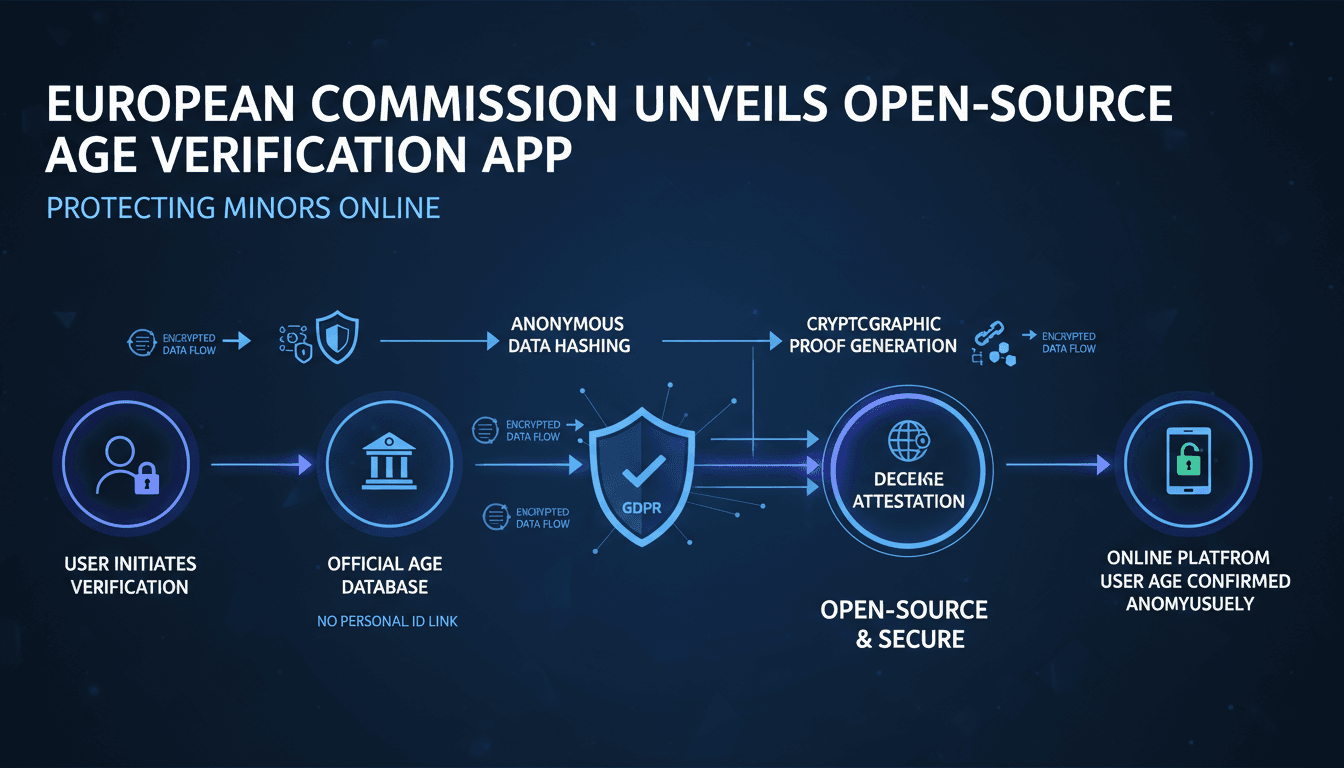
Here's what it means for you.
If you operate or engage with online platforms in the EU, prepare for new age verification requirements that could reshape user access and privacy.
Why it matters
The European Commission's age verification app is a pivotal step in regulating online safety for minors, impacting how platforms manage user access across the EU.
What happened (in 30 seconds)
- The European Commission launched an open-source age verification app on April 15, 2026, to comply with the Digital Services Act (DSA).
- The app allows users to verify their age anonymously using biometric data or ID without storing personal information.
- Platforms must integrate this app to avoid penalties under the DSA, which targets very large online platforms (VLOPs) with over 45 million monthly EU users.
The context you actually need
- The Digital Services Act (DSA) mandates that VLOPs implement measures to protect minors from harmful content, including robust age verification systems.
- Previous investigations into platforms like TikTok and Meta revealed inadequate age verification tools, prompting the need for a standardized solution.
- The app's development involved collaboration with tech partners Scytáles and T-Systems, aligning with broader EU digital identity initiatives.
What's really happening
The launch of the European Commission's age verification app marks a significant regulatory shift in how online platforms manage user access, particularly for minors. The DSA, which came into effect in 2024, requires VLOPs to identify and mitigate systemic risks to children, including inadequate age verification. This regulatory framework emerged from growing concerns about children's exposure to inappropriate content online, leading to investigations into major platforms that revealed their failure to implement effective age verification measures.
The app itself is designed to be privacy-preserving and open-source, allowing users to verify their age without the need for platforms to store personal data. Users can authenticate their age using various methods, including electronic IDs, passports, or biometric data, which generates an anonymous token for platforms via a QR code. This approach aims to balance the need for child protection with the imperative of safeguarding user privacy.
However, the rollout of this app is not without controversy. Privacy advocates have raised concerns about potential risks to anonymity and free expression, arguing that such verification systems could pave the way for increased surveillance. The European Commission has acknowledged these concerns but maintains that the app is essential for protecting minors online. As platforms are notified of their integration requirements, non-compliance could result in significant fines under the DSA.
The app's technical readiness signals a shift in the digital landscape, where compliance with regulatory frameworks will increasingly dictate how platforms operate. Member states are encouraged to adopt the app into their national digital wallets, further embedding this verification system into the fabric of online interactions. As the app becomes available for integration, platforms will need to navigate the complexities of compliance while addressing user concerns about privacy and security.
Who feels it first (and how)
- Online platforms: Must integrate the app to comply with DSA regulations or face penalties.
- Content creators and influencers: May experience changes in audience access and engagement due to age restrictions.
- Parents and guardians: Will have more tools to ensure their children are protected from harmful content online.
- Privacy advocates: Will monitor the app's implementation for potential risks to anonymity and free expression.
What to watch next
- Integration timelines: Monitor how quickly platforms adopt the app and the implications for user access.
- User feedback: Pay attention to how users respond to the app's functionality and privacy measures, which could influence future regulations.
- Legal challenges: Watch for potential legal disputes regarding privacy concerns and the app's impact on free expression.
The app is technically ready and will be available for integration by platforms.
Platforms will face pressure to comply with the DSA, leading to widespread adoption of the app.
The long-term impact on user privacy and potential legal challenges surrounding the app's implementation.
Frequently Asked Questions
- Why it matters?
- The European Commission's age verification app is a pivotal step in regulating online safety for minors, impacting how platforms manage user access across the EU.
- What happened (in 30 seconds)?
- The European Commission launched an open-source age verification app on April 15, 2026, to comply with the Digital Services Act (DSA). The app allows users to verify their age anonymously using biometric data or ID without storing personal information. Platforms must integrate this app to avoid penalties under the DSA, which targets very large online platforms (VLOPs) with over 45 million monthly EU users.
- What's really happening?
- The launch of the European Commission's age verification app marks a significant regulatory shift in how online platforms manage user access, particularly for minors. The DSA, which came into effect in 2024, requires VLOPs to identify and mitigate systemic risks to children, including inadequate age verification. This regulatory framework emerged from growing concerns about children's exposure to inappropriate content online, leading to investigations into major platforms that revealed their fai
- Who feels it first (and how)?
- Online platforms: Must integrate the app to comply with DSA regulations or face penalties. Content creators and influencers: May experience changes in audience access and engagement due to age restrictions. Parents and guardians: Will have more tools to ensure their children are protected from harmful content online. Privacy advocates: Will monitor the app's implementation for potential risks to anonymity and free expression.
- What to watch next?
- Integration timelines: Monitor how quickly platforms adopt the app and the implications for user access. User feedback: Pay attention to how users respond to the app's functionality and privacy measures, which could influence future regulations. Legal challenges: Watch for potential legal disputes regarding privacy concerns and the app's impact on free expression.
Business and policy angles on tech and AI.
"Business desk coverage intersecting with AI trends."
— A47 Editor
Europe’s Online Age Verification App Is Here
Europe has launched a free online age verification app aimed at blocking access to porn sites and social media platforms for minors, marking a significant step in digital safety. The app is designed to be completely anonymous, encouraging companies t...
Emerging technologies, digital transformation, IT, and cultural impact of tech.
"WIRED covers the intersection of technology, culture, and politics with a progressive, forward-looking editorial stance."
— A47 Editor
Europe’s Online Age Verification App Is Here
Europe has launched a free online age verification app aimed at blocking access to porn sites and social media platforms for minors, marking a significant step in digital safety. The app is designed to be completely anonymous, encouraging companies t...
Latest tech news, product reviews, and analysis for consumers and professionals.
"CNET delivers accessible and detailed technology reporting, including trusted product reviews and how-to guides."
— A47 Editor
How to Keep Kids Safe Online? Europe Believes Its Age Verification App Is the Answer
The European Commission has announced that its new age verification app, aimed at keeping children safe online, is technically ready and will soon be available, as stated by President Ursula von der Leyen. This initiative comes in response to growing...
Curated tech headlines including AI stories.
"Influential aggregator surfacing the day’s top tech/AI links."
— A47 Editor
The EU unveils an open-source age verification app, which requires showing ID, to shield kids from harmful content, setting the standard for verification tech (Gian Volpicelli/Bloomberg)
The European Union has introduced an open-source age verification app designed to confirm users' ages online, requiring users to show identification. This initiative aims to protect minors from harmful content and sets a new standard for verification...
Technology business news, market impacts, and innovation trends.
"Bloomberg is a premier financial and tech news provider, respected for its in-depth reporting and analytical rigor."
— A47 Editor
EU Unveils Age Verification App as Social Media Bans Gain Steam
The European Union has introduced a new app designed to verify users' ages online, establishing a benchmark for age verification technology as various countries contemplate legislation to restrict social media access for younger teenagers.
Technology and innovation coverage, including consumer tech and digital transformation stories.
"Emirates 24|7 technology coverage often highlights practical tech developments with relevance to Gulf readers and businesses."
— A47 Editor
EU children's social media access curbed soon as age verification app is ready EU children's social media access curbed soon as age verification app is ready
The European Commission has announced the readiness of an age verification app aimed at regulating children's access to social media, as stated by President Ursula von der Leyen. This initiative comes as EU member states, inspired by Australia's rece...