
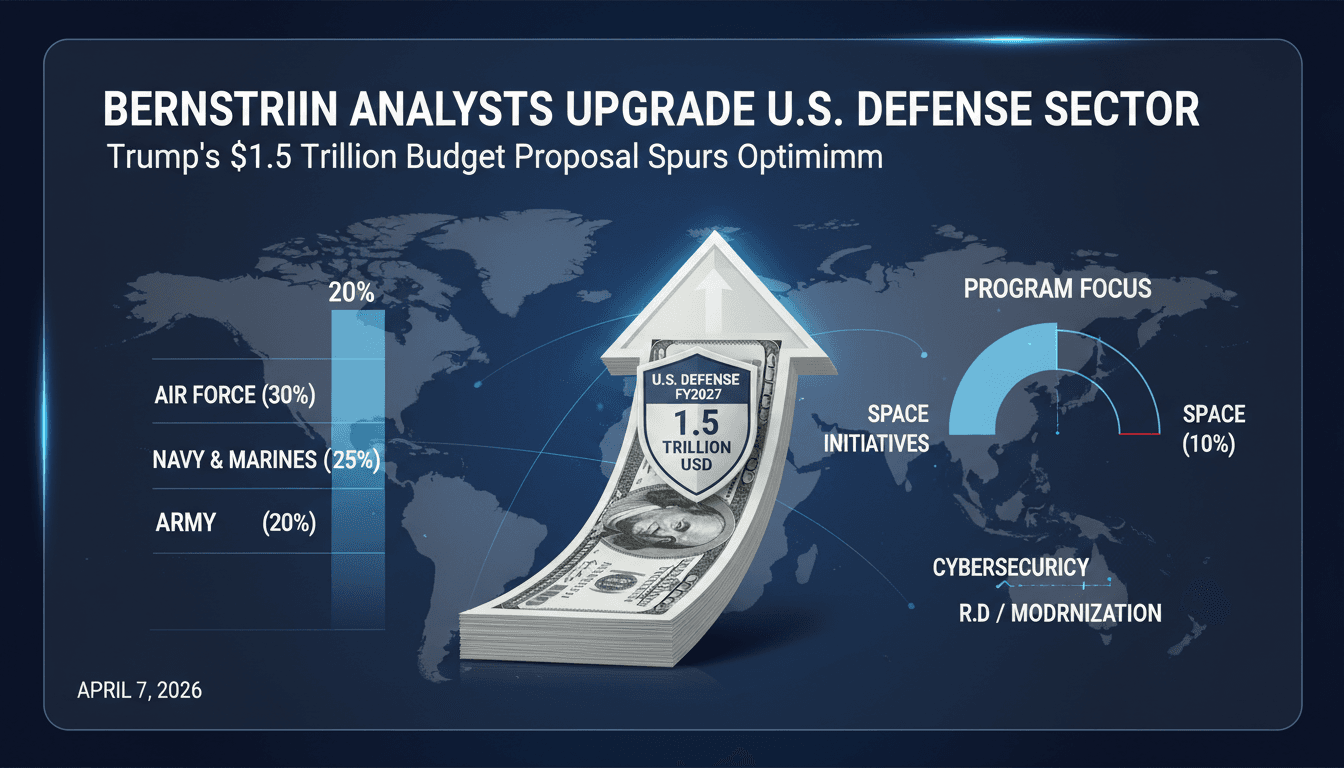
Bernstein Analysts Upgrade U.S. Defense Sector Outlook Following Trump's $1.5 Trillion Budget Proposal
Here's what it means for you.
If you work in defense contracting or related sectors, expect increased funding and opportunities in the coming years.
Why it matters
This budget proposal signifies a major shift in U.S. defense spending priorities amid global tensions, impacting both domestic and international markets.
What happened (in 30 seconds)
- Bernstein analysts raised their outlook for the U.S. defense sector following President Trump's proposed $1.5 trillion defense budget for fiscal year 2027.
- Congressional negotiations may trim the budget to $1.2 trillion, but analysts still expect positive impacts, especially for space programs.
- Increased procurement and R&D allocations reflect heightened geopolitical tensions, particularly related to Iran.
The context you actually need
- Defense spending is set to rise from 56% of discretionary spending in fiscal 2025 to 68% in fiscal 2027, reflecting a strategic pivot.
- Geopolitical pressures from conflicts with Iran, China, and Russia are driving this budget increase, with significant implications for U.S. military capabilities.
- Congressional reactions are mixed, with Republicans supporting the budget as a necessary response to threats, while Democrats criticize it for domestic cuts.
What's really happening
On April 3, 2026, President Trump unveiled a fiscal 2027 budget proposal that allocates a staggering $1.5 trillion to defense, marking a 50% increase from fiscal 2025 levels. This budget includes $1.45 trillion for the Department of Defense (DoD) and additional funding for nuclear programs under the Department of Energy. The proposal emphasizes substantial increases across various military branches: Army procurement is set to rise by 113%, the Navy by 58%, and the Air Force by 50%, with a notable focus on Space Force initiatives.
The budget's allocation reflects a strategic shift in response to ongoing geopolitical tensions, particularly the U.S. war with Iran and rising threats from China and Russia. The Trump administration has consistently prioritized defense spending, redirecting funds from non-defense discretionary programs, which will see a 10% cut to $660 billion. This reallocation aims to bolster procurement (up 101%) and research, development, testing, and evaluation (RDT&E) (up 63%).
Analysts at Bernstein have responded positively to this budget proposal, projecting favorable outcomes for defense stocks such as L3Harris, Northrop Grumman, Lockheed Martin, and Boeing, even if congressional negotiations lead to budget reductions. The anticipated $350 billion supplemental funding further underscores the administration's commitment to enhancing military capabilities.
However, the proposal has sparked mixed reactions in Congress. Republicans have hailed it as a bold move to address national security threats, while Democrats have labeled it "dead on arrival," criticizing the domestic cuts required to fund such an increase. The market has reacted with optimism, evidenced by Lockheed Martin's shares rising 52% over the past year, but analysts caution that sector indices may experience volatility due to ongoing war fatigue related to the Iran conflict.
This budget proposal not only reflects the U.S. government's commitment to defense but also highlights the intricate balance between national security needs and domestic spending priorities. As geopolitical tensions continue to evolve, the implications of this budget will resonate across various sectors, influencing defense contractors, investors, and international relations.
Who feels it first (and how)
- Defense contractors: Companies like Lockheed Martin and Northrop Grumman will see increased contracts and funding opportunities.
- Investors: Those holding stocks in defense-related companies may benefit from rising share prices and market optimism.
- U.S. military personnel: Increased funding could translate into better resources and support for military operations.
- International partners: Countries allied with the U.S. may experience shifts in defense collaboration and arms exports.
What to watch next
- Congressional negotiations: Watch for outcomes of budget discussions, as any reductions could impact specific defense programs and contractors.
- Market reactions: Monitor stock performance of defense companies in response to budget approvals or amendments.
- Geopolitical developments: Keep an eye on tensions with Iran and other nations, as these will influence future defense spending and priorities.
The proposed defense budget is $1.5 trillion, a significant increase from previous years.
Congressional negotiations will lead to some budget reductions, but overall defense spending will remain elevated.
The long-term impact on domestic programs and the overall economy as defense spending increases.
Frequently Asked Questions
- Why it matters?
- This budget proposal signifies a major shift in U.S. defense spending priorities amid global tensions, impacting both domestic and international markets.
- What happened (in 30 seconds)?
- Bernstein analysts raised their outlook for the U.S. defense sector following President Trump's proposed $1.5 trillion defense budget for fiscal year 2027. Congressional negotiations may trim the budget to $1.2 trillion, but analysts still expect positive impacts, especially for space programs. Increased procurement and R&D allocations reflect heightened geopolitical tensions, particularly related to Iran.
- What's really happening?
- On April 3, 2026, President Trump unveiled a fiscal 2027 budget proposal that allocates a staggering $1.5 trillion to defense, marking a 50% increase from fiscal 2025 levels. This budget includes $1.45 trillion for the Department of Defense (DoD) and additional funding for nuclear programs under the Department of Energy. The proposal emphasizes substantial increases across various military branches: Army procurement is set to rise by 113%, the Navy by 58%, and the Air Force by 50%, with a notabl
- Who feels it first (and how)?
- Defense contractors: Companies like Lockheed Martin and Northrop Grumman will see increased contracts and funding opportunities. Investors: Those holding stocks in defense-related companies may benefit from rising share prices and market optimism. U.S. military personnel: Increased funding could translate into better resources and support for military operations. International partners: Countries allied with the U.S. may experience shifts in defense collaboration and arms exports.
- What to watch next?
- Congressional negotiations: Watch for outcomes of budget discussions, as any reductions could impact specific defense programs and contractors. Market reactions: Monitor stock performance of defense companies in response to budget approvals or amendments. Geopolitical developments: Keep an eye on tensions with Iran and other nations, as these will influence future defense spending and priorities.
Brokerage upgrades/downgrades, price-target changes, and fresh coverage that move single names and sectors.
"Handy for tracking sentiment shifts from the sell side and consensus drift."
— A47 Editor
Bernstein raises defense outlook on Trump’s $1.5 trillion budget
Bernstein has raised its defense outlook in response to President Trump's proposed $1.5 trillion increase in military spending, which marks the largest surge in defense budgets in 75 years. This budget aims to enhance national security amid evolving ...
Stock market news, investing ideas, and trading analysis.
"TheStreet provides market news and retail-investor-focused analysis."
— A47 Editor
Trump's $2.2T proposed defense budget boosts Lockheed Martin's outlook
President Donald Trump has proposed a $2.2 trillion defense budget for 2027, which includes a significant $1.5 trillion allocation for defense, positively impacting Lockheed Martin's outlook as missile demand increases and the company expands its pro...