
U.S. Military Plans Global Boarding Operations Against Iran-Linked Vessels Amid Strait of Hormuz Tensions
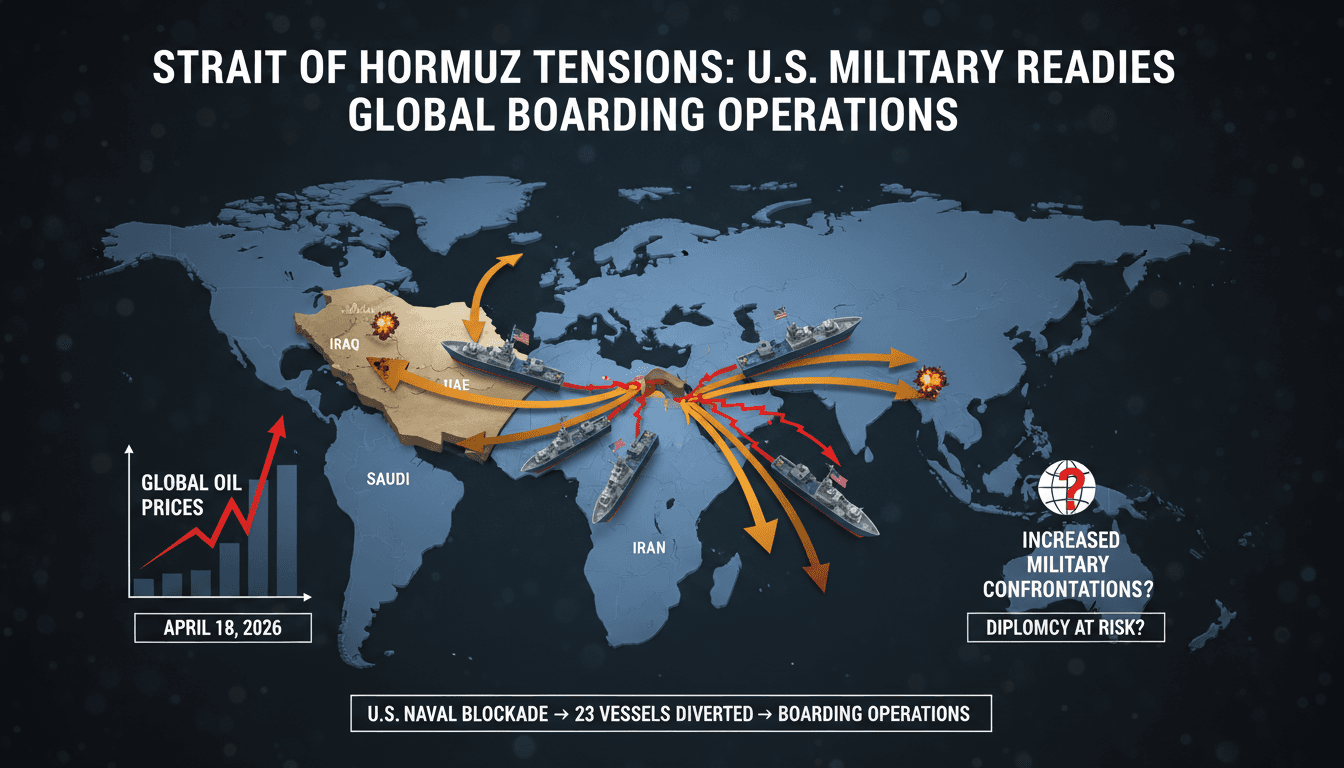
Here's what it means for you.
If you rely on global oil markets or shipping routes, the U.S. military's actions could lead to increased costs and delays.
Why it matters
The U.S. military's blockade and potential boarding operations could significantly disrupt oil supply chains and elevate global energy prices.
What happened (in 30 seconds)
- On April 18, 2026, the U.S. military announced preparations to deploy boarding parties to seize Iran-linked ships in international waters.
- U.S. Central Command reported diverting 23 vessels from Iranian ports amid escalating tensions in the Strait of Hormuz.
- Iranian forces retaliated by attacking commercial vessels, further complicating the situation and raising fears of broader conflict.
The context you actually need
- The crisis began in late February 2026, following an Israeli airstrike that killed Iran's Supreme Leader, escalating U.S.-Iran hostilities.
- Despite a temporary ceasefire, Iran continued to export oil through shadow fleets, undermining sanctions and prompting U.S. military action.
- The Strait of Hormuz is a critical chokepoint for global oil transport, with approximately 20% of the world's oil passing through it daily.
What's really happening
The U.S. military's preparations for boarding operations are a direct response to Iran's continued defiance of international sanctions and its aggressive posture in the Strait of Hormuz. Following the assassination of Iran's Supreme Leader, the geopolitical landscape shifted dramatically, leading to heightened tensions between the U.S. and Iran. The U.S. aims to enforce a naval blockade to compel Iran to adhere to international norms regarding oil exports and nuclear negotiations.
The U.S. Central Command's decision to divert 23 vessels from Iranian ports illustrates the seriousness of the blockade. This action is not merely a show of force; it is a strategic maneuver designed to disrupt Iran's economy, which heavily relies on oil exports. By targeting 'dark fleet' vessels that evade sanctions, the U.S. seeks to undermine Iran's ability to fund its military and nuclear ambitions.
The operational readiness of the 31st Marine Expeditionary Unit, which conducted maritime raid training exercises aboard the USS Tripoli, signals a commitment to enforcing this blockade. The Pentagon's expansion of interdiction efforts to include global operations against Iran-linked vessels indicates a broader strategy to isolate Iran economically and politically.
However, this approach carries risks. Iranian officials have already denounced the U.S. blockade as a violation of the ceasefire, and the Islamic Revolutionary Guard Corps (IRGC) has threatened to retaliate against vessels in the region. This tit-for-tat escalation could lead to a broader military confrontation, impacting not only regional stability but also global oil markets.
The volatility in oil prices, with Brent crude hovering near $90-100 per barrel, reflects market anxiety over these developments. As the U.S. pursues its objectives, the potential for increased fuel costs and shipping delays looms large, affecting consumers and businesses worldwide.
Who feels it first (and how)
- Oil traders: Increased prices and volatility in the market could lead to significant financial losses or gains.
- Shipping companies: Potential delays and rerouting could disrupt schedules and increase operational costs.
- Consumers in Dubai: Heightened fuel costs and food price inflation could strain household budgets, particularly as wheat prices rise.
- U.S. military personnel: Increased operational tempo and risk in the region could affect morale and safety.
What to watch next
- Oil price fluctuations: Monitor Brent crude prices as they may indicate market reactions to U.S. military actions and Iranian responses.
- Shipping delays: Watch for reports of increased shipping times through the Strait of Hormuz, which could signal broader disruptions.
- Diplomatic negotiations: Keep an eye on any renewed efforts for negotiations between the U.S. and Iran, as these could impact military operations and market stability.
The U.S. military is actively preparing for boarding operations against Iran-linked vessels.
Oil prices will remain volatile as tensions escalate and market participants react to news.
The long-term effectiveness of the U.S. blockade in compelling Iran to negotiate or alter its behavior remains uncertain.
Frequently Asked Questions
- Why it matters?
- The U.S. military's blockade and potential boarding operations could significantly disrupt oil supply chains and elevate global energy prices.
- What happened (in 30 seconds)?
- On April 18, 2026, the U.S. military announced preparations to deploy boarding parties to seize Iran-linked ships in international waters. U.S. Central Command reported diverting 23 vessels from Iranian ports amid escalating tensions in the Strait of Hormuz. Iranian forces retaliated by attacking commercial vessels, further complicating the situation and raising fears of broader conflict.
- What's really happening?
- The U.S. military's preparations for boarding operations are a direct response to Iran's continued defiance of international sanctions and its aggressive posture in the Strait of Hormuz. Following the assassination of Iran's Supreme Leader, the geopolitical landscape shifted dramatically, leading to heightened tensions between the U.S. and Iran. The U.S. aims to enforce a naval blockade to compel Iran to adhere to international norms regarding oil exports and nuclear negotiations. The U.S. Cent
- Who feels it first (and how)?
- Oil traders: Increased prices and volatility in the market could lead to significant financial losses or gains. Shipping companies: Potential delays and rerouting could disrupt schedules and increase operational costs. Consumers in Dubai: Heightened fuel costs and food price inflation could strain household budgets, particularly as wheat prices rise. U.S. military personnel: Increased operational tempo and risk in the region could affect morale and safety.
- What to watch next?
- Oil price fluctuations: Monitor Brent crude prices as they may indicate market reactions to U.S. military actions and Iranian responses. Shipping delays: Watch for reports of increased shipping times through the Strait of Hormuz, which could signal broader disruptions. Diplomatic negotiations: Keep an eye on any renewed efforts for negotiations between the U.S. and Iran, as these could impact military operations and market stability.
Corporate leadership, finance, technology, and market trends.
"Fortune covers financial trends, leadership, and innovation with a pragmatic editorial approach."
— A47 Editor
The U.S. is ready to seize Iran-linked ships with boarding parties, report says, while Marines practice maritime raids
The U.S. military is reportedly preparing to board ships linked to Iran, with Marines conducting training for maritime interception operations. This readiness reflects a strategic shift aimed at exerting pressure on Iran amid rising tensions.
Pan-Arab news coverage spanning politics, business, sports, and regional affairs.
"Asharq Al-Awsat reflects a broad Arab editorial perspective with strong attention to regional geopolitics."
— A47 Editor
تقرير: الجيش الأميركي يستعد لمداهمة سفن مرتبطة بإيران
The U.S. military is reportedly preparing to raid oil tankers linked to Iran, as stated by officials in a report by The Wall Street Journal. This action involves the potential seizure of commercial vessels associated with Iranian interests.
Arabic-language UAE newspaper coverage focused on domestic affairs, public institutions, business, society, and regional developments.
"Al Khaleej coverage generally reflects a mainstream UAE editorial lens with strong attention to public affairs, institutions, and regional developments."
— A47 Editor
الجيش الأمريكي يوسع حصاره بمطاردة السفن الإيرانية حول العالم
The U.S. military is preparing to raid ships linked to Iran worldwide, expanding its campaign to blockade Iranian ports. This move indicates a significant escalation in U.S. efforts to exert pressure on Iran through maritime operations.
Arabic-language political and world news coverage for UAE readers.
"Emarat Al Youm world coverage usually presents international developments through a UAE and Arab audience lens."
— A47 Editor
وول ستريت جورنال: الجيش الأميركي يستعد لمداهمة سفن مرتبطة بإيران وول ستريت جورنال: الجيش الأميركي يستعد لمداهمة سفن مرتبطة بإيران
The Wall Street Journal reported that U.S. military officials are preparing for potential raids on ships linked to Iran in the coming days. This development highlights ongoing tensions between the United States and Iran, particularly concerning marit...
Arabic-language UAE newspaper coverage focused on domestic affairs, public institutions, business, society, and regional developments.
"Al Khaleej coverage generally reflects a mainstream UAE editorial lens with strong attention to public affairs, institutions, and regional developments."
— A47 Editor
انطلاقاً من السفينة «طرابلس».. 3500 جندي أمريكي يحاصرون موانئ إيران
The United States Marine Corps has commenced intensive training operations for 3,500 troops aboard the USS Tripoli, focusing on live-lift exercises aimed at enhancing operational readiness in the region. This military maneuver is part of a broader st...