
Rümeysa Öztürk Returns to Türkiye After U.S. Deportation Settlement
Here's what it means for you.
The outcome of Öztürk's case highlights the precarious nature of academic freedom and immigration policies, impacting international scholars and students globally.
Why it matters
The case underscores the tension between immigration enforcement and academic expression, raising concerns for foreign students and scholars in the U.S.
What happened (in 30 seconds)
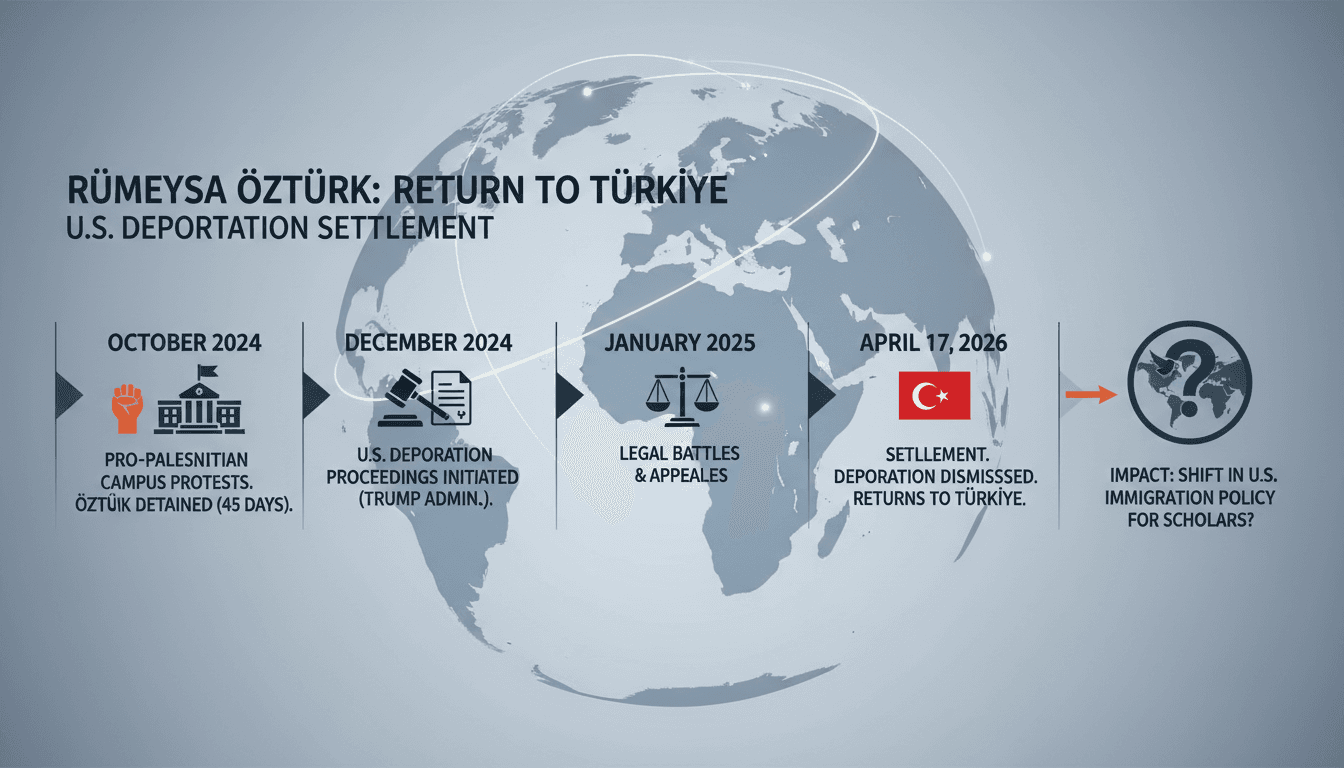
- Öztürk was arrested on March 25, 2025, by ICE agents in Massachusetts for co-signing a pro-Palestinian op-ed.
- After 45 days of detention, a federal court ruled in her favor, leading to the dismissal of deportation proceedings in February 2026.
- On April 17, 2026, she returned to Türkiye following a settlement that acknowledged her legal status and allowed her to leave without further legal issues.
The context you actually need
- Trump's executive order in January 2025 aimed to target perceived anti-Semitic activities, impacting non-citizens involved in protests.
- Öztürk's case is part of a broader crackdown on campus activism related to the Israel-Gaza conflict, affecting many international students.
- The ACLU's involvement highlights ongoing concerns about First Amendment rights and the treatment of foreign scholars in the U.S.
What's really happening
Rümeysa Öztürk's case is emblematic of the intersection between immigration policy and academic freedom during a politically charged era in the United States. Following the inauguration of President Donald Trump in January 2025, the administration intensified its focus on perceived anti-Semitic activities, particularly those linked to the Israel-Palestine conflict. This included an executive order that empowered the Department of Homeland Security (DHS) to target non-citizens involved in protests or activism deemed anti-Semitic.
Öztürk, a legal immigrant who had spent 13 years in the U.S. pursuing her education, became a target after co-signing an op-ed in the Tufts Daily advocating for divestment from companies linked to Israel. The DHS's claims of her alleged support for Hamas were unsubstantiated, yet they led to her arrest by plainclothes ICE agents in March 2025. Her subsequent 45-day detention in a Louisiana facility was marked by poor conditions, raising alarms about the treatment of detainees under the Trump administration.
The legal battle that ensued saw Öztürk's case gain traction, culminating in a federal court ruling that granted her release and dismissed the deportation proceedings. The ACLU's involvement was crucial, as they advocated for her rights and highlighted the implications of such cases for academic freedom and free speech. The settlement reached in early April 2026 allowed Öztürk to leave the U.S. voluntarily, a move she described as a means to avoid further "state-imposed violence" and to focus on her scholarly pursuits back in Türkiye.
This case not only reflects the challenges faced by international scholars in the U.S. but also signals a broader trend of increasing scrutiny and potential repercussions for academic expression. The implications extend beyond Öztürk, as many foreign students and scholars may now reconsider their positions and activities in the U.S. academic landscape, fearing similar repercussions.
Who feels it first (and how)
- International scholars: Increased scrutiny may deter them from engaging in activism or expressing controversial opinions.
- U.S. universities: Institutions may face challenges in attracting foreign talent due to fears of deportation or legal repercussions.
- Students: Those involved in activism may reconsider their participation in protests or public discourse, impacting campus culture.
What to watch next
- Legal challenges: Monitor ongoing litigation related to immigration policies affecting international students and scholars.
- Campus activism trends: Watch for shifts in student engagement and activism in response to heightened scrutiny.
- Policy changes: Keep an eye on potential reforms in immigration policy that could impact the treatment of foreign scholars.
Öztürk's case has been resolved with her return to Türkiye and the dismissal of deportation proceedings.
Increased caution among international scholars and students regarding activism in the U.S.
The long-term impact on U.S. academic institutions' ability to attract and retain international talent.
Frequently Asked Questions
- Why it matters?
- The case underscores the tension between immigration enforcement and academic expression, raising concerns for foreign students and scholars in the U.S.
- What happened (in 30 seconds)?
- Öztürk was arrested on March 25, 2025, by ICE agents in Massachusetts for co-signing a pro-Palestinian op-ed. After 45 days of detention, a federal court ruled in her favor, leading to the dismissal of deportation proceedings in February 2026. On April 17, 2026, she returned to Türkiye following a settlement that acknowledged her legal status and allowed her to leave without further legal issues.
- What's really happening?
- Rümeysa Öztürk's case is emblematic of the intersection between immigration policy and academic freedom during a politically charged era in the United States. Following the inauguration of President Donald Trump in January 2025, the administration intensified its focus on perceived anti-Semitic activities, particularly those linked to the Israel-Palestine conflict. This included an executive order that empowered the Department of Homeland Security (DHS) to target non-citizens involved in protest
- Who feels it first (and how)?
- International scholars: Increased scrutiny may deter them from engaging in activism or expressing controversial opinions. U.S. universities: Institutions may face challenges in attracting foreign talent due to fears of deportation or legal repercussions. Students: Those involved in activism may reconsider their participation in protests or public discourse, impacting campus culture.
- What to watch next?
- Legal challenges: Monitor ongoing litigation related to immigration policies affecting international students and scholars. Campus activism trends: Watch for shifts in student engagement and activism in response to heightened scrutiny. Policy changes: Keep an eye on potential reforms in immigration policy that could impact the treatment of foreign scholars.
Global news coverage with extensive reporting on Middle Eastern conflicts and geopolitics.
"Al Jazeera is a Qatar-based broadcaster known for wide regional coverage and alternative perspectives."
— A47 Editor
Scholar Rumeysa Ozturk returns to Turkiye following Trump deportation push
Scholar Rumeysa Ozturk has returned to Turkiye after a push for her deportation by former President Trump, citing a desire to avoid further state-imposed violence and hostility. Ozturk's decision reflects her response to the political climate and cha...
Comprehensive coverage of Middle Eastern and global issues.
"Al Jazeera is a prominent voice from the Global South, especially the Middle East, with an emphasis on underreported stories."
— A47 Editor
Scholar Rumeysa Ozturk returns to Turkiye following Trump deportation push
Scholar Rumeysa Ozturk has returned to Turkiye after a push for her deportation by former President Trump, citing a desire to avoid further state-imposed violence and hostility. Ozturk's decision reflects her response to the political climate and cha...
Regional coverage and analysis focused on politics, diplomacy, and business across the Middle East.
"Al-Monitor is known for analytical reporting on Middle East politics and policy developments."
— A47 Editor
Turkish doctoral student detained by US immigration returns home
Rumeysa Ozturk, a Turkish doctoral student at Tufts University, has returned to Turkey after being detained by US immigration authorities for six weeks due to her pro-Palestinian activism. Her return was confirmed by the American Civil Liberties Unio...
Regional coverage and analysis focused on politics, diplomacy, and business across the Middle East.
"Al-Monitor is known for analytical reporting on Middle East politics and policy developments."
— A47 Editor
Pro-Palestinian Tufts University graduate targeted by Trump administration returns to Turkey
Rumeysa Ozturk, a Tufts University graduate who was arrested by U.S. immigration agents last year due to her pro-Palestinian activism, has returned to Turkey following a settlement with the Trump administration. This development comes after a judge p...