
Israel Approves 34 New Settlements in Occupied West Bank
Here's what it means for you.
Increased geopolitical tensions may impact global markets and investment strategies.
Why it matters
This expansion could exacerbate regional instability, influencing international relations and economic conditions.
What happened (in 30 seconds)
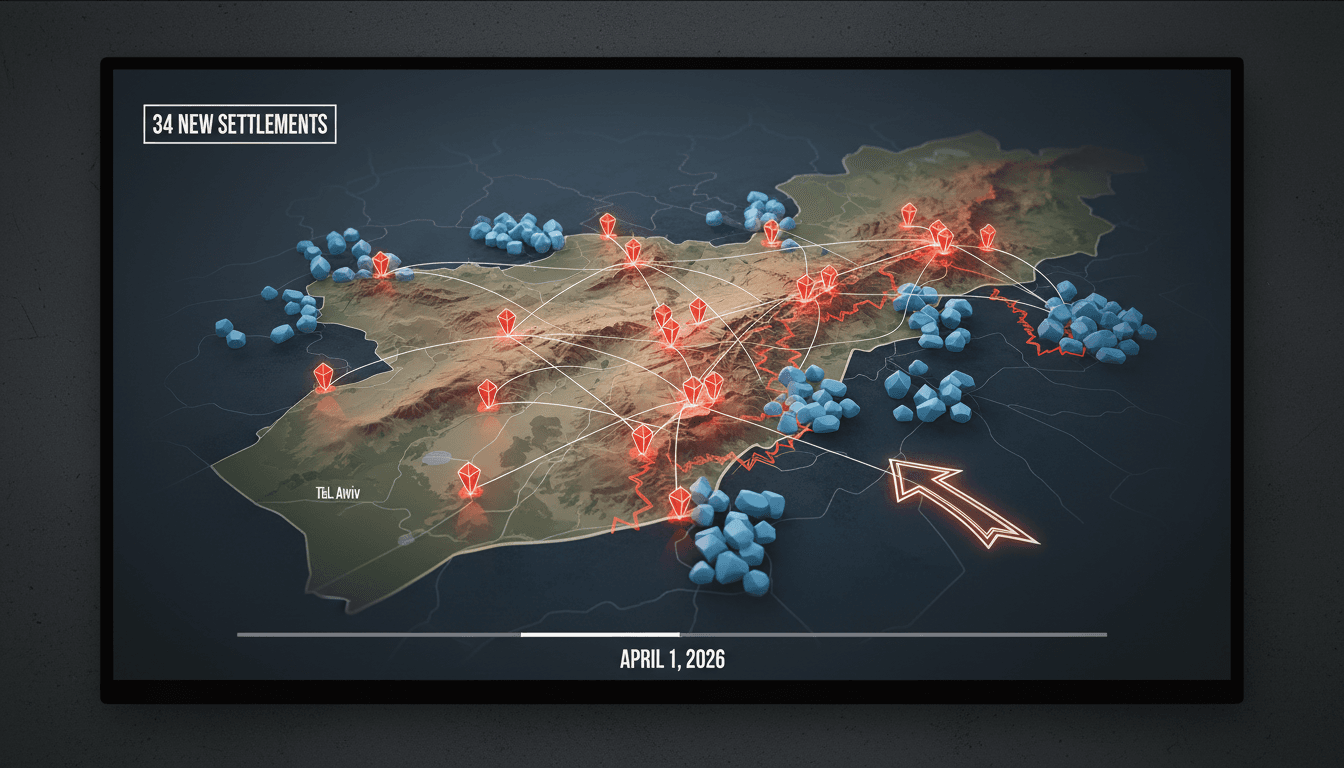
- On April 1, 2026, Israel's Security Cabinet approved 34 new settlements in the occupied West Bank, the largest single-batch authorization in history.
- The decision includes 24 new settlements and 10 outposts for legalization, all located in Area C, which is under full Israeli control.
- International reactions have been swift, with widespread condemnation for violating international law and concerns over escalating violence.
The context you actually need
- Settlement policy has intensified under Prime Minister Benjamin Netanyahu, with a reported 102 settlements approved since December 2022, marking an 80% increase.
- Post-October 2023 conflicts have led to heightened tensions, with increased settler violence displacing Palestinian communities and straining Israeli Defense Forces (IDF) resources.
- The April 1 decision aligns with the ambitions of settler leaders to create irreversible facts on the ground, potentially influencing future elections.
What's really happening
On April 1, 2026, during a classified meeting, Israel's Security Cabinet made a significant move by approving the establishment of 34 new settlements in the occupied West Bank, a decision that underscores the ongoing complexities of the Israeli-Palestinian conflict. This approval includes 24 new settlements and the legalization of 10 outposts, all situated in Area C, which is under full Israeli control. The decision remained under wraps until April 9, when it was reported by Israeli media and watchdog organizations, revealing a strategic push to solidify Israeli presence in contested territories.
The implications of this decision are profound. It not only reflects the Israeli government's commitment to expanding its settlements but also highlights the increasing influence of settler leaders within the political landscape. Figures like Finance Minister Bezalel Smotrich have been vocal proponents of such expansions, aiming to create irreversible demographic and territorial changes before potential elections. This move is seen as a direct response to the escalating regional tensions following the Gaza war and confrontations with Iran, which have shifted the focus of Israeli policy towards securing its hold on the West Bank.
The IDF has expressed concerns regarding the manpower needed to manage these new settlements amid rising violence from settlers, which has led to increased displacement of Palestinian communities. The approval of these settlements is likely to exacerbate tensions, as Palestinian leadership has labeled the decision a "dangerous escalation" and a breach of international law. The Organization of Islamic Cooperation (OIC) has also condemned the move, reflecting a broader international discontent with Israel's settlement policies.
Infrastructure planning for water and electricity is already underway, indicating that the Israeli government is moving quickly to implement these changes. The Samaria Council, representing settler interests, has celebrated this decision as a step towards their "Plan for a Million" settlers, which aims to significantly increase the Jewish population in the West Bank. This ambitious plan is not just about numbers; it is about altering the political landscape and making any future negotiations regarding the territory more complicated.
As the situation evolves, the international community is watching closely. The lack of immediate market shifts suggests that investors may currently be taking a wait-and-see approach, but the long-term implications of this settlement expansion could lead to increased volatility in the region, affecting everything from travel to investment sentiment.
Who feels it first (and how)
- Palestinian communities: Facing increased displacement and violence, leading to humanitarian concerns.
- Israeli settlers: Benefiting from expanded infrastructure and support from the government.
- International investors: Potentially impacted by heightened geopolitical risks and instability in the region.
- Regional governments: May need to reassess diplomatic relations and security strategies in response to increased tensions.
What to watch next
- International diplomatic responses: Monitor how countries and organizations react to the settlement expansion, as this could influence Israel's future policies.
- Settler violence trends: Increased violence could lead to further displacement of Palestinians and strain IDF resources, impacting regional stability.
- Infrastructure developments: Watch for the speed and scale of infrastructure projects in the new settlements, which could signal Israel's long-term intentions in the West Bank.
The approval of 34 new settlements has been confirmed by multiple sources.
Increased tensions and violence in the region as a result of the settlement expansion.
The long-term impact on international relations and market stability.
Frequently Asked Questions
- Why it matters?
- This expansion could exacerbate regional instability, influencing international relations and economic conditions.
- What happened (in 30 seconds)?
- On April 1, 2026, Israel's Security Cabinet approved 34 new settlements in the occupied West Bank, the largest single-batch authorization in history. The decision includes 24 new settlements and 10 outposts for legalization, all located in Area C, which is under full Israeli control. International reactions have been swift, with widespread condemnation for violating international law and concerns over escalating violence.
- What's really happening?
- On April 1, 2026, during a classified meeting, Israel's Security Cabinet made a significant move by approving the establishment of 34 new settlements in the occupied West Bank, a decision that underscores the ongoing complexities of the Israeli-Palestinian conflict. This approval includes 24 new settlements and the legalization of 10 outposts, all situated in Area C, which is under full Israeli control. The decision remained under wraps until April 9, when it was reported by Israeli media and wa
- Who feels it first (and how)?
- Palestinian communities: Facing increased displacement and violence, leading to humanitarian concerns. Israeli settlers: Benefiting from expanded infrastructure and support from the government. International investors: Potentially impacted by heightened geopolitical risks and instability in the region. Regional governments: May need to reassess diplomatic relations and security strategies in response to increased tensions.
- What to watch next?
- International diplomatic responses: Monitor how countries and organizations react to the settlement expansion, as this could influence Israel's future policies. Settler violence trends: Increased violence could lead to further displacement of Palestinians and strain IDF resources, impacting regional stability. Infrastructure developments: Watch for the speed and scale of infrastructure projects in the new settlements, which could signal Israel's long-term intentions in the West Bank.
Arabic-language UAE newspaper coverage focused on domestic affairs, public institutions, business, society, and regional developments.
"Al Khaleej coverage generally reflects a mainstream UAE editorial lens with strong attention to public affairs, institutions, and regional developments."
— A47 Editor
إسرائيل توافق سراً على إنشاء 34 مستوطنة جديدة في الضفة
An Israeli organization reported on Thursday that Israel has secretly approved the establishment of 34 new settlements in the West Bank. This development raises concerns regarding the ongoing tensions in the region and the impact on the Israeli-Pales...
Arabic-language coverage of political affairs and current events.
"Okaz political coverage typically follows mainstream Saudi framing on national and regional affairs."
— A47 Editor
«الكابينت» يصادق سراً على بناء 34 مستوطنة بالضفة الغربية
Israeli media reported that the Israeli security cabinet, known as the 'kabinett', has secretly approved the establishment of 34 new settlements in the West Bank, marking the largest single settlement decision made by the cabinet. The new settlements...
UAE-based English-language newspaper covering regional politics, economics, and global affairs.
"The National reflects Emirati policy perspectives while maintaining international editorial standards."
— A47 Editor
Israel 'secretly approves' 34 new settlements in occupied West Bank
Israel has reportedly approved the establishment of 34 new Jewish settlements in the occupied West Bank, a decision that has not been publicly announced by the government but was revealed by the watchdog group Peace Now. This move occurs amid rising ...