
U.S. Retail Sales Rise 1.7 Percent in March 2026 Amid Gasoline Price Surge
Here's what it means for you.
Rising gasoline prices could impact your budget and spending habits, influencing everything from commuting costs to discretionary purchases.
Why it matters
The increase in retail sales signals consumer resilience amid rising energy costs, which could shape economic forecasts and spending patterns.
What happened (in 30 seconds)
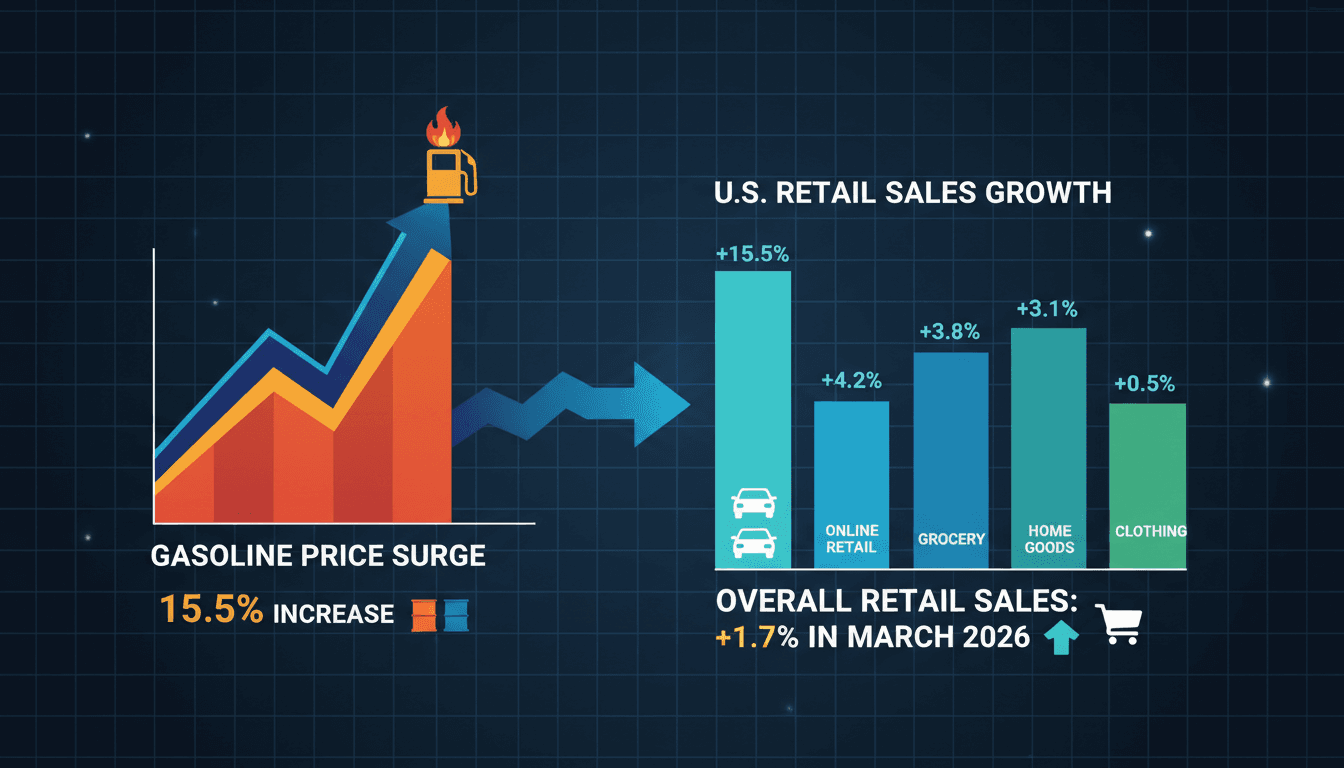
- U.S. retail sales rose by 1.7 percent in March 2026, driven by a significant 15.5 percent increase in gasoline station sales.
- Gasoline prices surged by 25.1 percent due to disruptions in the Strait of Hormuz linked to the U.S.-Iran conflict.
- Excluding gasoline, retail sales still grew by 0.6 percent, indicating broader consumer spending across various sectors.
The context you actually need
- The U.S.-Iran conflict began on February 28, 2026, leading to significant disruptions in global oil supplies, particularly through the Strait of Hormuz.
- Gasoline prices reached $3.64 per gallon in March, marking a substantial increase that directly influenced consumer behavior and spending.
- Retail sectors such as department stores and online retail also saw gains, suggesting that while fuel prices rose, overall consumer confidence remained intact.
What's really happening
The recent surge in U.S. retail sales can be traced back to the geopolitical tensions surrounding the U.S.-Iran conflict, which began in late February 2026. As Iranian forces disrupted the Strait of Hormuz, a critical artery for global oil transport, the immediate effect was a sharp contraction in oil supplies. This disruption led to a staggering 25.1 percent month-over-month increase in gasoline prices, pushing the average price to $3.64 per gallon in March.
As consumers faced higher fuel costs, spending patterns shifted dramatically. Gasoline station sales skyrocketed by 15.5 percent, reflecting not only the increased prices but also a heightened demand as consumers rushed to fill their tanks amid fears of shortages. This spike in gasoline sales accounted for a significant portion of the overall retail sales growth, which reached $752.1 billion in March, surpassing economist expectations of a 1.4 percent increase.
However, the data reveals a more nuanced picture. Excluding gasoline sales, retail sales still advanced by 0.6 percent, indicating that consumers were not solely driven by fuel purchases. Sectors such as department stores (up 4.2 percent), furniture (up 2.2 percent), and online retail (up 1.0 percent) also contributed to the overall growth. This suggests that while energy inflation is a pressing concern, consumer resilience remains strong, with many still willing to spend on non-essential items despite rising costs.
The aftermath of these developments has been mixed in the markets. U.S. equities advanced, reflecting investor confidence in consumer spending, while cryptocurrencies like Bitcoin approached $77,000, indicating a broader risk-on sentiment. Meanwhile, Gulf markets displayed a divergence, with UAE non-oil sectors showing growth despite the regional strains caused by the conflict.
In summary, the interplay between geopolitical events and consumer behavior is shaping the current economic landscape. As fuel prices rise, they not only affect direct spending on gasoline but also influence broader consumer confidence and spending habits across various sectors.
Who feels it first (and how)
- Commuters: Increased transportation costs directly impact daily budgets.
- Retailers: Gasoline station sales surge, while other sectors may see varied impacts based on consumer spending shifts.
- Low to middle-income households: More sensitive to fuel price increases, affecting discretionary spending.
- Online retailers: May benefit from shifts in consumer purchasing behavior as people adjust their spending priorities.
What to watch next
- Gasoline price trends: Continued fluctuations could further influence consumer spending and overall economic health.
- Retail sector performance: Monitoring sales data in the coming months will reveal if the growth trend continues or if consumers pull back due to rising costs.
- Geopolitical developments: Any escalation in the U.S.-Iran conflict could lead to further disruptions in oil supply, impacting prices and consumer behavior.
Retail sales increased by 1.7 percent in March 2026, driven by gasoline sales.
Continued volatility in gasoline prices will affect consumer spending patterns in the near term.
The long-term impact of the U.S.-Iran conflict on global oil supplies and U.S. economic stability remains uncertain.
Frequently Asked Questions
- Why it matters?
- The increase in retail sales signals consumer resilience amid rising energy costs, which could shape economic forecasts and spending patterns.
- What happened (in 30 seconds)?
- U.S. retail sales rose by 1.7 percent in March 2026, driven by a significant 15.5 percent increase in gasoline station sales. Gasoline prices surged by 25.1 percent due to disruptions in the Strait of Hormuz linked to the U.S.-Iran conflict. Excluding gasoline, retail sales still grew by 0.6 percent, indicating broader consumer spending across various sectors.
- What's really happening?
- The recent surge in U.S. retail sales can be traced back to the geopolitical tensions surrounding the U.S.-Iran conflict, which began in late February 2026. As Iranian forces disrupted the Strait of Hormuz, a critical artery for global oil transport, the immediate effect was a sharp contraction in oil supplies. This disruption led to a staggering 25.1 percent month-over-month increase in gasoline prices, pushing the average price to $3.64 per gallon in March. As consumers faced higher fuel cost
- Who feels it first (and how)?
- Commuters: Increased transportation costs directly impact daily budgets. Retailers: Gasoline station sales surge, while other sectors may see varied impacts based on consumer spending shifts. Low to middle-income households: More sensitive to fuel price increases, affecting discretionary spending. Online retailers: May benefit from shifts in consumer purchasing behavior as people adjust their spending priorities.
- What to watch next?
- Gasoline price trends: Continued fluctuations could further influence consumer spending and overall economic health. Retail sector performance: Monitoring sales data in the coming months will reveal if the growth trend continues or if consumers pull back due to rising costs. Geopolitical developments: Any escalation in the U.S.-Iran conflict could lead to further disruptions in oil supply, impacting prices and consumer behavior.
Key macro releases (CPI, jobs, PMIs), surprise indexes, and market implications.
"Great for data-print awareness and instant read-through to rates and risk assets."
— A47 Editor
Record surge in gasoline receipts boosts US retail sales, but weakness is looming
A record surge in gasoline receipts has significantly boosted U.S. retail sales, indicating a strong consumer spending trend. However, there are concerns about potential weaknesses on the horizon that could impact future sales performance.
Pan-Arab news coverage spanning politics, business, sports, and regional affairs.
"Asharq Al-Awsat reflects a broad Arab editorial perspective with strong attention to regional geopolitics."
— A47 Editor
نمو مبيعات التجزئة الأميركية بـ1.7 % في مارس بدفع من قفزة أسعار الوقود
U.S. retail sales increased by 1.7% in March, primarily driven by a surge in fuel prices, indicating a rise in consumer spending compared to the previous month. The majority of this spending was concentrated in gas stations, reflecting the impact of ...
Social/economic commentary and analysis relevant to business and markets.
"WSJ blends data-driven economic insight with commentary on policy and society."
— A47 Editor
Higher Gasoline Prices Lifted March Retail Sales
Total retail sales in the U.S. increased by 1.7% in March, following a 0.7% rise in February, primarily driven by higher gasoline prices amid the ongoing conflict in Iran. Consumers faced increased costs at the pump, which contributed to this uptick ...
U.S. business news, corporate developments, and economy.
"The Wall Street Journal is respected for deep financial and economic reporting with a center-right editorial perspective."
— A47 Editor
Higher Gasoline Prices Lifted March Retail Sales
Total retail sales in the United States rose by 1.7% in March, following a 0.7% increase in February, largely driven by a significant rise in gasoline prices amid the ongoing conflict in Iran. Consumers faced higher costs at the pump, which contribut...