
Backdoor Vulnerabilities Exposed in Essential Plugin WordPress Plugins Following Ownership Change
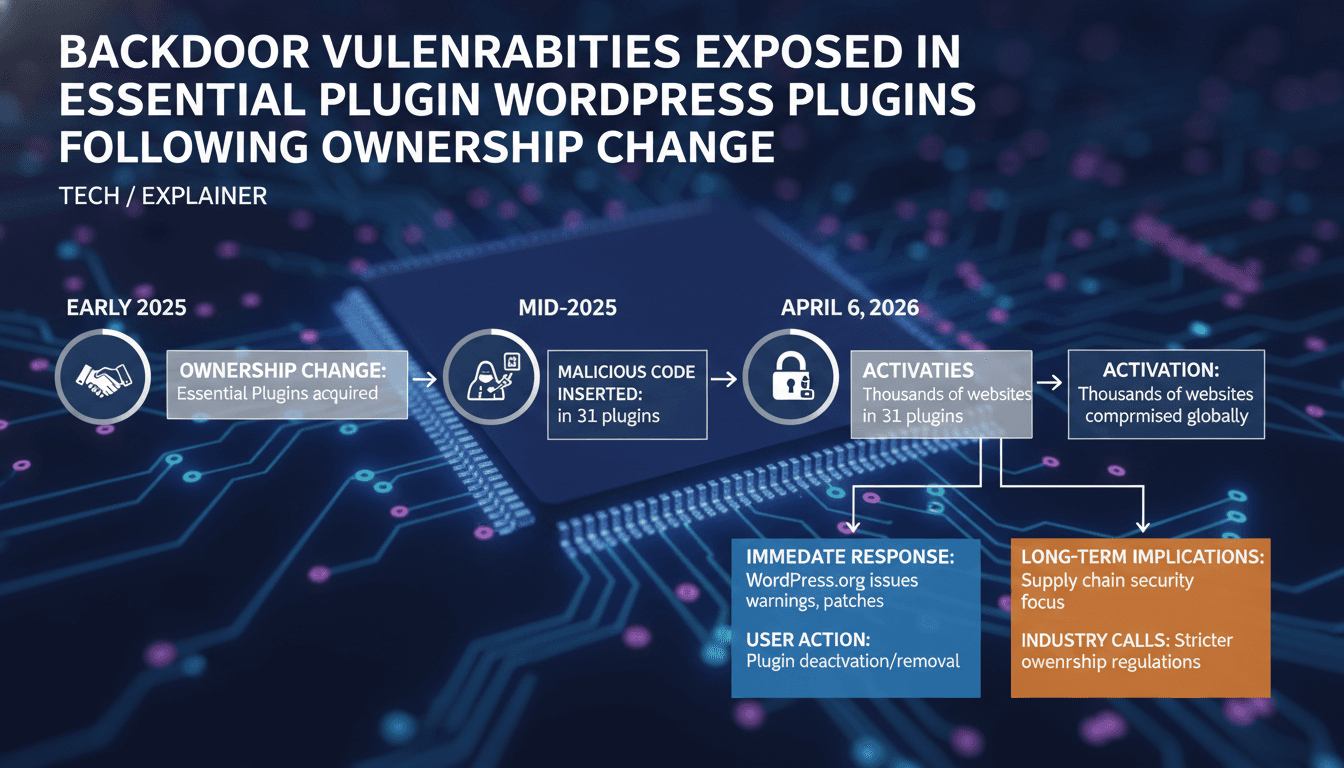
Here's what it means for you.
If you manage a WordPress site, the recent backdoor incident highlights the critical need for vigilance in plugin management and ownership changes.
Why it matters
This incident underscores significant vulnerabilities in the WordPress ecosystem, particularly regarding plugin ownership transfers and the potential for widespread compromise.
What happened (in 30 seconds)
- Backdoors activated: On April 6, 2026, dormant backdoors in 31 Essential Plugin WordPress plugins were activated, compromising thousands of websites.
- Malware injection: The backdoors allowed remote code execution, injecting malware into wp-config.php files to serve SEO spam.
- Immediate response: WordPress.org permanently closed all affected plugins and issued forced updates to mitigate the threat.
The context you actually need
- Ownership transfer risks: Essential Plugin, originally founded in 2015, was sold in early 2025 to a new owner via Flippa, raising concerns about the vetting process for plugin ownership changes.
- Historical precedents: This incident echoes previous backdoor attacks in 2017, where acquired plugins were similarly compromised, affecting hundreds of thousands of sites.
- Lack of oversight: WordPress.org currently lacks mechanisms to notify users or review ownership changes, enabling undetected code alterations that can lead to widespread vulnerabilities.
What's really happening
The backdoor incident involving Essential Plugin is a stark reminder of the vulnerabilities inherent in the WordPress ecosystem, particularly regarding plugin ownership transfers. In early 2025, the Essential Plugin portfolio was sold to a new owner, 'Kris,' who had connections to SEO, cryptocurrency, and online gambling sectors. This acquisition, facilitated through the Flippa marketplace, raised immediate red flags about the potential for malicious intent.
The new owner introduced backdoors into the plugins, starting with Countdown Timer Ultimate v2.6.7 on August 8, 2025. These backdoors utilized PHP deserialization vulnerabilities, allowing for remote code execution. For eight months, the backdoors remained dormant, but on April 6, 2026, they were activated, enabling the plugins to communicate with an external server and inject malware into the wp-config.php files of affected websites. This malware served SEO spam, which was only visible to search engine bots, effectively compromising the integrity of countless sites.
The incident highlights a critical gap in the WordPress ecosystem: the lack of oversight during ownership transfers. WordPress.org does not currently have mechanisms in place to notify users of ownership changes or to review the code of plugins after such transfers. This absence of oversight allows for undetected alterations that can lead to significant security risks. The rapid response from WordPress.org to close the affected plugins and issue forced updates demonstrates the urgency of addressing these vulnerabilities, but it also raises questions about the long-term implications for plugin developers and users alike.
As the digital landscape continues to evolve, the need for enhanced security measures and vetting processes becomes increasingly apparent. The Essential Plugin incident serves as a wake-up call for both developers and users to prioritize security and remain vigilant against potential threats. The implications of this incident extend beyond just the affected plugins; they signal a broader need for improved practices in the management of digital assets and the importance of maintaining trust within the WordPress community.
Who feels it first (and how)
- Website administrators: Those managing WordPress sites using the affected plugins face immediate risks of malware infection and SEO spam.
- Small business owners: Many small businesses rely on these plugins for functionality, making them vulnerable to reputational damage and loss of customer trust.
- Developers and agencies: Web developers and agencies that utilize Essential Plugin products may experience disruptions in their services and increased workload due to the need for cleanup and remediation.
What to watch next
- Increased scrutiny on plugin ownership: Expect calls for more stringent vetting processes for plugin ownership transfers to prevent similar incidents in the future.
- Emergence of security-focused plugins: The market may see a rise in plugins designed specifically to enhance security and monitor for backdoor vulnerabilities.
- User education initiatives: There may be a push for educational resources aimed at helping users understand the risks associated with plugin management and ownership changes.
The backdoor incident compromised thousands of websites globally, affecting the integrity of the WordPress ecosystem.
There will be increased discussions around the need for better security practices and oversight in plugin management.
The long-term impact on user trust in the WordPress ecosystem and how it will affect plugin development and sales remains uncertain.
Frequently Asked Questions
- Why it matters?
- This incident underscores significant vulnerabilities in the WordPress ecosystem, particularly regarding plugin ownership transfers and the potential for widespread compromise.
- What happened (in 30 seconds)?
- Backdoors activated: On April 6, 2026, dormant backdoors in 31 Essential Plugin WordPress plugins were activated, compromising thousands of websites. Malware injection: The backdoors allowed remote code execution, injecting malware into wp-config.php files to serve SEO spam. Immediate response: WordPress.org permanently closed all affected plugins and issued forced updates to mitigate the threat.
- What's really happening?
- The backdoor incident involving Essential Plugin is a stark reminder of the vulnerabilities inherent in the WordPress ecosystem, particularly regarding plugin ownership transfers. In early 2025, the Essential Plugin portfolio was sold to a new owner, 'Kris,' who had connections to SEO, cryptocurrency, and online gambling sectors. This acquisition, facilitated through the Flippa marketplace, raised immediate red flags about the potential for malicious intent. The new owner introduced backdoors i
- Who feels it first (and how)?
- Website administrators: Those managing WordPress sites using the affected plugins face immediate risks of malware infection and SEO spam. Small business owners: Many small businesses rely on these plugins for functionality, making them vulnerable to reputational damage and loss of customer trust. Developers and agencies: Web developers and agencies that utilize Essential Plugin products may experience disruptions in their services and increased workload due to the need for cleanup and remedi
- What to watch next?
- Increased scrutiny on plugin ownership: Expect calls for more stringent vetting processes for plugin ownership transfers to prevent similar incidents in the future. Emergence of security-focused plugins: The market may see a rise in plugins designed specifically to enhance security and monitor for backdoor vulnerabilities. User education initiatives: There may be a push for educational resources aimed at helping users understand the risks associated with plugin management and ownership chang
Tech news, hardware, and AI tools coverage.
"PC/tech site increasingly covering AI hardware and apps."
— A47 Editor
Popular WordPress plugins backdoored after ownership change, putting thousands of websites at risk
A significant security breach has been reported involving popular WordPress plugins that were compromised following a change in ownership. The new owner has allegedly weaponized these plugins to download and distribute malicious code, affecting numer...
Consumer tech news, reviews, and buying guides for gadgets and electronics.
"TechRadar is known for comprehensive buying advice, hardware reviews, and consumer tech news targeted at mainstream audiences."
— A47 Editor
WordPress websites under attack — expert report says dozens of plugins hijacked to target thousands of sites
A recent report reveals that a malicious actor acquired a struggling WordPress plugin company and introduced malware into its products, compromising numerous websites. This incident highlights a significant security breach affecting thousands of Word...
Startup news with frequent AI coverage.
"Covers launches, funding, and product updates in AI."
— A47 Editor
Someone planted backdoors in dozens of WordPress plug-ins used in thousands of websites
Dozens of WordPress plug-ins have reportedly been compromised to introduce malware after being acquired by a new corporate owner, raising significant security concerns for the thousands of websites that utilize these tools.
Tech startup news, programming trends, and discussions shared by the developer community.
"Hacker News is a community-driven source highlighting influential tech discussions, startup launches, and programming insights."
— A47 Editor
Someone Bought 30 WordPress Plugins and Planted a Backdoor in All of Them
A significant security breach has been reported involving the purchase of 30 WordPress plugins, which were subsequently compromised to include a backdoor, allowing unauthorized access to affected websites. This incident raises alarms about the integr...