
Cuba Experiences Nationwide Power Grid Collapse Amid Fuel Crisis
Here's what it means for you.
The ongoing energy crisis in Cuba could influence global energy prices and supply chains, affecting markets you engage with.
Why it matters
Cuba's power grid collapse highlights vulnerabilities in energy infrastructure that can resonate globally, particularly in regions reliant on aging systems.
What happened (in 30 seconds)
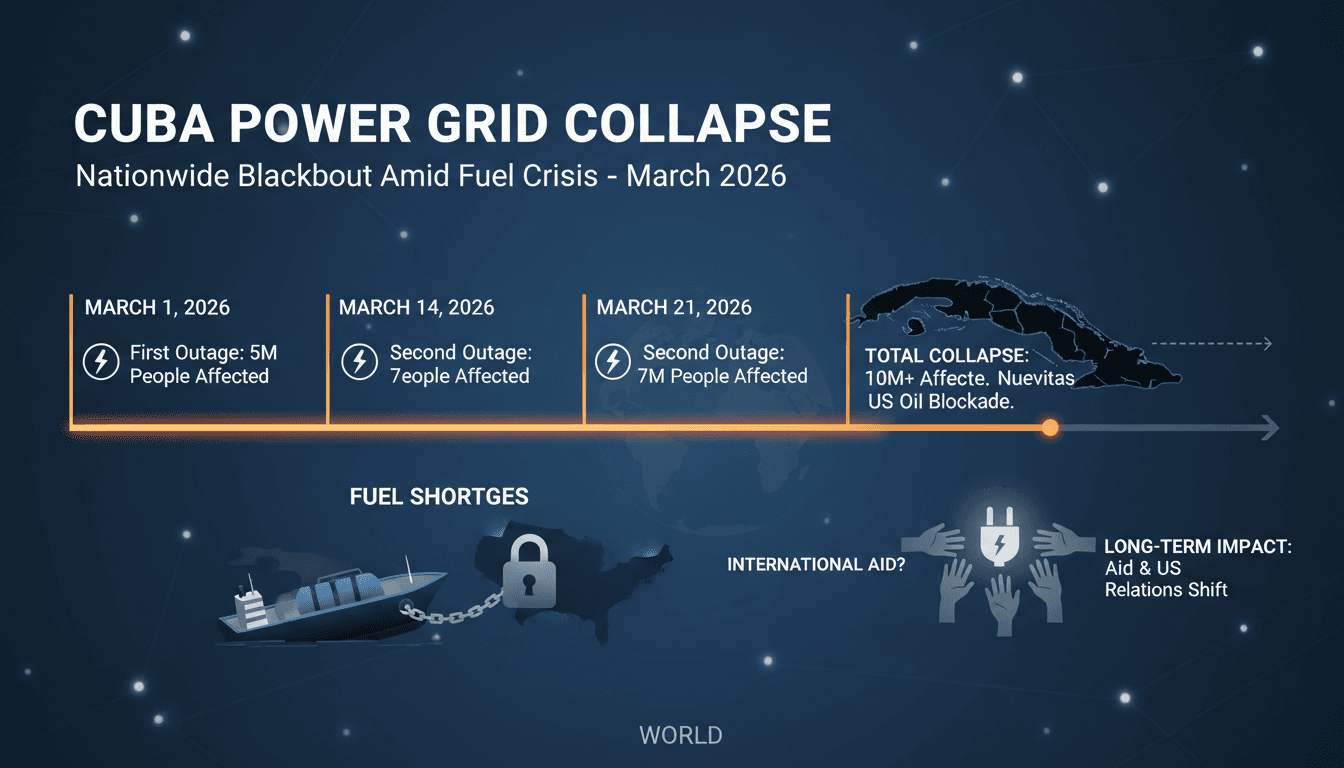
- Total blackout: On March 21, 2026, Cuba experienced a nationwide power grid collapse, impacting over 10 million residents.
- Immediate restoration efforts: Restoration began the next day, with partial power returned to half of Havana and critical services.
- Ongoing crisis: The situation remains critical as the government implements emergency measures amid severe fuel shortages.
The context you actually need
- Aging infrastructure: Cuba's energy system relies heavily on outdated thermoelectric plants, exacerbated by chronic fuel shortages.
- Fuel supply issues: The U.S. oil blockade and recent geopolitical shifts have halted key petroleum supplies, with Cuba generating only 40% of its fuel domestically.
- Public unrest: The crisis has led to protests and civil unrest, indicating widespread dissatisfaction with the government's handling of the energy situation.
What's really happening
Cuba's energy crisis is rooted in a combination of systemic failures, geopolitical pressures, and infrastructural decay. The collapse of the power grid on March 21, 2026, was not an isolated incident; it followed two previous outages earlier that month, highlighting a pattern of instability in the national energy supply. The immediate cause of the blackout was a sudden shutdown at the Nuevitas thermoelectric plant, a critical facility in Camagüey province. This plant's failure was exacerbated by chronic fuel shortages, which have plagued Cuba for years.
The Cuban government attributes these shortages primarily to a U.S.-imposed oil blockade that has intensified since early 2026. The blockade has severely limited Cuba's ability to import the necessary fuel, especially after tariffs were imposed on oil exporters to Cuba, further straining an already fragile energy landscape. With no foreign oil imports for three months leading up to the blackout, the situation reached a tipping point.
In response to the blackout, the Cuban government initiated immediate restoration efforts, focusing on critical infrastructure such as hospitals and water systems through microgrids. However, these measures are merely temporary fixes to a much larger problem. The energy crisis has prompted the government to ration fuel and reduce workplace hours, indicating a significant shift in daily life for many Cubans.
Public reaction has been intense, with protests erupting in Havana and other cities. Citizens have expressed their frustration through demonstrations, including pot-banging and even attacks on government buildings. This unrest signals a growing dissatisfaction with the government's management of the energy crisis and its broader implications for daily life.
Internationally, the crisis has drawn attention, with aid convoys from countries like Mexico delivering solar panels and other supplies to assist in recovery efforts. However, the U.S. has maintained its blockade policy, complicating any potential for a swift resolution. The combination of these factors creates a precarious situation for Cuba, where the energy crisis is not just an isolated incident but a symptom of deeper systemic issues.
Who feels it first (and how)
- Cuban citizens: Over 10 million residents are directly affected by power outages and fuel shortages, impacting daily life and access to essential services.
- Healthcare workers: Hospitals are struggling to maintain operations without reliable power, affecting patient care.
- Local businesses: Many businesses face reduced hours and operational capacity due to energy rationing, impacting income and employment.
- International aid organizations: Groups providing assistance face logistical challenges in delivering aid amid ongoing unrest and infrastructure issues.
What to watch next
- Restoration progress: Monitor the speed and effectiveness of power restoration efforts in Cuba, as this will indicate the government's capacity to manage the crisis.
- Public response: Watch for signs of increasing civil unrest or protests, which could signal growing dissatisfaction with the government's handling of the energy crisis.
- International relations: Keep an eye on any shifts in U.S. policy regarding the oil blockade, as changes could significantly impact Cuba's energy supply and recovery efforts.
The blackout affected over 10 million residents and prompted immediate restoration efforts.
Public unrest will continue as citizens demand better management of the energy crisis.
The long-term implications of the energy crisis on Cuba's economy and international relations remain uncertain.
Frequently Asked Questions
- Why it matters?
- Cuba's power grid collapse highlights vulnerabilities in energy infrastructure that can resonate globally, particularly in regions reliant on aging systems.
- What happened (in 30 seconds)?
- Total blackout: On March 21, 2026, Cuba experienced a nationwide power grid collapse, impacting over 10 million residents. Immediate restoration efforts: Restoration began the next day, with partial power returned to half of Havana and critical services. Ongoing crisis: The situation remains critical as the government implements emergency measures amid severe fuel shortages.
- What's really happening?
- Cuba's energy crisis is rooted in a combination of systemic failures, geopolitical pressures, and infrastructural decay. The collapse of the power grid on March 21, 2026, was not an isolated incident; it followed two previous outages earlier that month, highlighting a pattern of instability in the national energy supply. The immediate cause of the blackout was a sudden shutdown at the Nuevitas thermoelectric plant, a critical facility in Camagüey province. This plant's failure was exacerbated by
- Who feels it first (and how)?
- Cuban citizens: Over 10 million residents are directly affected by power outages and fuel shortages, impacting daily life and access to essential services. Healthcare workers: Hospitals are struggling to maintain operations without reliable power, affecting patient care. Local businesses: Many businesses face reduced hours and operational capacity due to energy rationing, impacting income and employment. International aid organizations: Groups providing assistance face logistical challenge
- What to watch next?
- Restoration progress: Monitor the speed and effectiveness of power restoration efforts in Cuba, as this will indicate the government's capacity to manage the crisis. Public response: Watch for signs of increasing civil unrest or protests, which could signal growing dissatisfaction with the government's handling of the energy crisis. International relations: Keep an eye on any shifts in U.S. policy regarding the oil blockade, as changes could significantly impact Cuba's energy supply and reco
Global coverage of politics, crises, and international affairs.
"HuffPost provides progressive-oriented reporting on international developments, often focusing on humanitarian and social justice issues."
— A47 Editor
Cuba Begins To Restore Power After Nationwide Grid Collapse
Cuba has begun the process of restoring its power grid following a nationwide blackout that left millions without electricity, marking a significant failure of the country's aging energy infrastructure. The blackout, which affected approximately 11 m...
International news, politics, and culture.
"Sky News is a UK-based 24-hour channel known for fast-breaking news and political coverage."
— A47 Editor
Cuba left in darkness after third power cut in a month
Cuba's national electric grid has collapsed for the third time this month, plunging millions into darkness and leaving the country without electricity. The latest blackout, which occurred on March 16, 2026, has particularly affected Havana and surrou...
International stories from NPR’s global desk.
"NPR is an American public media organization known for thoughtful reporting and a slightly left-leaning editorial tone."
— A47 Editor
Cuba begins to restore power after third nationwide collapse in a month
Cuba's power grid collapsed for the third time in March, leaving millions without electricity as the government struggles with an aging infrastructure and the impacts of a U.S.-imposed oil blockade. This latest blackout highlights the ongoing energy ...