
U.S. Forces Board Sanctioned Oil Tanker M/T Tifani in Indian Ocean
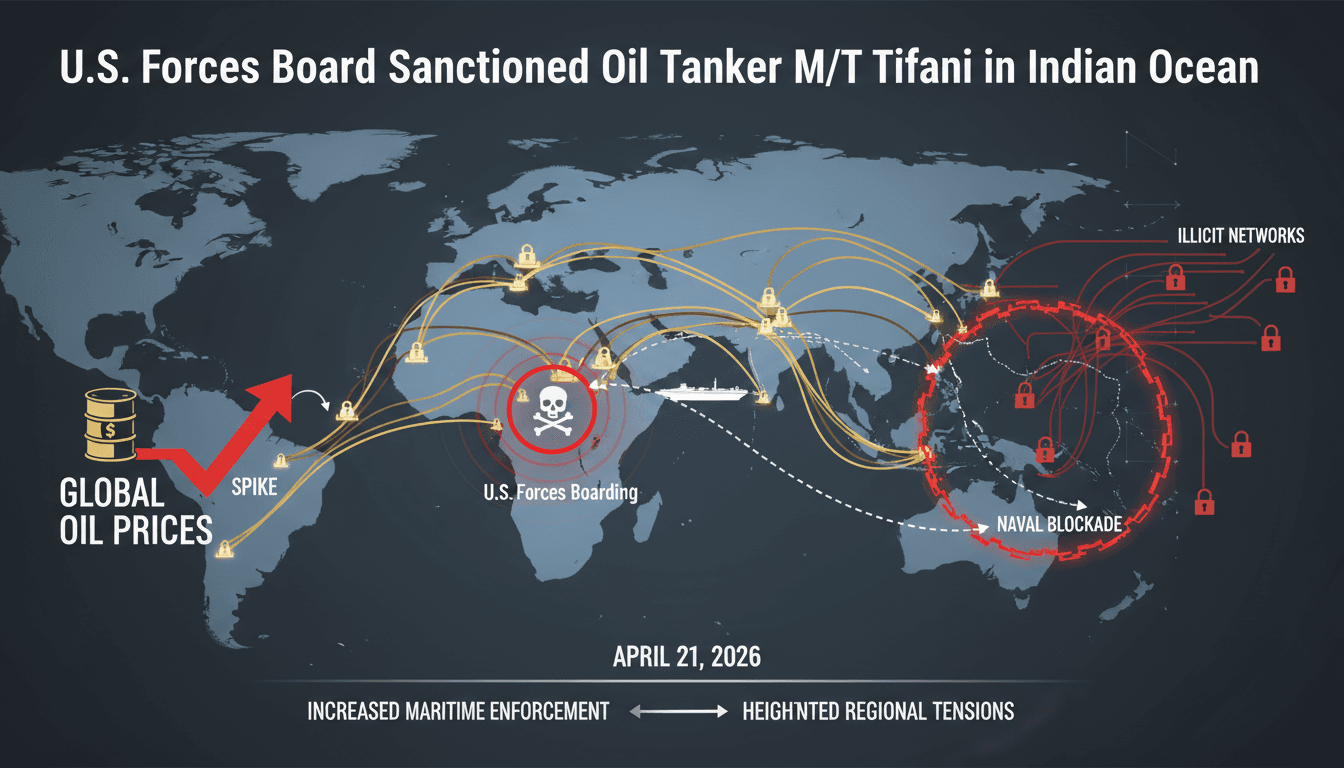
Here's what it means for you.
Increased oil prices and shipping risks could impact your energy costs and supply chains.
Why it matters
This action underscores the U.S. commitment to disrupting Iranian oil exports, which could have significant implications for global energy markets.
What happened (in 30 seconds)
- On April 21, 2026, U.S. forces boarded the M/T Tifani, a stateless oil tanker, in the Indian Ocean.
- The vessel was previously sanctioned for smuggling Iranian crude oil, part of broader U.S. efforts to counter Iran's military funding.
- This operation follows a naval blockade of Iranian ports and comes amid escalating U.S.-Iran hostilities.
The context you actually need
- The M/T Tifani has a history of changing flags and was sanctioned for facilitating Iranian oil transfers, which are crucial for Iran's military activities.
- The U.S. has intensified maritime operations in the region, with 27 ships turned back from Iranian ports since the blockade began.
- Pakistan is mediating ceasefire talks as tensions rise, with a fragile truce nearing expiration.
What's really happening
The boarding of the M/T Tifani is part of a strategic U.S. initiative to disrupt Iran's oil revenue streams, which are vital for funding its military operations. The U.S. Indo-Pacific Command executed the operation without incident, utilizing helicopter insertion, which highlights the military's readiness to enforce sanctions on vessels linked to Iran. This action is not isolated; it follows the seizure of another Iranian-linked tanker, the Touska, just a day prior, indicating a broader enforcement strategy beyond traditional maritime theaters.
The U.S. sanctions aim to limit Iran's ability to export oil, which has been a significant source of revenue for the regime. By targeting vessels like the Tifani, the U.S. seeks to dismantle the networks that facilitate these illicit oil transfers. The Pentagon's announcement of the operation emphasizes a commitment to denying Iran maritime freedom, reflecting a shift in U.S. naval strategy to actively engage in enforcement actions against sanctioned vessels.
The geopolitical landscape is further complicated by the ongoing naval blockade of Iranian ports, which has been in effect since late February 2026. This blockade is intended to restrict Iran's access to international shipping lanes, particularly through the Strait of Hormuz, a critical chokepoint for global oil transport. The U.S. military's actions are designed to signal to Iran and its allies that the U.S. will not tolerate violations of sanctions, especially as tensions escalate in the region.
As the situation develops, analysts are closely monitoring the legality of these actions under the terms of the informal ceasefire mediated by Pakistan. The potential for conflict escalation remains high, with Iran condemning U.S. actions as piracy. The rise in oil prices following these events—Brent crude prices surged by 5%—indicates that markets are reacting to the increased risks associated with shipping in the region.
Who feels it first (and how)
- Energy consumers: Higher oil prices will lead to increased costs for gasoline and heating.
- Shipping companies: Elevated insurance premiums and operational risks in the Indian Ocean and Strait of Hormuz.
- Investors in energy markets: Volatility in oil prices could impact investment strategies and returns.
What to watch next
- Oil price fluctuations: Continued increases in Brent crude prices could signal ongoing instability in the region, affecting global markets.
- U.S.-Iran negotiations: Any developments in ceasefire talks mediated by Pakistan could influence military actions and sanctions enforcement.
- Shipping insurance rates: Rising premiums in response to increased risks could impact logistics and supply chain costs.
The U.S. will continue to enforce sanctions against Iranian oil exports.
Oil prices will remain volatile as tensions in the region escalate.
The potential for further military engagements or escalations in U.S.-Iran hostilities.
Frequently Asked Questions
- Why it matters?
- This action underscores the U.S. commitment to disrupting Iranian oil exports, which could have significant implications for global energy markets.
- What happened (in 30 seconds)?
- On April 21, 2026, U.S. forces boarded the M/T Tifani, a stateless oil tanker, in the Indian Ocean. The vessel was previously sanctioned for smuggling Iranian crude oil, part of broader U.S. efforts to counter Iran's military funding. This operation follows a naval blockade of Iranian ports and comes amid escalating U.S.-Iran hostilities.
- What's really happening?
- The boarding of the M/T Tifani is part of a strategic U.S. initiative to disrupt Iran's oil revenue streams, which are vital for funding its military operations. The U.S. Indo-Pacific Command executed the operation without incident, utilizing helicopter insertion, which highlights the military's readiness to enforce sanctions on vessels linked to Iran. This action is not isolated; it follows the seizure of another Iranian-linked tanker, the Touska, just a day prior, indicating a broader enforcem
- Who feels it first (and how)?
- Energy consumers: Higher oil prices will lead to increased costs for gasoline and heating. Shipping companies: Elevated insurance premiums and operational risks in the Indian Ocean and Strait of Hormuz. Investors in energy markets: Volatility in oil prices could impact investment strategies and returns.
- What to watch next?
- Oil price fluctuations: Continued increases in Brent crude prices could signal ongoing instability in the region, affecting global markets. U.S.-Iran negotiations: Any developments in ceasefire talks mediated by Pakistan could influence military actions and sanctions enforcement. Shipping insurance rates: Rising premiums in response to increased risks could impact logistics and supply chain costs.
Corporate leadership, finance, technology, and market trends.
"Fortune covers financial trends, leadership, and innovation with a pragmatic editorial approach."
— A47 Editor
U.S. forces board an oil tanker previously sanctioned for smuggling Iranian crude oil
U.S. forces conducted a right-of-visit maritime interdiction aboard the M/T Tifani, an oil tanker previously sanctioned for smuggling Iranian crude oil. This operation highlights ongoing tensions regarding the enforcement of sanctions against Iranian...
Pan-Arab news coverage spanning politics, business, sports, and regional affairs.
"Asharq Al-Awsat reflects a broad Arab editorial perspective with strong attention to regional geopolitics."
— A47 Editor
قوات أميركية تعتلي ناقلة خاضعة للعقوبات بمنطقة المحيطين الهندي والهادئ
U.S. forces boarded an oil tanker that is under sanctions in the Indian and Pacific Oceans without any reported clashes. This action highlights ongoing tensions in maritime operations and the enforcement of international sanctions.
Arabic-language political and world news coverage for UAE readers.
"Emarat Al Youm world coverage usually presents international developments through a UAE and Arab audience lens."
— A47 Editor
قوات أميركية تصعد على متن ناقلة ضمن قوائم العقوبات لتهريب النفط الإيراني قوات أميركية تصعد على متن ناقلة ضمن قوائم العقوبات لتهريب النفط الإيراني
The U.S. Department of Defense announced that American forces boarded an oil tanker that had previously been sanctioned for smuggling Iranian oil. This action reflects ongoing efforts to enforce sanctions aimed at curbing illicit oil trade linked to ...