
Shehbaz Sharif and JD Vance Engage in Ceasefire Negotiations Amid Ongoing Iran War
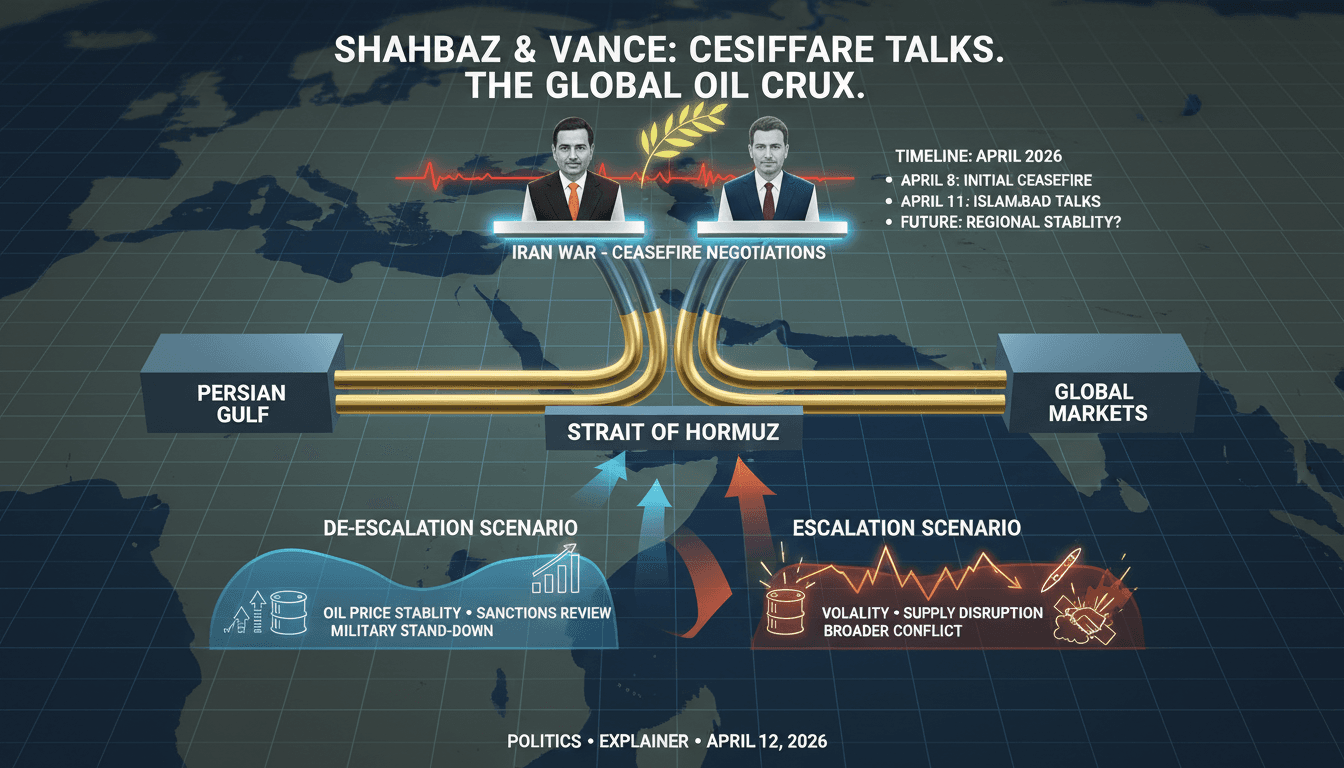
Here's what it means for you.
You may face rising travel costs and economic shifts as geopolitical tensions influence global markets.
Why it matters
The outcome of these negotiations could reshape energy prices and regional security dynamics, impacting global trade.
What happened (in 30 seconds)
- April 11, 2026: Pakistani Prime Minister Shehbaz Sharif met U.S. Vice President JD Vance in Islamabad to facilitate U.S.-Iran ceasefire talks.
- Ceasefire negotiations aim to extend a fragile two-week truce established on April 8 amid the ongoing Iran War.
- Key issues include sanctions relief, navigation rights in the Strait of Hormuz, and addressing hostilities in Lebanon.
The context you actually need
- The 2026 Iran War began on February 28 with U.S.-Israeli airstrikes targeting Iranian military and nuclear sites, leading to significant casualties and displacement.
- Pakistan's role as a mediator highlights its strategic position in regional geopolitics, aiming to stabilize a volatile situation that affects global oil supply.
- High fatalities (estimated between 4,246 and 9,820+) underscore the war's human cost and the urgency for diplomatic solutions.
What's really happening
The ongoing U.S.-Iran conflict, ignited by coordinated military actions from the U.S. and Israel, has escalated tensions throughout the Middle East. The initial strikes targeted critical Iranian infrastructure, resulting in Iran's retaliatory measures, including missile strikes and the activation of proxy groups like Hezbollah. This cycle of violence has not only caused significant military and civilian casualties but has also led to widespread displacement, with millions affected.
In response to the escalating crisis, Pakistan has stepped in as a mediator, leveraging its historical ties with both the U.S. and Iran. The recent meeting between Sharif and Vance signifies a crucial diplomatic effort to extend a temporary ceasefire that began on April 8. The ceasefire represents a fragile hope for peace, but it is contingent on complex negotiations involving multiple stakeholders, including Iran's demands for the cessation of Israeli operations in Lebanon and the unfreezing of assets.
The discussions in Islamabad are not just about halting current hostilities; they are also about addressing long-term issues such as sanctions relief and navigation rights in the strategically vital Strait of Hormuz. This waterway is crucial for global oil shipments, and any disruptions can lead to significant economic repercussions worldwide. The high stakes of these negotiations are underscored by the fact that sustained high oil prices could exacerbate inflation and economic instability in various regions, particularly in oil-dependent economies.
The geopolitical landscape is further complicated by the involvement of key figures like Jared Kushner and Steve Witkoff, who bring their own influence and agendas into the discussions. The outcome of these talks could set the tone for future U.S.-Iran relations and impact regional allies, including Gulf states that have been monitoring the situation closely.
As the negotiations unfold, the potential for a lasting peace remains uncertain. However, the implications are clear: a successful resolution could stabilize the region and lead to a decrease in oil prices, while failure could result in renewed hostilities and further economic strain.
Who feels it first (and how)
- Travelers: Increased airfares and limited flight availability due to rising jet fuel prices from Strait of Hormuz disruptions.
- Energy Sector: Oil companies and consumers will feel the impact of fluctuating oil prices based on the outcome of negotiations.
- Investors: Market volatility in the Gulf and broader economic strains will affect investment strategies and risk assessments.
What to watch next
- Ceasefire extension outcomes: Monitoring the effectiveness of the ceasefire and any agreements reached will be crucial for regional stability.
- Oil price fluctuations: Watch for changes in oil prices as negotiations progress, which will directly impact global markets and consumer costs.
- Regional military movements: Keep an eye on military activities in Lebanon and Iran, as escalations could derail diplomatic efforts.
The U.S. and Iran are engaged in indirect negotiations mediated by Pakistan.
Continued volatility in oil prices and potential economic repercussions for countries reliant on oil imports.
The long-term effectiveness of the ceasefire and whether it can lead to a permanent resolution.
Frequently Asked Questions
- Why it matters?
- The outcome of these negotiations could reshape energy prices and regional security dynamics, impacting global trade.
- What happened (in 30 seconds)?
- April 11, 2026: Pakistani Prime Minister Shehbaz Sharif met U.S. Vice President JD Vance in Islamabad to facilitate U.S.-Iran ceasefire talks. Ceasefire negotiations aim to extend a fragile two-week truce established on April 8 amid the ongoing Iran War. Key issues include sanctions relief, navigation rights in the Strait of Hormuz, and addressing hostilities in Lebanon.
- What's really happening?
- The ongoing U.S.-Iran conflict, ignited by coordinated military actions from the U.S. and Israel, has escalated tensions throughout the Middle East. The initial strikes targeted critical Iranian infrastructure, resulting in Iran's retaliatory measures, including missile strikes and the activation of proxy groups like Hezbollah. This cycle of violence has not only caused significant military and civilian casualties but has also led to widespread displacement, with millions affected. In response
- Who feels it first (and how)?
- Travelers: Increased airfares and limited flight availability due to rising jet fuel prices from Strait of Hormuz disruptions. Energy Sector: Oil companies and consumers will feel the impact of fluctuating oil prices based on the outcome of negotiations. Investors: Market volatility in the Gulf and broader economic strains will affect investment strategies and risk assessments.
- What to watch next?
- Ceasefire extension outcomes: Monitoring the effectiveness of the ceasefire and any agreements reached will be crucial for regional stability. Oil price fluctuations: Watch for changes in oil prices as negotiations progress, which will directly impact global markets and consumer costs. Regional military movements: Keep an eye on military activities in Lebanon and Iran, as escalations could derail diplomatic efforts.
Arabic-language UAE newspaper coverage focused on domestic affairs, public institutions, business, society, and regional developments.
"Al Khaleej coverage generally reflects a mainstream UAE editorial lens with strong attention to public affairs, institutions, and regional developments."
— A47 Editor
شهباز شريف يلتقي فانس في إطار محادثات إنهاء حرب إيران
Pakistani Prime Minister Shahbaz Sharif met with U.S. Vice President Jay D. Vance as part of discussions aimed at ending the ongoing conflict in Iran. This meeting highlights the diplomatic efforts being made to address regional tensions and promote ...
Arabic-language coverage of Saudi, regional, and international affairs.
"Al Bilad offers mainstream Saudi newspaper coverage across domestic and broader Arab topics."
— A47 Editor
رئيس الوزراء الباكستاني يعقد اجتماعًا مع نائب الرئيس الأمريكي
Pakistani Prime Minister Shehbaz Sharif held a meeting with U.S. Vice President Jay D. Vance to discuss ways to advance peace efforts in the region, coinciding with the start of Islamabad talks. The Prime Minister praised both delegations for their c...
Arabic-language UAE newspaper coverage focused on domestic affairs, public institutions, business, society, and regional developments.
"Al Khaleej coverage generally reflects a mainstream UAE editorial lens with strong attention to public affairs, institutions, and regional developments."
— A47 Editor
محادثات بين نائب الرئيس الأمريكي ورئيس وزراء باكستان
The White House and the office of Pakistani Prime Minister Shahbaz Sharif announced that U.S. Vice President J.D. Vance held discussions with Sharif, focusing on bilateral relations and cooperation. This meeting highlights ongoing diplomatic engageme...