
Microsoft and Samsung Raise Prices on Devices Amid Ongoing RAM Shortage
Here's what it means for you.
If you're in the market for a new laptop or smartphone, expect to pay significantly more due to a global RAM shortage.
Why it matters
This price surge reflects broader supply chain vulnerabilities and the impact of AI demand on consumer electronics.
What happened (in 30 seconds)
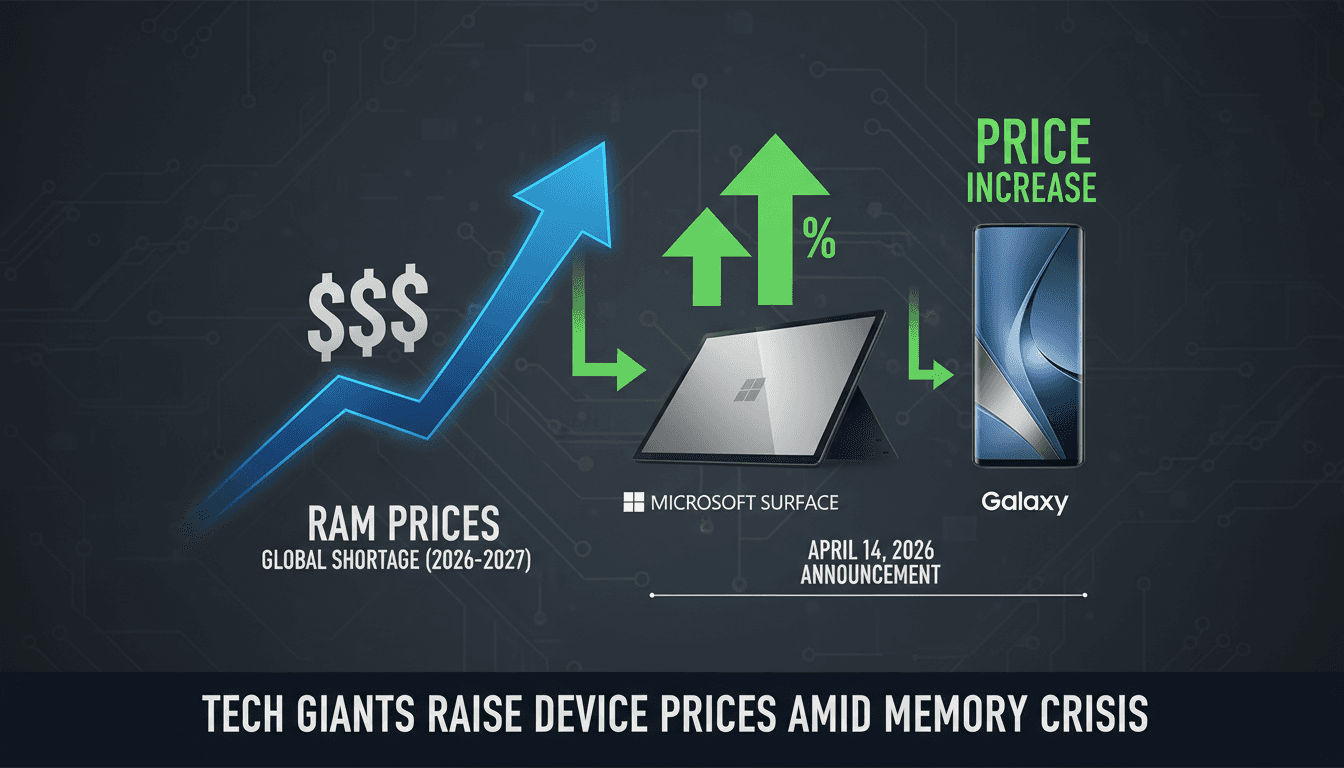
- On April 14, 2026, Microsoft and Samsung announced price increases on their devices due to a RAM crisis.
- Microsoft's entry-level Surface Laptop saw a price jump from $999 to $1,499, while Samsung's Galaxy products increased by $80 to $280.
- The global shortage of DRAM and NAND flash memory is primarily driven by surging demand from AI data centers.
The context you actually need
- The RAM crisis began in 2024, fueled by increased demand for High Bandwidth Memory (HBM) in AI infrastructure, diverting resources from consumer-grade memory.
- Geopolitical trade restrictions and production cuts have exacerbated the situation, leading to a 172% year-over-year increase in DRAM prices in 2025.
- AI projects like OpenAI's Stargate reportedly consumed up to 40% of global DRAM supply, further straining availability for consumer electronics.
What's really happening
The ongoing RAM shortage is a complex interplay of rising demand, geopolitical factors, and production challenges. Since 2024, the global memory supply has been under pressure, primarily due to the explosive growth of AI technologies that require vast amounts of memory for data processing and storage. This surge in demand has diverted manufacturing capacity away from consumer-grade DRAM and NAND flash memory, leading to significant price increases.
In 2025, the memory market experienced a staggering 172% increase in DRAM prices year-over-year, with NAND flash prices also rising sharply. This inflation in memory costs has forced major tech companies like Microsoft and Samsung to adjust their pricing strategies. On April 14, 2026, both companies announced substantial price hikes for their devices, with Microsoft raising the entry-level Surface Laptop 13.8-inch model by $500 and Samsung increasing prices on various Galaxy products by $80 to $280.
The price adjustments reflect not only the increased costs of memory components but also a strategic shift in the market. As memory prices continue to rise, companies are likely to prioritize higher-margin products and enterprise solutions over consumer devices. This trend could lead to a decline in PC shipments, with projections indicating a 10-11% drop in 2026, according to Gartner and IDC.
Moreover, the RAM crisis has broader implications for consumers. In regions like Dubai, local markets are experiencing doubled to tripled RAM module prices, which further exacerbates the costs for imported devices. This situation creates a ripple effect, impacting the affordability of smartphones and laptops, and potentially leading to a shift in consumer purchasing behavior.
As companies like Apple secure their memory supplies in advance, they may gain a competitive edge over rivals like Microsoft and Samsung, who are now grappling with the fallout of the RAM crisis. The ongoing adjustments in pricing and product availability signal a significant shift in the consumer electronics landscape, driven by the relentless demand for AI capabilities.
Who feels it first (and how)
- Consumers: Individuals looking to purchase new laptops or smartphones will face higher prices.
- Tech retailers: Stores selling Microsoft and Samsung products may see reduced sales due to increased prices.
- Businesses: Companies relying on PCs and mobile devices for operations may experience budget constraints and need to reassess their technology investments.
- Dubai residents: Local consumers are particularly affected by inflated RAM prices, impacting the cost of imported devices.
What to watch next
- Memory price trends: Keep an eye on DRAM and NAND flash prices to gauge future device pricing.
- Consumer purchasing behavior: Monitor how consumers adjust their buying habits in response to rising prices.
- Tech company strategies: Watch for shifts in product offerings as companies prioritize higher-margin items over consumer electronics.
Microsoft and Samsung have raised prices on their devices due to the RAM crisis.
Memory prices will continue to rise through 2027, impacting consumer electronics.
The long-term effects on PC shipments and consumer behavior remain uncertain.
Frequently Asked Questions
- Why it matters?
- This price surge reflects broader supply chain vulnerabilities and the impact of AI demand on consumer electronics.
- What happened (in 30 seconds)?
- On April 14, 2026, Microsoft and Samsung announced price increases on their devices due to a RAM crisis. Microsoft's entry-level Surface Laptop saw a price jump from $999 to $1,499, while Samsung's Galaxy products increased by $80 to $280. The global shortage of DRAM and NAND flash memory is primarily driven by surging demand from AI data centers.
- What's really happening?
- The ongoing RAM shortage is a complex interplay of rising demand, geopolitical factors, and production challenges. Since 2024, the global memory supply has been under pressure, primarily due to the explosive growth of AI technologies that require vast amounts of memory for data processing and storage. This surge in demand has diverted manufacturing capacity away from consumer-grade DRAM and NAND flash memory, leading to significant price increases. In 2025, the memory market experienced a stagg
- Who feels it first (and how)?
- Consumers: Individuals looking to purchase new laptops or smartphones will face higher prices. Tech retailers: Stores selling Microsoft and Samsung products may see reduced sales due to increased prices. Businesses: Companies relying on PCs and mobile devices for operations may experience budget constraints and need to reassess their technology investments. Dubai residents: Local consumers are particularly affected by inflated RAM prices, impacting the cost of imported devices.
- What to watch next?
- Memory price trends: Keep an eye on DRAM and NAND flash prices to gauge future device pricing. Consumer purchasing behavior: Monitor how consumers adjust their buying habits in response to rising prices. Tech company strategies: Watch for shifts in product offerings as companies prioritize higher-margin items over consumer electronics.
Latest tech news, product reviews, and analysis for consumers and professionals.
"CNET delivers accessible and detailed technology reporting, including trusted product reviews and how-to guides."
— A47 Editor
Samsung Increases Some Galaxy Prices as Cost Pressures Mount
Samsung has announced price increases for nearly two dozen of its Galaxy phones and tablets, citing mounting cost pressures as the primary reason for this decision. This move marks a significant shift in the company's pricing strategy amid a challeng...
Tech news, hardware, and AI tools coverage.
"PC/tech site increasingly covering AI hardware and apps."
— A47 Editor
Microsoft just made its Surface laptops a lot more expensive
Microsoft has raised the prices of its Surface Pro and Surface Laptop models by $300, with the 13-inch models now priced at $1,499 due to increasing component costs. This adjustment reflects the ongoing challenges in the tech industry, particularly i...
Technology business and AI-related headlines.
"Data-driven tech newsroom with global scope."
— A47 Editor
Microsoft Raises Surface Prices Sharply in Face of Memory Crunch
Microsoft Corp. has significantly increased prices across its Surface-branded device lineup, responding to a historic shortage of memory chips that has impacted the personal computer industry. This move aligns Microsoft with other PC manufacturers wh...
Technology business news, market impacts, and innovation trends.
"Bloomberg is a premier financial and tech news provider, respected for its in-depth reporting and analytical rigor."
— A47 Editor
Microsoft Raises Surface Prices Sharply in Face of Memory Crunch
Microsoft Corp. has significantly increased prices across its Surface-branded device lineup, responding to a historic shortage of memory chips that has impacted the personal computer industry. This move aligns Microsoft with other PC manufacturers wh...
Consumer tech and culture with frequent AI coverage.
"Influential tech outlet covering AI products and policy."
— A47 Editor
RAMageddon has come for Microsoft’s Surface Pro and Surface Laptop
Microsoft has increased the prices of its Surface devices due to a global RAM shortage, with the 13-inch Surface Pro 11 and the 13.8-inch Surface Laptop 7 now costing $1,499, up from their original price of $999, as reported by Windows Central. This ...
Tech news, reviews, and analysis of consumer electronics, science, art, and culture.
"The Verge is a technology-focused media outlet known for in-depth reporting, product reviews, and coverage of the intersection between technology and culture."
— A47 Editor
RAMageddon has come for Microsoft’s Surface Pro and Surface Laptop
Microsoft has increased the prices of its Surface devices due to a global RAM shortage, with the 13-inch Surface Pro 11 and the 13.8-inch Surface Laptop 7 now costing $1,499, up from their original price of $999, as reported by Windows Central. This ...