
Reserve Bank of India Holds Repo Rate Steady Amid US-Iran Ceasefire and Currency Pressures
Here's what it means for you.
If you’re an investor or a consumer in India, the RBI's decision to maintain the repo rate could affect your borrowing costs and investment strategies.
Why it matters
The RBI's decision reflects a balancing act between controlling inflation and supporting economic growth amid external shocks.
What happened (in 30 seconds)
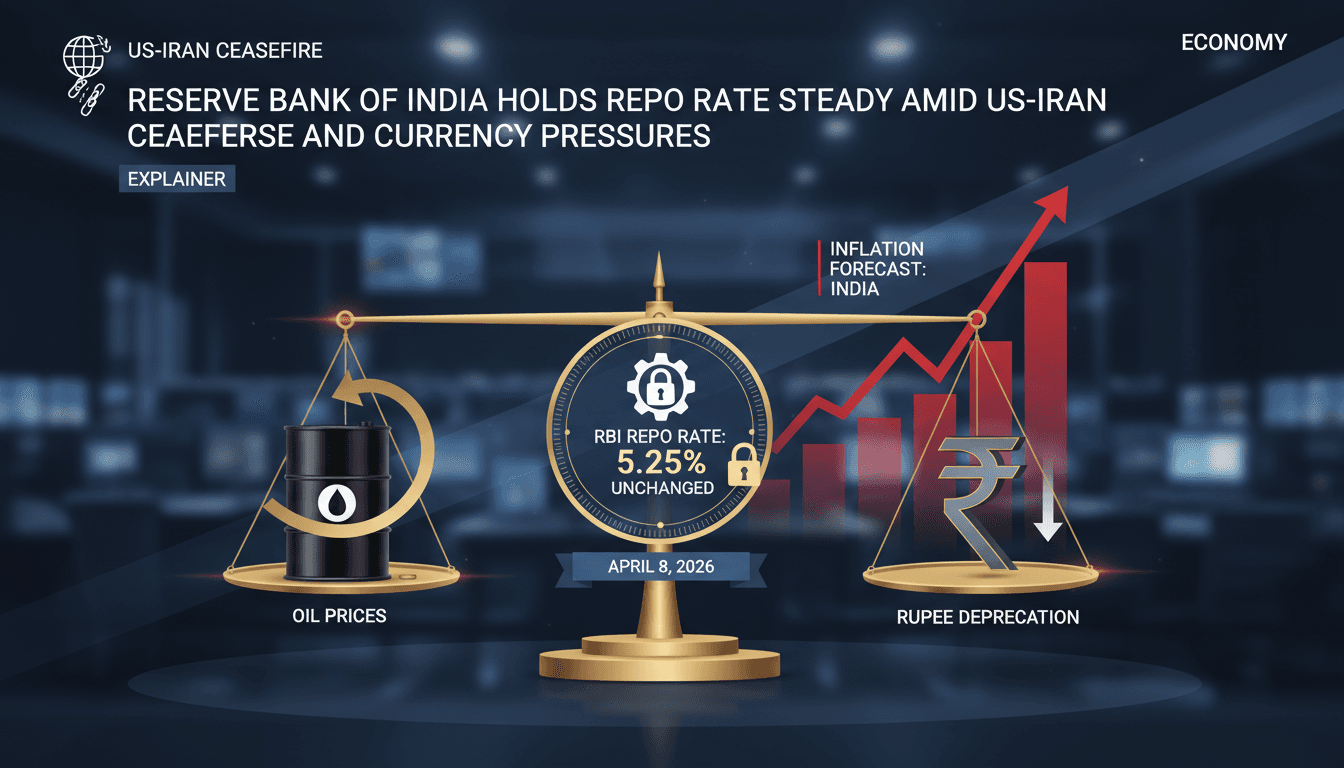
- On April 8, 2026, the Reserve Bank of India decided to keep its repo rate unchanged at 5.25 percent.
- A two-week ceasefire between the US and Iran was announced just before the RBI meeting, impacting oil prices and supply.
- The Indian rupee depreciated to record lows, with $19 billion in foreign investor outflows from March to April.
The context you actually need
- India imports 90 percent of its oil, making it highly vulnerable to global supply disruptions.
- The rupee's depreciation of 11 percent in the 2025-2026 fiscal year is the largest in over a decade, affecting purchasing power and inflation.
- The RBI projects GDP growth for FY2026-27 at 6.9 percent, down from 7.6 percent the previous year, highlighting economic slowdown concerns.
What's really happening
The Reserve Bank of India's (RBI) decision to maintain the repo rate at 5.25 percent is a calculated response to a complex interplay of domestic and international factors. The backdrop of this decision is the ongoing US-Iran conflict, which has significantly disrupted global oil supplies and led to a spike in prices. Given that India relies on imports for 90 percent of its oil needs, any fluctuation in oil prices directly impacts inflation and economic stability.
The RBI's Monetary Policy Committee, led by Governor Sanjay Malhotra, adopted a neutral stance, indicating a cautious approach to potential inflation risks stemming from oil price volatility. The committee is particularly concerned about the possibility of oil shocks evolving into demand shocks, which could further strain the economy. The RBI's inflation forecast of 4.6 percent for the upcoming fiscal year remains within its target range of 2-6 percent, but the core inflation forecast of 4.4 percent assumes oil prices stabilize at around $85 per barrel. A 10 percent increase in oil prices could add 50 basis points to inflation and reduce GDP growth by 15 basis points, illustrating the delicate balance the RBI must maintain.
The immediate aftermath of the RBI's decision saw the benchmark 10-year bond yield rise to 6.92 percent, while the rupee slipped to 92.62 per USD. Equity indices, however, rose by 4 percent, suggesting investor optimism despite the underlying economic challenges. Governor Malhotra has pledged to intervene in currency markets to curb volatility and provide liquidity support, indicating that the RBI is prepared to act if conditions worsen.
The $19 billion in foreign investor outflows from March to April 2026 highlights the impact of geopolitical tensions on investor sentiment. This outflow is a significant concern, as it can lead to further depreciation of the rupee and increased borrowing costs for businesses and consumers alike. Economists are now describing the RBI's approach as a "delicate balancing" of risks, with no rate hikes anticipated unless inflation consistently exceeds 6 percent.
Who feels it first (and how)
- Investors: Foreign investors withdrawing capital may face losses and reduced market confidence.
- Consumers: Borrowers may see higher costs if inflation rises, impacting loans and mortgages.
- Expatriates: Indian expatriates in Dubai benefit from increased remittance value due to rupee depreciation.
- Businesses: Companies reliant on imported oil face rising operational costs, potentially leading to layoffs or reduced hiring.
What to watch next
- Oil prices: Monitoring fluctuations in oil prices will be crucial, as they directly affect inflation and economic growth.
- Foreign investment trends: Changes in foreign investor sentiment could indicate broader economic stability or instability.
- Rupee stability: Observing the RBI's currency interventions will provide insights into its strategy for managing volatility.
The RBI's repo rate remains at 5.25 percent.
Continued volatility in oil prices will impact inflation and growth forecasts.
The long-term effects of the US-Iran ceasefire on global oil supply and prices.
Frequently Asked Questions
- Why it matters?
- The RBI's decision reflects a balancing act between controlling inflation and supporting economic growth amid external shocks.
- What happened (in 30 seconds)?
- On April 8, 2026, the Reserve Bank of India decided to keep its repo rate unchanged at 5.25 percent. A two-week ceasefire between the US and Iran was announced just before the RBI meeting, impacting oil prices and supply. The Indian rupee depreciated to record lows, with $19 billion in foreign investor outflows from March to April.
- What's really happening?
- The Reserve Bank of India's (RBI) decision to maintain the repo rate at 5.25 percent is a calculated response to a complex interplay of domestic and international factors. The backdrop of this decision is the ongoing US-Iran conflict, which has significantly disrupted global oil supplies and led to a spike in prices. Given that India relies on imports for 90 percent of its oil needs, any fluctuation in oil prices directly impacts inflation and economic stability. The RBI's Monetary Policy Commi
- Who feels it first (and how)?
- Investors: Foreign investors withdrawing capital may face losses and reduced market confidence. Consumers: Borrowers may see higher costs if inflation rises, impacting loans and mortgages. Expatriates: Indian expatriates in Dubai benefit from increased remittance value due to rupee depreciation. Businesses: Companies reliant on imported oil face rising operational costs, potentially leading to layoffs or reduced hiring.
- What to watch next?
- Oil prices: Monitoring fluctuations in oil prices will be crucial, as they directly affect inflation and economic growth. Foreign investment trends: Changes in foreign investor sentiment could indicate broader economic stability or instability. Rupee stability: Observing the RBI's currency interventions will provide insights into its strategy for managing volatility.
Pan-Arab news coverage spanning politics, business, sports, and regional affairs.
"Asharq Al-Awsat reflects a broad Arab editorial perspective with strong attention to regional geopolitics."
— A47 Editor
وسط هدنة إيران وتراجع الروبية... الهند تُبقي الفائدة عند 5.25 %
The Reserve Bank of India maintained its key interest rate at 5.25% on Wednesday, citing potential growth slowdown and rising inflation amid the ongoing Middle East crisis. This decision reflects the bank's cautious approach in navigating economic ch...
Macro commentary, policy analysis, growth/inflation themes, and global outlooks.
"Contextual macro coverage that complements day-to-day market headlines."
— A47 Editor
India central bank holds rates as Mideast crisis clouds growth, stokes inflation risks
The Reserve Bank of India (RBI) has decided to hold interest rates steady amid growing concerns over the impact of the ongoing crisis in the Middle East, particularly the conflict in Iran, which poses risks to economic growth and inflation.