
Trump Dismisses War Crimes Concerns Amid Threats to Bomb Iranian Infrastructure
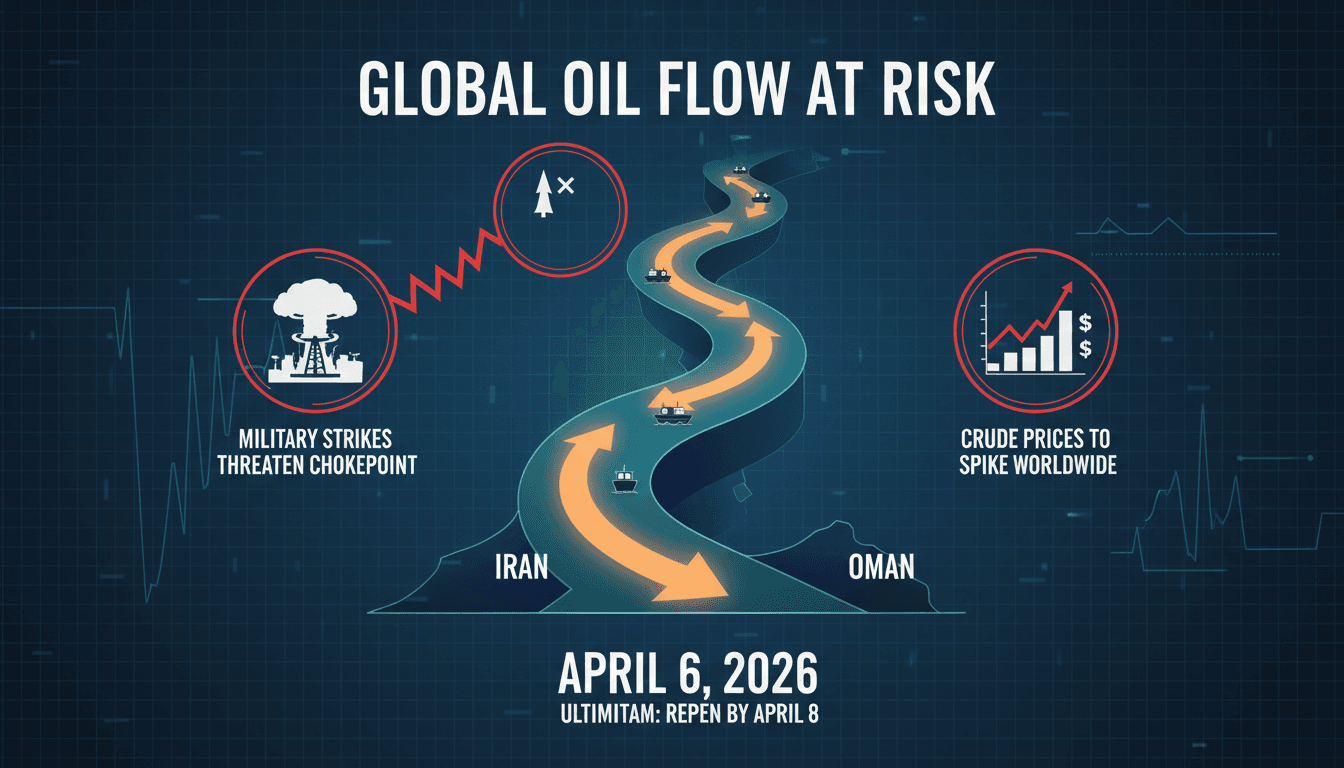
Here's what it means for you.
The ongoing U.S.-Iran conflict could lead to significant disruptions in global oil markets, impacting energy prices and economic stability.
Why it matters
The escalation of military threats can destabilize oil supply chains, leading to increased costs for consumers and businesses worldwide.
What happened (in 30 seconds)
- On April 6, 2026, President Trump declared he was "not at all" concerned about potential war crimes from threats to bomb Iranian civilian infrastructure.
- He issued an ultimatum for Iran to reopen the Strait of Hormuz by April 8, warning of strikes on energy facilities if demands were unmet.
- Oil prices surged, with Brent crude futures rising to $110.34 per barrel amid fears of escalating conflict.
The context you actually need
- The U.S.-Iran conflict began in late February 2026, following coordinated airstrikes by the U.S. and Israel on Iranian sites.
- Iran's closure of the Strait of Hormuz has already disrupted approximately 20% of global oil trade, causing significant economic repercussions.
- Legal experts and international officials have condemned Trump's threats as potential violations of international law, raising concerns about war crimes.
What's really happening
The current U.S.-Iran conflict is rooted in a complex interplay of geopolitical tensions, energy security, and international law. Since late February 2026, a series of U.S. and Israeli airstrikes targeted Iranian military sites, prompting Iran to retaliate by closing the strategically crucial Strait of Hormuz. This chokepoint is vital for global oil transport, and its closure has already led to surging oil prices, with Brent crude futures hitting $110.34 per barrel following Trump's latest threats.
In a press conference on April 6, Trump escalated the rhetoric, issuing a stark ultimatum for Iran to reopen the Strait by April 8 or face military strikes on key infrastructure, including power plants and bridges. His dismissal of war crime concerns reflects a broader strategy that prioritizes U.S. military leverage over adherence to international norms. Trump framed these actions as necessary to prevent Iran from developing nuclear weapons and to liberate the Iranian people, who he claimed desire freedom.
The implications of these threats extend beyond immediate military concerns. They signal a potential shift in U.S. foreign policy, where the use of military force is increasingly justified as a means to achieve strategic objectives. This approach raises questions about the future of international law and the norms governing state conduct in conflict. Legal experts and international organizations have condemned Trump's rhetoric, warning that targeting civilian infrastructure could constitute war crimes under the Geneva Conventions.
Moreover, the economic ramifications are significant. The closure of the Strait of Hormuz and the threat of military action have already resulted in a 1% GDP reduction for Gulf states and a 25% decline in housing sales in Dubai since the onset of the conflict. As energy prices continue to rise, consumers and businesses worldwide will feel the impact, leading to inflationary pressures and potential economic instability.
Who feels it first (and how)
- Energy sector professionals: Oil and gas companies face increased operational costs and market volatility.
- Consumers: Rising fuel prices directly affect transportation and goods pricing, impacting daily expenses.
- Investors: Stock markets, particularly in energy and aviation sectors, are experiencing volatility due to geopolitical tensions.
- Residents of Gulf states: Economic disruptions from the conflict could lead to job losses and reduced economic growth.
What to watch next
- Oil price fluctuations: Continued instability in the region could lead to further increases in oil prices, affecting global markets.
- Diplomatic negotiations: Watch for any developments in U.S.-Iran negotiations post-April 8, which could either escalate or de-escalate tensions.
- International legal responses: Monitor how international bodies respond to Trump's threats, particularly regarding potential war crimes.
Oil prices have already surged due to the conflict, with Brent crude at $110.34 per barrel.
Continued military threats will exacerbate economic instability in the Gulf region and beyond.
The long-term effects on U.S.-Iran relations and international law enforcement remain uncertain.
Frequently Asked Questions
- Why it matters?
- The escalation of military threats can destabilize oil supply chains, leading to increased costs for consumers and businesses worldwide.
- What happened (in 30 seconds)?
- On April 6, 2026, President Trump declared he was "not at all" concerned about potential war crimes from threats to bomb Iranian civilian infrastructure. He issued an ultimatum for Iran to reopen the Strait of Hormuz by April 8, warning of strikes on energy facilities if demands were unmet. Oil prices surged, with Brent crude futures rising to $110.34 per barrel amid fears of escalating conflict.
- What's really happening?
- The current U.S.-Iran conflict is rooted in a complex interplay of geopolitical tensions, energy security, and international law. Since late February 2026, a series of U.S. and Israeli airstrikes targeted Iranian military sites, prompting Iran to retaliate by closing the strategically crucial Strait of Hormuz. This chokepoint is vital for global oil transport, and its closure has already led to surging oil prices, with Brent crude futures hitting $110.34 per barrel following Trump's latest threa
- Who feels it first (and how)?
- Energy sector professionals: Oil and gas companies face increased operational costs and market volatility. Consumers: Rising fuel prices directly affect transportation and goods pricing, impacting daily expenses. Investors: Stock markets, particularly in energy and aviation sectors, are experiencing volatility due to geopolitical tensions. Residents of Gulf states: Economic disruptions from the conflict could lead to job losses and reduced economic growth.
- What to watch next?
- Oil price fluctuations: Continued instability in the region could lead to further increases in oil prices, affecting global markets. Diplomatic negotiations: Watch for any developments in U.S.-Iran negotiations post-April 8, which could either escalate or de-escalate tensions. International legal responses: Monitor how international bodies respond to Trump's threats, particularly regarding potential war crimes.
Capitol Hill news, legislation, and policy insight.
"The Hill specializes in U.S. politics and policy, with a focus on Capitol Hill developments and a reputation for insider reporting."
— A47 Editor
Trump brushes off questions about potential war crimes in Iran
President Trump dismissed concerns about potential war crimes during a White House press briefing, specifically regarding threats to bomb civilian infrastructure in Iran, such as power plants and bridges. When questioned by a New York Times reporter,...
Top international stories selected by The Guardian editors.
"The Guardian is known for its progressive editorial stance and in-depth analysis."
— A47 Editor
Trump shrugs off concerns that threat to bomb Iran’s infrastructure could amount to war crimes – US politics live
President Donald Trump has downplayed concerns regarding his threats to bomb Iranian infrastructure, asserting he is not worried about potential war crimes implications. This statement follows his ultimatum to Iran to reopen the Strait of Hormuz with...
Arabic-language political and world news coverage for UAE readers.
"Emarat Al Youm world coverage usually presents international developments through a UAE and Arab audience lens."
— A47 Editor
ترامب "ليس قلقا" من اعتبار قصف محطات الطاقة الإيرانية جريمة حرب ترامب "ليس قلقا" من اعتبار قصف محطات الطاقة الإيرانية جريمة حرب
On Monday, U.S. President Donald Trump stated that he is "not concerned" about the potential for committing war crimes in Iran if he follows through on his threat to bomb Iranian power plants. This declaration raises significant questions regarding t...