
IMF Reports Significant Economic Impact of Wars on Affected Nations
Why it matters
The IMF's research reveals how armed conflicts can lead to long-term economic instability, affecting global markets and individual livelihoods.
What happened (in 30 seconds)
- On April 8, 2026, the International Monetary Fund published research indicating that wars cause severe and lasting economic losses in affected countries.
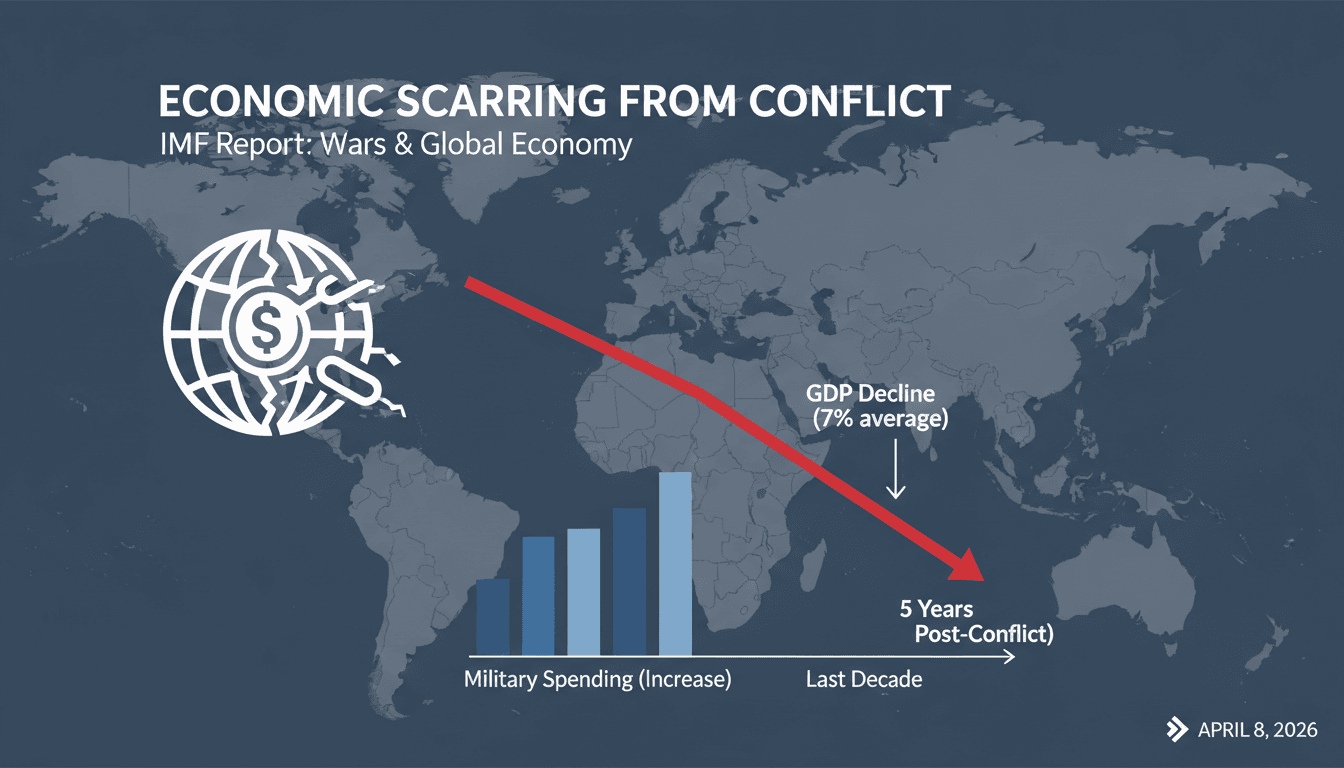
- The study analyzed data from 1946 across 164 nations, showing average GDP declines of 7% over five years, with effects lasting over a decade.
- The findings highlight the fragility of peace, with 40% of countries relapsing into conflict within five years post-war.
The context you actually need
- Armed conflicts reached their highest levels since World War II by 2024, affecting nearly 45% of the global population.
- Military spending has surged, with many countries increasing budgets amid geopolitical tensions, notably the Iran war.
- The IMF's research aims to quantify the long-term economic scarring from wars, emphasizing the need for early stabilization and investment in domestic economies.
What's really happening
The IMF's recent findings underscore the profound economic toll that wars impose on nations embroiled in conflict. The research indicates that countries experiencing warfare see an average GDP contraction of 7% over a five-year period, a decline that surpasses losses typically associated with financial crises or natural disasters. This economic scarring is not merely a short-term phenomenon; the effects can persist for over a decade, fundamentally altering the economic landscape of affected nations.
The study highlights that elevated military spending, averaging 2.7% of GDP, often financed through deficits, exacerbates fiscal pressures. This increased military expenditure leads to a widening of fiscal gaps by approximately 2.6 percentage points of GDP and raises public debt by 7 points within three years. Such financial strains can hinder a nation's ability to invest in critical infrastructure and social services, further entrenching economic instability.
Moreover, the research reveals a troubling trend: peace is often fragile in post-conflict nations, with 40% of countries relapsing into conflict within five years. This cycle of violence and economic decline creates a feedback loop that is difficult to escape. The IMF emphasizes the importance of early stabilization efforts, debt restructuring, and prioritizing domestic investments over foreign arms procurement to break this cycle.
The geopolitical backdrop, particularly the ongoing Iran war, exacerbates these economic challenges. As military budgets rise in response to heightened tensions, countries face difficult trade-offs between defense spending and investments in their economies. The IMF's analysis serves as a stark reminder of the long-term consequences of conflict, urging policymakers to consider the broader economic implications of military engagements.
As global tensions continue to rise, the findings of the IMF will likely influence economic policies and investment strategies worldwide. Understanding these dynamics is crucial for businesses and individuals alike, as the ripple effects of wars extend far beyond the immediate conflict zones.
Who feels it first (and how)
- Investors: Market volatility in conflict-affected regions can lead to significant financial losses.
- Governments: Increased military spending strains national budgets, impacting public services.
- Local populations: Economic downturns lead to job losses and reduced living standards, particularly in war-torn areas.
What to watch next
- Global military spending trends: Monitoring shifts in defense budgets can provide insights into potential conflicts and economic impacts.
- Post-conflict recovery efforts: Observing how countries manage stabilization and investment can indicate future economic resilience or decline.
- Geopolitical developments: Changes in international relations, especially in conflict-prone regions, will affect global markets and economic stability.
Wars lead to significant economic losses, with GDP declines averaging 7%.
Increased military spending will continue to strain national budgets and hinder economic recovery.
The long-term effectiveness of proposed stabilization measures in preventing relapse into conflict remains uncertain.
Frequently Asked Questions
- Why it matters?
- The IMF's research reveals how armed conflicts can lead to long-term economic instability, affecting global markets and individual livelihoods.
- What happened (in 30 seconds)?
- On April 8, 2026, the International Monetary Fund published research indicating that wars cause severe and lasting economic losses in affected countries. The study analyzed data from 1946 across 164 nations, showing average GDP declines of 7% over five years, with effects lasting over a decade. The findings highlight the fragility of peace, with 40% of countries relapsing into conflict within five years post-war.
- What's really happening?
- The IMF's recent findings underscore the profound economic toll that wars impose on nations embroiled in conflict. The research indicates that countries experiencing warfare see an average GDP contraction of 7% over a five-year period, a decline that surpasses losses typically associated with financial crises or natural disasters. This economic scarring is not merely a short-term phenomenon; the effects can persist for over a decade, fundamentally altering the economic landscape of affected nati
- Who feels it first (and how)?
- Investors: Market volatility in conflict-affected regions can lead to significant financial losses. Governments: Increased military spending strains national budgets, impacting public services. Local populations: Economic downturns lead to job losses and reduced living standards, particularly in war-torn areas.
- What to watch next?
- Global military spending trends: Monitoring shifts in defense budgets can provide insights into potential conflicts and economic impacts. Post-conflict recovery efforts: Observing how countries manage stabilization and investment can indicate future economic resilience or decline. Geopolitical developments: Changes in international relations, especially in conflict-prone regions, will affect global markets and economic stability.
Pan-Arab news coverage spanning politics, business, sports, and regional affairs.
"Asharq Al-Awsat reflects a broad Arab editorial perspective with strong attention to regional geopolitics."
— A47 Editor
«صندوق النقد الدولي»: الحروب تُكبّد الدول خسائر اقتصادية فادحة ومستمرة
The International Monetary Fund (IMF) published a study on Wednesday indicating that wars inflict significant and ongoing economic losses on countries experiencing conflict. The report highlights the severe financial repercussions that armed conflict...
Macro commentary, policy analysis, growth/inflation themes, and global outlooks.
"Contextual macro coverage that complements day-to-day market headlines."
— A47 Editor
Wars impose deep and prolonged economic costs on countries, IMF research finds
The International Monetary Fund (IMF) has found that wars impose significant and prolonged economic costs on countries, highlighting the adverse effects of conflict on national economies. This research underscores the IMF's ongoing concern regarding ...