
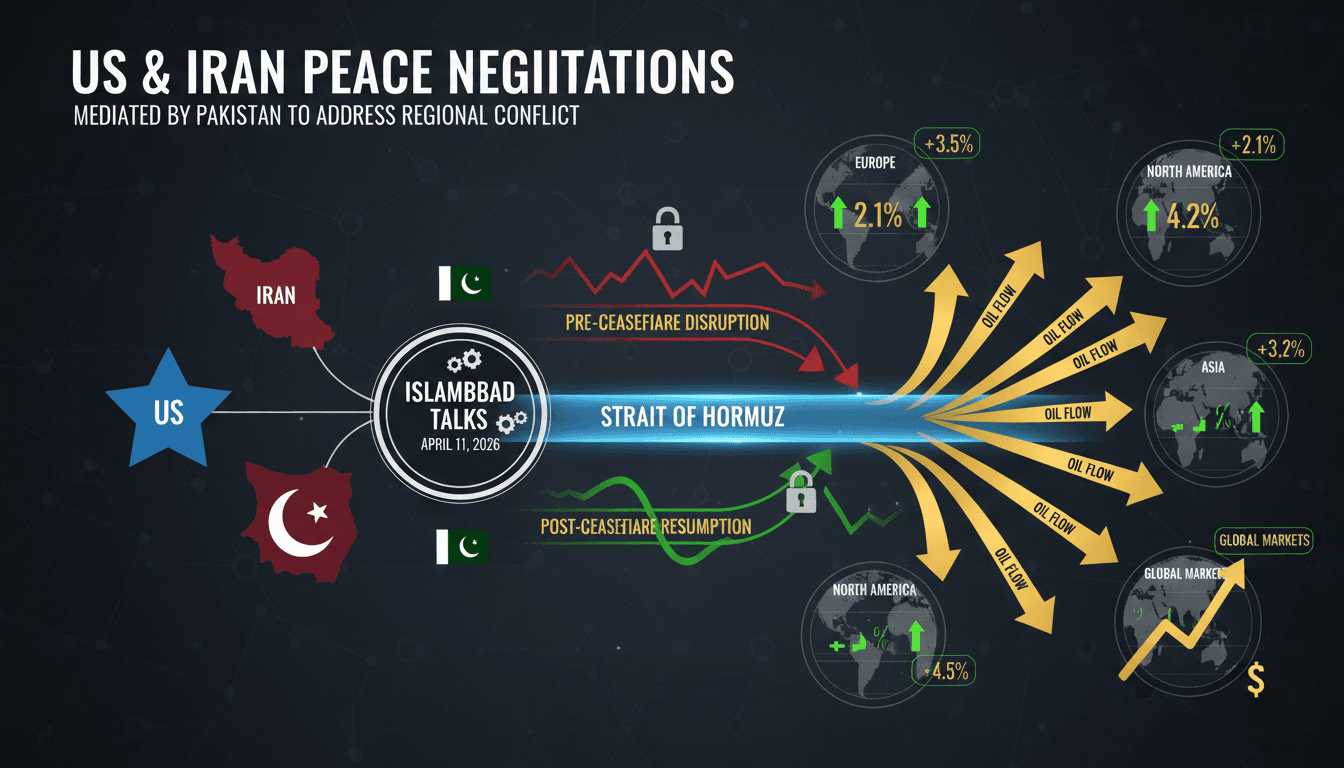
US and Iran Engage in Peace Negotiations Mediated by Pakistan to Address Regional Conflict
Here's what it means for you.
The outcome of the Islamabad Talks could significantly impact global energy prices and geopolitical stability, affecting your cost of living and investment strategies.
Why it matters
The negotiations are pivotal for regional stability, global energy supply, and the economic landscape, particularly for oil-dependent economies.
What happened (in 30 seconds)
- April 11, 2026: The Islamabad Talks commence, aiming to resolve the ongoing US-Iran conflict and reopen the vital Strait of Hormuz.
- February 28, 2026: Iran's closure of the Strait initiated a war, disrupting one-fifth of the world's oil and gas supplies.
- Ceasefire achieved: A temporary ceasefire allows for negotiations, with both sides presenting competing proposals on nuclear and military issues.
The context you actually need
- War escalation: The conflict began with Iran's strategic closure of the Strait of Hormuz, a critical chokepoint for global energy supplies.
- US objectives: The US aims to dismantle Iran's nuclear capabilities and missile arsenal while addressing regional proxy conflicts.
- Diplomatic efforts: Prior meetings among regional powers, including Saudi Arabia and Turkey, set the stage for these crucial talks.
What's really happening
The Islamabad Talks represent a critical juncture in the ongoing conflict between the US and Iran, which escalated dramatically following Iran's closure of the Strait of Hormuz on February 28, 2026. This strategic move not only disrupted global oil supplies but also triggered a military response from the US, which had long sought to curtail Iran's nuclear ambitions and regional influence. The stakes are high, as the Strait of Hormuz is responsible for approximately 20% of the world's oil and liquefied natural gas flows, making its accessibility vital for global energy markets.
The negotiations are framed by competing proposals: the US has laid out a 15-point plan demanding significant concessions from Iran, including halting nuclear enrichment and missile development. In contrast, Iran's 10-point proposal seeks non-aggression pacts, lifting of sanctions, and a US military withdrawal from the region. This divergence highlights the fundamental tensions between the two nations, rooted in historical grievances and geopolitical objectives.
Pakistan's role as a mediator is crucial, as it has positioned itself as a neutral party capable of facilitating dialogue. The recent ceasefire, which allows for these talks to take place, is a fragile but necessary step toward de-escalation. However, both parties remain entrenched in their positions, with the US insisting on non-negotiable terms regarding Iran's nuclear program, while Iran views its missile capabilities as a non-negotiable aspect of its national security.
The implications of these talks extend beyond immediate military concerns. Should a resolution be reached, it could lead to sanctions relief for Iran, potentially revitalizing its economy and altering regional power dynamics. Conversely, failure to reach an agreement may result in renewed hostilities, further destabilizing the Middle East and exacerbating global energy crises, particularly affecting countries like the UAE that rely heavily on oil exports.
As the talks unfold, market participants will be closely monitoring oil prices and geopolitical developments, as any shifts could have immediate repercussions on global economic stability.
Who feels it first (and how)
- Energy sector: Oil and gas companies will experience immediate impacts on pricing and supply chains.
- Investors: Those with stakes in oil markets or Middle Eastern economies will see fluctuations in asset values.
- Consumers: Households in oil-dependent regions, such as Dubai, will face rising costs for fuel and commodities.
What to watch next
- Oil price fluctuations: Monitor how negotiations affect crude oil prices, as any agreement or escalation could lead to significant market shifts.
- Geopolitical developments: Keep an eye on military movements and rhetoric from both the US and Iran, which could signal the talks' success or failure.
- Regional alliances: Watch for changes in alliances among Middle Eastern countries, particularly in response to the outcomes of the Islamabad Talks.
The Islamabad Talks are scheduled for April 11, 2026, with confirmed Iranian participation.
Both sides will present their proposals, but reaching a consensus may prove challenging.
The long-term effects on regional stability and global energy markets remain uncertain, depending on the talks' outcome.
Frequently Asked Questions
- Why it matters?
- The negotiations are pivotal for regional stability, global energy supply, and the economic landscape, particularly for oil-dependent economies.
- What happened (in 30 seconds)?
- April 11, 2026: The Islamabad Talks commence, aiming to resolve the ongoing US-Iran conflict and reopen the vital Strait of Hormuz. February 28, 2026: Iran's closure of the Strait initiated a war, disrupting one-fifth of the world's oil and gas supplies. Ceasefire achieved: A temporary ceasefire allows for negotiations, with both sides presenting competing proposals on nuclear and military issues.
- What's really happening?
- The Islamabad Talks represent a critical juncture in the ongoing conflict between the US and Iran, which escalated dramatically following Iran's closure of the Strait of Hormuz on February 28, 2026. This strategic move not only disrupted global oil supplies but also triggered a military response from the US, which had long sought to curtail Iran's nuclear ambitions and regional influence. The stakes are high, as the Strait of Hormuz is responsible for approximately 20% of the world's oil and liq
- Who feels it first (and how)?
- Energy sector: Oil and gas companies will experience immediate impacts on pricing and supply chains. Investors: Those with stakes in oil markets or Middle Eastern economies will see fluctuations in asset values. Consumers: Households in oil-dependent regions, such as Dubai, will face rising costs for fuel and commodities.
- What to watch next?
- Oil price fluctuations: Monitor how negotiations affect crude oil prices, as any agreement or escalation could lead to significant market shifts. Geopolitical developments: Keep an eye on military movements and rhetoric from both the US and Iran, which could signal the talks' success or failure. Regional alliances: Watch for changes in alliances among Middle Eastern countries, particularly in response to the outcomes of the Islamabad Talks.
English-language news from Qatar covering domestic and regional affairs.
"Gulf Times reflects Qatari perspectives on regional developments."
— A47 Editor
What is at stake in the Islamabad talks
The United States and Iran are scheduled to hold peace talks in Islamabad, Pakistan, following a two-week ceasefire agreement facilitated by Pakistan. Despite this diplomatic engagement, significant divisions remain between the two nations on key iss...
Global business headlines with AI angles.
"General business outlet that frequently covers AI."
— A47 Editor
Trump Says Iranian Leaders 'Talk Much Differently When You're At a Meeting' As He Expresses Optimism On Ceasefire Talks
President Donald Trump expressed optimism regarding ceasefire negotiations with Iranian leaders, stating they communicate differently in meetings compared to public statements. These discussions are set to take place in Pakistan in the coming days.