
Pope Leo XIV Endorses US-Iran Ceasefire Amid Ongoing Middle East Conflict
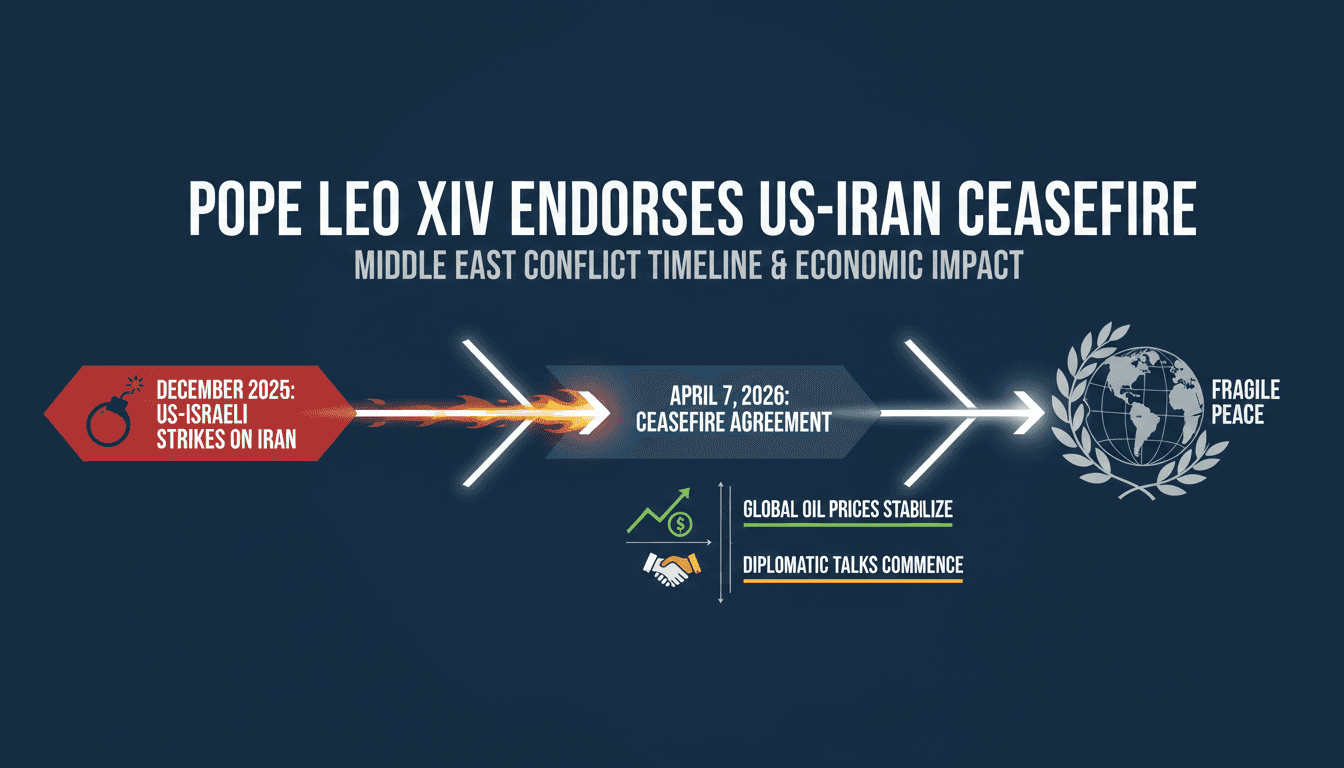
Here's what it means for you.
The temporary ceasefire between the U.S. and Iran could reshape energy prices and security dynamics that directly affect your economic environment.
Why it matters
This ceasefire signals a potential shift in Middle Eastern geopolitics, impacting global oil markets and regional security.
What happened (in 30 seconds)
- Pope Leo XIV endorsed a two-week ceasefire between the U.S. and Iran on April 8, 2026, calling it a "sign of deep hope."
- The ceasefire follows intense military conflict that began on February 28, 2026, with U.S.-Israeli airstrikes on Iran.
- Oil prices dropped by 15% following the announcement, reflecting immediate market reactions to the ceasefire.
The context you actually need
- The Iran war escalated rapidly after U.S. and Israeli strikes killed Supreme Leader Ali Khamenei, leading to widespread regional instability.
- Iran's 10-point peace proposal was a response to U.S. threats, aiming to halt military operations and secure sanctions relief.
- The ceasefire is fragile, with reports of violations, including Iranian strikes on Gulf states, indicating ongoing tensions.
What's really happening
The U.S.-Iran ceasefire represents a tactical pause in a conflict that has escalated dramatically since February 2026. The war began with over 900 coordinated airstrikes by the U.S. and Israel, targeting Iranian military capabilities and leadership. This aggressive approach was partly fueled by a desire to dismantle Iran's influence in the region, particularly in light of its nuclear ambitions and support for proxy groups across the Middle East.
The ceasefire, announced on April 7, 2026, came just hours before a deadline set by President Trump for Iranian capitulation. Iran's acceptance of a two-week halt was a strategic move to buy time for negotiations, particularly around its 10-point peace proposal, which includes demands for the cessation of attacks, sanctions relief, and recognition of its regional role. The endorsement from Pope Leo XIV adds a layer of moral authority to the diplomatic efforts, framing the ceasefire as a hopeful step toward peace.
However, the situation remains precarious. The ceasefire is already facing challenges, with reports of Iranian missile strikes on Gulf states, including the UAE, raising security concerns. This has prompted Gulf governments to activate their air defenses, highlighting the ongoing threat posed by Iran even amidst negotiations. The economic implications are also significant; the announcement of the ceasefire led to a 15% drop in crude oil prices per barrel, reflecting immediate market relief. For Dubai, this translated into temporary economic relief, reducing inflation and boosting stock market gains.
Yet, the underlying tensions remain unresolved. The U.S. and Iran have a long history of mistrust, and the ceasefire does not guarantee a lasting peace. Analysts are closely watching how both sides navigate this fragile truce, particularly in light of ongoing military operations and regional proxy conflicts. The potential for renewed hostilities looms large, especially if either side perceives violations of the ceasefire terms.
Who feels it first (and how)
- Energy sector professionals: Fluctuations in oil prices directly impact their operations and profitability.
- Middle Eastern governments: Regional stability affects their security policies and economic strategies.
- Investors in UAE equities: Market volatility can influence investment decisions and portfolio performance.
What to watch next
- Compliance with the ceasefire: Monitoring adherence to the ceasefire terms will indicate whether negotiations can progress or if tensions will escalate again.
- Oil price trends: Continued fluctuations in oil prices will affect global markets and economic conditions, particularly in energy-dependent regions.
- Reactions from regional players: The responses from Gulf states and other Middle Eastern countries will shape the broader geopolitical landscape and influence future diplomatic efforts.
The ceasefire is temporary and fragile, with ongoing military operations reported.
Oil prices will remain volatile as markets react to geopolitical developments.
The long-term impact of the ceasefire on U.S.-Iran relations and regional stability remains uncertain.
Frequently Asked Questions
- Why it matters?
- This ceasefire signals a potential shift in Middle Eastern geopolitics, impacting global oil markets and regional security.
- What happened (in 30 seconds)?
- Pope Leo XIV endorsed a two-week ceasefire between the U.S. and Iran on April 8, 2026, calling it a "sign of deep hope." The ceasefire follows intense military conflict that began on February 28, 2026, with U.S.-Israeli airstrikes on Iran. Oil prices dropped by 15% following the announcement, reflecting immediate market reactions to the ceasefire.
- What's really happening?
- The U.S.-Iran ceasefire represents a tactical pause in a conflict that has escalated dramatically since February 2026. The war began with over 900 coordinated airstrikes by the U.S. and Israel, targeting Iranian military capabilities and leadership. This aggressive approach was partly fueled by a desire to dismantle Iran's influence in the region, particularly in light of its nuclear ambitions and support for proxy groups across the Middle East. The ceasefire, announced on April 7, 2026, came j
- Who feels it first (and how)?
- Energy sector professionals: Fluctuations in oil prices directly impact their operations and profitability. Middle Eastern governments: Regional stability affects their security policies and economic strategies. Investors in UAE equities: Market volatility can influence investment decisions and portfolio performance.
- What to watch next?
- Compliance with the ceasefire: Monitoring adherence to the ceasefire terms will indicate whether negotiations can progress or if tensions will escalate again. Oil price trends: Continued fluctuations in oil prices will affect global markets and economic conditions, particularly in energy-dependent regions. Reactions from regional players: The responses from Gulf states and other Middle Eastern countries will shape the broader geopolitical landscape and influence future diplomatic efforts.
Capitol Hill news, legislation, and policy insight.
"The Hill specializes in U.S. politics and policy, with a focus on Capitol Hill developments and a reputation for insider reporting."
— A47 Editor
Pope welcomes US-Iran ceasefire deal as 'sign of deep hope'
Pope Leo XIV expressed satisfaction over the announcement of a two-week ceasefire agreement between the U.S. and Iran, describing it as a 'sign of deep hope' during his address in St. Peter’s Square. This ceasefire, effective immediately, includes Ir...
English-language reporting on Saudi politics, policy, and society.
"Saudi Gazette reflects mainstream Saudi institutional perspectives."
— A47 Editor
Pope Leo slams Trump’s threat to destroy Iran's civilization
Pope Leo XIV condemned U.S. President Donald Trump's threats to destroy Iran's civilization, calling them 'truly unacceptable' just hours before a two-week ceasefire was announced between the U.S. and Iran. The Pope urged Americans to advocate for pe...
Regional coverage and analysis focused on politics, diplomacy, and business across the Middle East.
"Al-Monitor is known for analytical reporting on Middle East politics and policy developments."
— A47 Editor
Pope Leo praises Iran war ceasefire after criticizing Trump threat
Pope Leo expressed great satisfaction with the announcement of a two-week ceasefire in the Iran war, marking a significant shift in his stance as he has recently criticized U.S. President Donald Trump's threats against Iran. The ceasefire was agreed ...
Conservative-leaning coverage of current events.
"Fox News is a highly influential conservative news outlet known for right-leaning political commentary and coverage."
— A47 Editor
Pope Leo calls out Trump’s Iran rhetoric before last-minute ceasefire emerges
Pope Leo has publicly condemned President Trump's aggressive rhetoric towards Iran, labeling it 'truly unacceptable' and urging global leaders to prioritize diplomacy over military action. This statement comes amid heightened tensions and a looming d...