
Nvidia CEO Announces OpenClaw as Next Major AI Platform
Here's what it means for you.
As enterprises pivot to agentic AI systems, your workplace could soon be transformed by autonomous tools that enhance productivity and decision-making.
Why it matters
The shift from generative chatbots to autonomous AI systems signals a significant evolution in how businesses will operate and innovate.
What happened (in 30 seconds)
- Jensen Huang, CEO of Nvidia, announced OpenClaw as the next major AI platform during a CNBC interview on March 17, 2026, at the GTC conference.
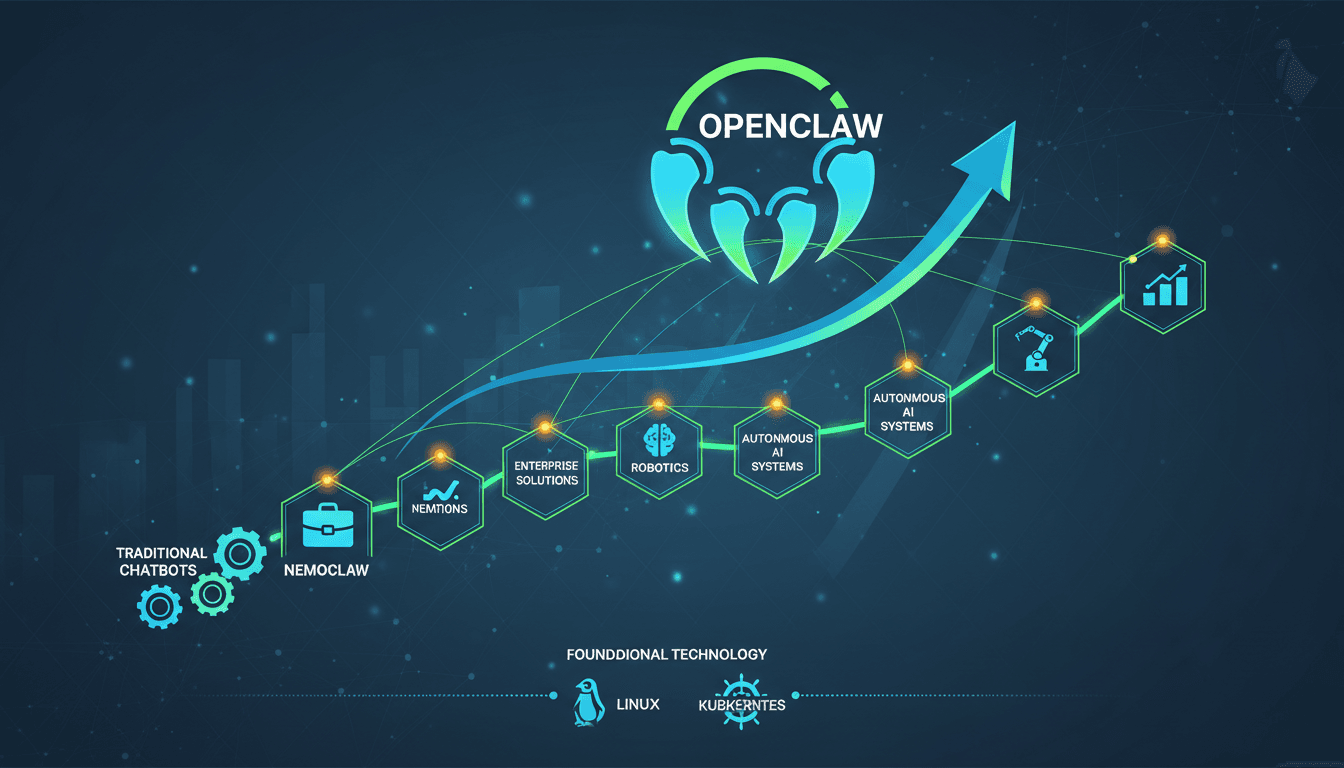
- OpenClaw is positioned as foundational infrastructure for enterprises, akin to Linux or Kubernetes, emphasizing an 'agentic systems strategy.'
- Nvidia's NemoClaw was launched to address security concerns and facilitate enterprise adoption, following the viral success of OpenClaw as an open-source project.
The context you actually need
- OpenClaw gained rapid traction in early 2026 as the fastest-growing open-source project, enabling local AI agent deployment.
- Nvidia's Q4 FY2026 earnings report revealed record revenues of $68.1 billion, largely driven by AI demand, showcasing the market's appetite for advanced AI solutions.
- The UAE is actively investing in AI technologies, with companies like TrendAI collaborating with Nvidia to enhance automation and security in various sectors.
What's really happening
Jensen Huang's declaration of OpenClaw as the next ChatGPT marks a pivotal moment in the AI landscape, transitioning from traditional generative chatbots to more sophisticated agentic AI systems. These systems are designed to perform complex tasks autonomously, which fundamentally alters the way businesses can leverage AI technologies. The implications of this shift are profound, as enterprises are encouraged to adopt an 'agentic systems strategy'—a move that could redefine operational frameworks across industries.
OpenClaw's rapid ascent as an open-source project highlights a growing demand for customizable AI solutions that can be deployed locally, mitigating concerns around data privacy and security. However, the initial hesitance from enterprises due to security vulnerabilities prompted Nvidia to introduce NemoClaw, an enterprise-grade version that integrates security features and controls. This strategic pivot not only addresses immediate concerns but also positions Nvidia as a leader in the burgeoning field of autonomous AI.
The endorsement of OpenClaw by Huang during a high-profile interview reflects a broader trend where major tech companies are racing to establish their platforms as foundational technologies for the next generation of AI. With Nvidia reporting record revenues of $68.1 billion in Q4 FY2026, largely attributed to AI demand, the market is clearly signaling a strong appetite for advanced AI solutions. This financial success reinforces Nvidia's commitment to driving innovation in AI infrastructure.
As enterprises begin to adopt agentic AI systems, the impact will be felt across various sectors, from fintech to healthcare. The collaboration between Nvidia and Dubai-based TrendAI exemplifies how regional players are aligning with global tech leaders to enhance their AI capabilities. This partnership aims to accelerate the secure adoption of agentic AI, which could lead to increased automation and efficiency in local businesses.
In essence, the transition to agentic AI systems is not just a technological evolution; it represents a fundamental shift in how organizations will operate, innovate, and compete in the future. As these systems become more prevalent, the potential for increased productivity and enhanced decision-making capabilities will reshape the workforce and the nature of work itself.
Who feels it first (and how)
- Tech companies: They will lead the charge in adopting and integrating agentic AI systems into their operations.
- Enterprise-level organizations: Businesses across various sectors will begin to implement autonomous AI tools to streamline workflows and enhance productivity.
- Developers and AI researchers: They will explore new opportunities and challenges presented by the shift towards agentic AI, driving innovation in the field.
- UAE businesses: Companies in the UAE, particularly in fintech and tech, will benefit from collaborations aimed at enhancing automation and security in AI applications.
What to watch next
- Adoption rates of agentic AI systems: Monitor how quickly enterprises implement these technologies, as it will indicate the market's readiness for autonomous AI.
- Security developments in AI platforms: As concerns around data privacy grow, advancements in security measures for platforms like NemoClaw will be crucial for enterprise trust.
- Investment trends in AI: Keep an eye on funding and partnerships in the AI sector, particularly in regions like the UAE, which are heavily investing in AI infrastructure.
Nvidia's NemoClaw has been launched to enhance security and enterprise adoption of OpenClaw.
Enterprises will increasingly adopt agentic AI systems, transforming workflows and decision-making processes.
The long-term impact of these technologies on job roles and workforce dynamics remains to be seen.
Frequently Asked Questions
- Why it matters?
- The shift from generative chatbots to autonomous AI systems signals a significant evolution in how businesses will operate and innovate.
- What happened (in 30 seconds)?
- Jensen Huang, CEO of Nvidia, announced OpenClaw as the next major AI platform during a CNBC interview on March 17, 2026, at the GTC conference. OpenClaw is positioned as foundational infrastructure for enterprises, akin to Linux or Kubernetes, emphasizing an 'agentic systems strategy.' Nvidia's NemoClaw was launched to address security concerns and facilitate enterprise adoption, following the viral success of OpenClaw as an open-source project.
- What's really happening?
- Jensen Huang's declaration of OpenClaw as the next ChatGPT marks a pivotal moment in the AI landscape, transitioning from traditional generative chatbots to more sophisticated agentic AI systems. These systems are designed to perform complex tasks autonomously, which fundamentally alters the way businesses can leverage AI technologies. The implications of this shift are profound, as enterprises are encouraged to adopt an 'agentic systems strategy'—a move that could redefine operational framework
- Who feels it first (and how)?
- Tech companies: They will lead the charge in adopting and integrating agentic AI systems into their operations. Enterprise-level organizations: Businesses across various sectors will begin to implement autonomous AI tools to streamline workflows and enhance productivity. Developers and AI researchers: They will explore new opportunities and challenges presented by the shift towards agentic AI, driving innovation in the field. UAE businesses: Companies in the UAE, particularly in fintech an
- What to watch next?
- Adoption rates of agentic AI systems: Monitor how quickly enterprises implement these technologies, as it will indicate the market's readiness for autonomous AI. Security developments in AI platforms: As concerns around data privacy grow, advancements in security measures for platforms like NemoClaw will be crucial for enterprise trust. Investment trends in AI: Keep an eye on funding and partnerships in the AI sector, particularly in regions like the UAE, which are heavily investing in AI in
Stock market news, investing ideas, and trading analysis.
"TheStreet provides market news and retail-investor-focused analysis."
— A47 Editor
Nvidia CEO makes bombshell call on AI’s next big thing
Nvidia CEO Jensen Huang has made a significant announcement regarding the company's future direction in artificial intelligence, emphasizing a shift from hardware to software agents, specifically highlighting OpenClaw as a pivotal development.
Startup news with frequent AI coverage.
"Covers launches, funding, and product updates in AI."
— A47 Editor
What happened at Nvidia GTC: NemoClaw, Robot Olaf, and a $1 trillion bet
At Nvidia's GTC conference, CEO Jensen Huang delivered a keynote highlighting the company's ambitious forecast of $1 trillion in AI chip sales by 2027, alongside the introduction of NemoClaw, an open-source AI agent platform, and a demonstration feat...
News and guidance for IT pros on AI adoption.
"Enterprise-focused tips, explainers, and news for professionals."
— A47 Editor
Nvidia’s Open Model Super Panel Made a Strong Case for Open Agents
At the GTC 2026 conference, Nvidia's leadership, including CEO Jensen Huang, presented a strong argument for the future of artificial intelligence (AI) to focus on open agent systems rather than solely on open models. This discussion highlighted the ...