
Regional Powers Initiate Diplomatic Efforts to Extend US-Iran Ceasefire
Here's what it means for you.
Your business interests in the Middle East could be significantly impacted by shifts in energy supply and market stability.
Why it matters
The diplomatic efforts to extend the US-Iran ceasefire are crucial for maintaining energy security and economic stability in a region that affects global markets.
What happened (in 30 seconds)
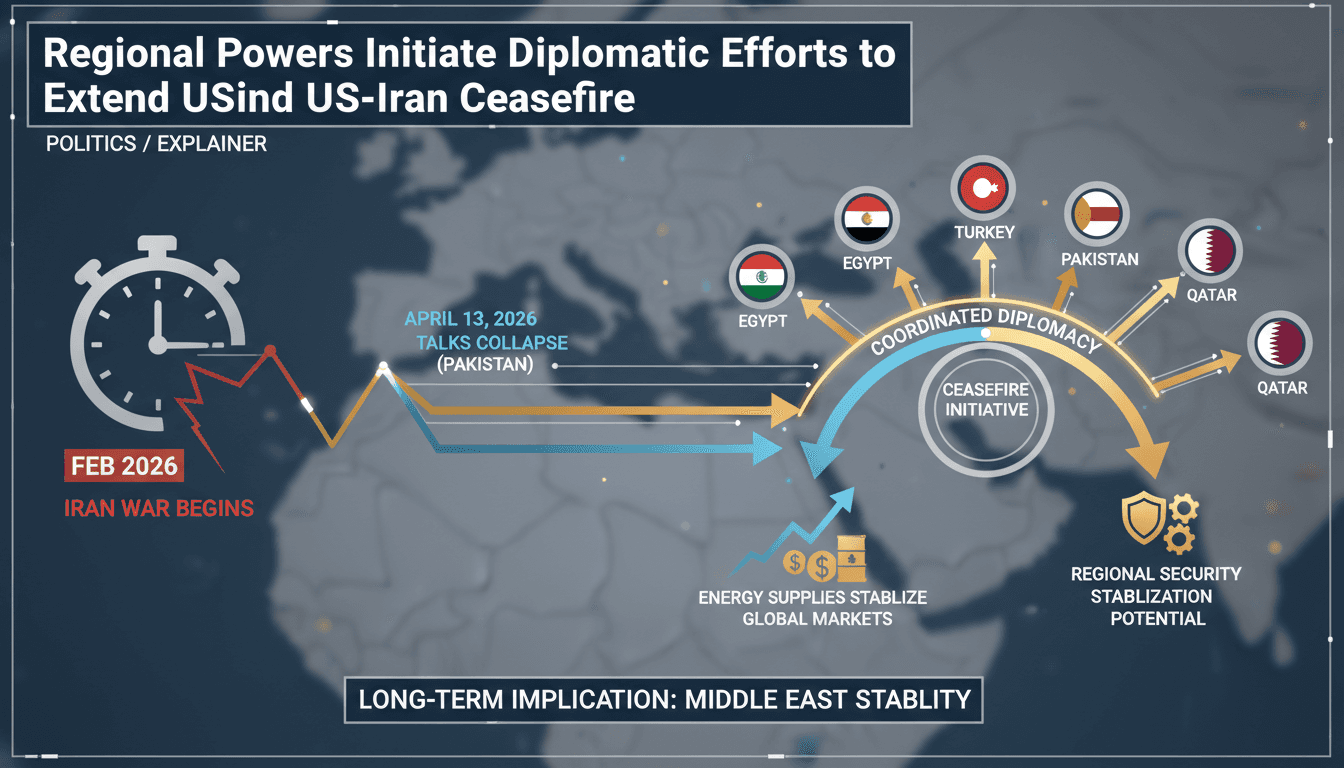
- April 15, 2026: Egypt, Turkey, Pakistan, Saudi Arabia, and Qatar launched a coordinated diplomatic initiative to extend the US-Iran ceasefire.
- April 13, 2026: Negotiations in Pakistan collapsed, prompting regional powers to intervene and push for renewed talks.
- Current Status: High-level meetings are ongoing, with a quadripartite foreign ministers' summit planned in Antalya, Turkey.
The context you actually need
- US-Iran War: The conflict began in late February 2026, escalating tensions and disrupting global energy markets.
- Ceasefire Timeline: A fragile ceasefire took effect on April 8, 2026, but negotiations stalled shortly after, highlighting the volatility of the situation.
- Regional Influence: Countries like Egypt and Turkey are positioning themselves as neutral mediators to stabilize the region and mitigate economic fallout.
What's really happening
The recent diplomatic initiative to extend the US-Iran ceasefire is a response to the escalating conflict that erupted in late February 2026. This war has involved direct military actions, including Israeli strikes and US military involvement, which have severely disrupted global energy markets and threatened the stability of the Gulf region. The fragile ceasefire that began on April 8, 2026, was a temporary relief, but the collapse of negotiations in Pakistan on April 13 revealed the precarious nature of peace in the area.
In the wake of these developments, regional powers—Egypt, Turkey, Pakistan, Saudi Arabia, and Qatar—have stepped in to form a "multi-party de-escalation umbrella." This coalition aims to apply pressure on both the US and Iran to return to the negotiating table and work towards a permanent peace agreement. The involvement of these nations is significant; they are leveraging their positions as neutral influencers to stabilize the region and prevent further economic fallout that could arise from continued conflict.
The initiative is not just about peace; it is also about economic stability. The Gulf region is a critical hub for energy supplies, and any disruption can have ripple effects on global markets. For instance, following the announcement of the ceasefire on April 8, the Dubai Financial Market General Index surged by 6.9%, marking the largest intraday gain since March 2020. However, this optimism was short-lived, as the index dropped 0.8% after the negotiation setbacks on April 13. This volatility illustrates how closely tied regional stability is to market performance.
The upcoming quadripartite foreign ministers' summit in Antalya is a pivotal moment. It represents a concerted effort by these nations to not only extend the ceasefire but also to create a framework for ongoing dialogue. The stakes are high; failure to achieve a lasting peace could lead to renewed hostilities, further destabilizing the region and impacting global energy supplies.
Who feels it first (and how)
- Energy Sector: Companies reliant on stable oil prices will experience immediate impacts from any shifts in conflict dynamics.
- Investors: Those with stakes in Middle Eastern markets will see fluctuations in stock performance based on the success or failure of diplomatic efforts.
- Local Businesses: Enterprises in the Gulf region may face operational challenges or opportunities depending on the stability of the ceasefire and regional security.
What to watch next
- Diplomatic Meetings: The outcomes of the quadripartite foreign ministers' summit in Antalya will be crucial in determining the future of US-Iran relations and regional stability.
- Market Reactions: Monitor stock market performance in the Gulf, particularly in Dubai, as it reflects investor sentiment and economic health in response to geopolitical developments.
- Energy Supply Trends: Keep an eye on oil prices and supply chain disruptions, as any escalation in conflict could lead to significant fluctuations.
The US-Iran ceasefire is currently in effect, with ongoing diplomatic efforts to extend it.
Regional powers will continue to push for negotiations, leveraging their influence to stabilize the situation.
The long-term effectiveness of these diplomatic initiatives in achieving a permanent peace agreement remains uncertain.
Frequently Asked Questions
- Why it matters?
- The diplomatic efforts to extend the US-Iran ceasefire are crucial for maintaining energy security and economic stability in a region that affects global markets.
- What happened (in 30 seconds)?
- April 15, 2026: Egypt, Turkey, Pakistan, Saudi Arabia, and Qatar launched a coordinated diplomatic initiative to extend the US-Iran ceasefire. April 13, 2026: Negotiations in Pakistan collapsed, prompting regional powers to intervene and push for renewed talks. Current Status: High-level meetings are ongoing, with a quadripartite foreign ministers' summit planned in Antalya, Turkey.
- What's really happening?
- The recent diplomatic initiative to extend the US-Iran ceasefire is a response to the escalating conflict that erupted in late February 2026. This war has involved direct military actions, including Israeli strikes and US military involvement, which have severely disrupted global energy markets and threatened the stability of the Gulf region. The fragile ceasefire that began on April 8, 2026, was a temporary relief, but the collapse of negotiations in Pakistan on April 13 revealed the precarious
- Who feels it first (and how)?
- Energy Sector: Companies reliant on stable oil prices will experience immediate impacts from any shifts in conflict dynamics. Investors: Those with stakes in Middle Eastern markets will see fluctuations in stock performance based on the success or failure of diplomatic efforts. Local Businesses: Enterprises in the Gulf region may face operational challenges or opportunities depending on the stability of the ceasefire and regional security.
- What to watch next?
- Diplomatic Meetings: The outcomes of the quadripartite foreign ministers' summit in Antalya will be crucial in determining the future of US-Iran relations and regional stability. Market Reactions: Monitor stock market performance in the Gulf, particularly in Dubai, as it reflects investor sentiment and economic health in response to geopolitical developments. Energy Supply Trends: Keep an eye on oil prices and supply chain disruptions, as any escalation in conflict could lead to significant fluc
Pan-Arab news coverage spanning politics, business, sports, and regional affairs.
"Asharq Al-Awsat reflects a broad Arab editorial perspective with strong attention to regional geopolitics."
— A47 Editor
«حرب إيران»... حراك إقليمي لاستدامة التهدئة
Regional efforts are underway to extend the ceasefire between Washington and Tehran, with Egyptian and Turkish consultations urging a swift resumption of negotiations that recently stalled between the two conflicting nations.
Arabic-language UAE newspaper coverage focused on domestic affairs, public institutions, business, society, and regional developments.
"Al Khaleej coverage generally reflects a mainstream UAE editorial lens with strong attention to public affairs, institutions, and regional developments."
— A47 Editor
واشنطن تأمل «صفقـة كبرى» تُنهي الحرب مع طهران
Recent signals from Washington and Tehran indicate that negotiators from both countries have made progress towards reaching a framework agreement aimed at ending the ongoing conflict. This development was highlighted on Wednesday, suggesting a potent...
Arabic-language UAE newspaper coverage focused on domestic affairs, public institutions, business, society, and regional developments.
"Al Khaleej coverage generally reflects a mainstream UAE editorial lens with strong attention to public affairs, institutions, and regional developments."
— A47 Editor
أردوغان: تركيا تعمل على تمديد وقف إطلاق النار في حرب إيران
Turkish President Recep Tayyip Erdoğan announced that Ankara is working to extend the ceasefire between the United States and Iran, aiming to reduce tensions and ensure ongoing negotiations. He expressed optimism about the talks despite existing disa...