
Iran's Closure of the Strait of Hormuz Triggers Historic Energy Supply Disruption
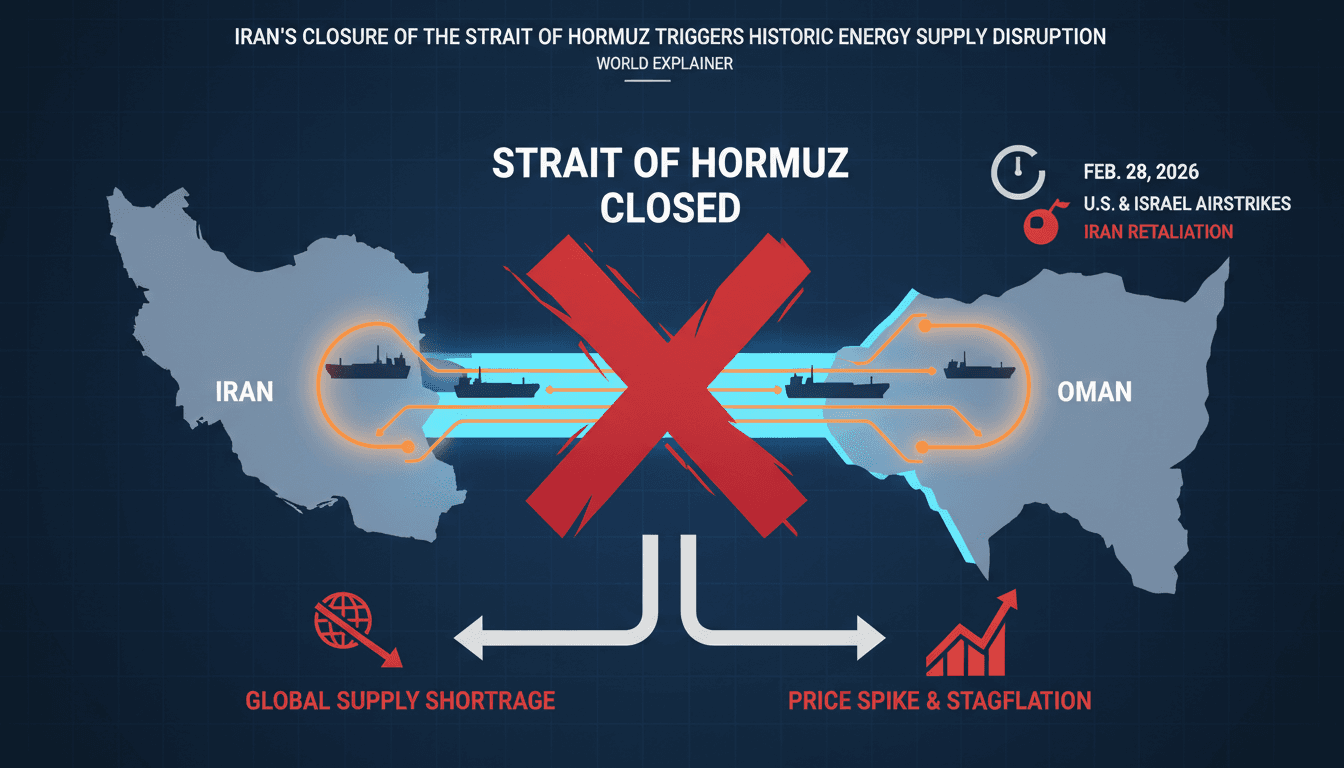
Here's what it means for you.
Rising energy prices and potential inflationary pressures could impact your daily expenses and investment decisions.
Why it matters
The closure of the Strait of Hormuz disrupts nearly 20% of global oil supply, triggering widespread economic ramifications.
What happened (in 30 seconds)
- Iran's blockade: Following U.S. and Israeli airstrikes on February 28, 2026, Iran restricted maritime traffic in the Strait of Hormuz.
- Historic supply drop: The International Energy Agency (IEA) reported an 8 million barrels per day decline in global oil supply for March 2026.
- Emergency measures: The IEA coordinated the release of 400 million barrels from strategic reserves to mitigate the crisis.
The context you actually need
- Geopolitical tensions: The blockade is a response to escalating conflicts in the Middle East, particularly regarding nuclear concerns and regional proxy wars.
- Chokepoint significance: The Strait of Hormuz is a critical passage for oil, with approximately 20 million barrels per day typically transiting through it.
- Production cuts: Gulf states, including Iraq and the UAE, have significantly reduced oil production, affecting global supply chains and prices.
What's really happening
The closure of the Strait of Hormuz marks a pivotal moment in global energy dynamics, driven by a confluence of geopolitical tensions and retaliatory military actions. On February 28, 2026, the United States and Israel launched airstrikes against Iranian targets, which prompted Iran to respond by blocking tanker traffic through the Strait of Hormuz. This strait is crucial, as it serves as a conduit for about 20% of the world's oil supply. The immediate aftermath saw oil flows plummet from 20 million barrels per day to nearly zero, leading to shutdowns of refining capacities and production cuts totaling around 10 million barrels per day across the region.
The IEA's declaration of an 8 million barrels per day global supply drop in March 2026 underscores the severity of the situation. This figure represents the largest single-month decline in oil supply in history, surpassing previous crises from 1973, 1979, and 2022. The IEA's emergency measures included the unprecedented release of 400 million barrels from strategic reserves, a move designed to stabilize markets and mitigate the impact of soaring oil prices, which initially surged above $120 per barrel before settling around $92.
The blockade's implications extend beyond immediate supply disruptions. With Gulf producers like Iraq, Kuwait, and Saudi Arabia forced to curtail production, the ripple effects are felt globally. Developing nations, in particular, face heightened inflationary pressures as energy costs rise, leading to potential stagflation risks. The UAE, a key player in the Gulf oil market, has seen its revenues dip by 2.6% due to lower production volumes, despite price gains. This situation has prompted OPEC+ members to submit compliance plans to offset previous overproduction, indicating a collective response to the crisis.
As the situation evolves, the interconnectedness of global energy markets means that the ramifications of this blockade will be felt far beyond the Middle East. Countries reliant on oil imports will need to navigate rising costs, while energy producers will have to adapt to a volatile market landscape.
Who feels it first (and how)
- Consumers: Rising fuel prices will directly impact transportation and food costs.
- Businesses: Industries reliant on oil, such as logistics and manufacturing, may face increased operational costs.
- Investors: Volatility in energy markets could affect stock prices and investment strategies, particularly in energy sectors.
- Developing nations: Countries dependent on oil imports will experience accelerated inflation and economic strain.
What to watch next
- Oil price fluctuations: Monitor how prices respond to ongoing geopolitical developments and supply adjustments.
- OPEC+ compliance: Watch for updates on how OPEC+ members implement compensation plans to stabilize the market.
- Inflation indicators: Keep an eye on inflation rates in consumer goods and energy sectors, particularly in developing economies.
The Strait of Hormuz closure is causing significant disruptions to global oil supply.
Energy prices will remain volatile as geopolitical tensions persist and production adjustments are made.
The long-term geopolitical implications of this blockade and its impact on future U.S.-Iran relations remain uncertain.
Frequently Asked Questions
- Why it matters?
- The closure of the Strait of Hormuz disrupts nearly 20% of global oil supply, triggering widespread economic ramifications.
- What happened (in 30 seconds)?
- Iran's blockade: Following U.S. and Israeli airstrikes on February 28, 2026, Iran restricted maritime traffic in the Strait of Hormuz. Historic supply drop: The International Energy Agency (IEA) reported an 8 million barrels per day decline in global oil supply for March 2026. Emergency measures: The IEA coordinated the release of 400 million barrels from strategic reserves to mitigate the crisis.
- What's really happening?
- The closure of the Strait of Hormuz marks a pivotal moment in global energy dynamics, driven by a confluence of geopolitical tensions and retaliatory military actions. On February 28, 2026, the United States and Israel launched airstrikes against Iranian targets, which prompted Iran to respond by blocking tanker traffic through the Strait of Hormuz. This strait is crucial, as it serves as a conduit for about 20% of the world's oil supply. The immediate aftermath saw oil flows plummet from 20 mil
- Who feels it first (and how)?
- Consumers: Rising fuel prices will directly impact transportation and food costs. Businesses: Industries reliant on oil, such as logistics and manufacturing, may face increased operational costs. Investors: Volatility in energy markets could affect stock prices and investment strategies, particularly in energy sectors. Developing nations: Countries dependent on oil imports will experience accelerated inflation and economic strain.
- What to watch next?
- Oil price fluctuations: Monitor how prices respond to ongoing geopolitical developments and supply adjustments. OPEC+ compliance: Watch for updates on how OPEC+ members implement compensation plans to stabilize the market. Inflation indicators: Keep an eye on inflation rates in consumer goods and energy sectors, particularly in developing economies.
Pan-Arab news coverage spanning politics, business, sports, and regional affairs.
"Asharq Al-Awsat reflects a broad Arab editorial perspective with strong attention to regional geopolitics."
— A47 Editor
وكالة الطاقة الدولية: لم يشهد العالم من قبل انقطاعاً في الإمدادات بهذه الضخامة
Fatih Birol, the Director of the International Energy Agency, stated on Tuesday that the world has never experienced such a massive disruption in energy supplies, referencing the current situation resulting from the war in Iran.
Sports reporting with a focus on Saudi and regional competitions.
"Okaz sports coverage is broad and audience-friendly, with strong attention to Saudi teams and leagues."
— A47 Editor
«الطاقة الدولية» تحذر: «أبريل أسود» ينتظر العالم بسبب أزمة النفط والغاز
Fatih Birol, the head of the International Energy Agency, warned that the ongoing energy crisis linked to the Middle East conflict is the worst the world has ever faced, predicting a significantly more challenging April compared to March. He emphasiz...